
Society Islands (French Polynesia)
An archipelago in French Polynesia centered on Tahiti, known for volcanic high islands, coral reefs, Polynesian culture, and tourism. Includes Tahiti, Bora Bora, Moorea and several other inhabited and uninhabited isles.
Overview
The Society Islands are an archipelago in the central South Pacific that form the most populous and well-known part of French Polynesia. The group includes high volcanic islands and low coral atolls clustered around the large island of Tahiti. The region is administered as part of the overseas collectivity of France and combines indigenous Polynesian traditions with French influence. The town of Faaa on Tahiti hosts the archipelago's largest urban area and its main international airport.
Image gallery
10 Images



Geography and principal islands
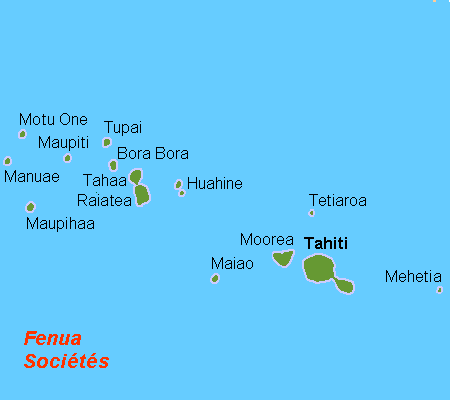
Geologically the islands are volcanic in origin, with mountainous interiors, fringing coral reefs and lagoons. Climate is tropical and moderated by trade winds. Major islands commonly cited include:
- Tahiti — the largest and most populated island, home to the capital region and many services.
- Bora Bora — famed for its lagoon and luxury tourism overwater bungalows.
- Moorea — known for dramatic ridges and easy access from Tahiti.
- Other islands such as Raiatea, Taha'a, Huahine and Maupiti, plus numerous smaller islets and motus.
History and cultural context
Polynesian voyagers settled the islands centuries before European contact, establishing languages, social structures and navigation skills characteristic of the wider Polynesian world. European explorers arrived in the 18th century, and French political influence grew over the 19th and 20th centuries. Today the Society Islands retain strong Polynesian cultural practices—language, dance, tattooing and handicrafts—alongside French administrative institutions.
Economy, transport and uses
The local economy is driven largely by tourism, supported by pearl farming, small-scale agriculture and public administration. Papeete and Faaa on Tahiti function as transport hubs with ferry links between islands and international flights. Visitors are drawn by scuba diving, surfing, cultural festivals and scenic lagoons; some islands specialize in luxury resorts while others emphasize ecotourism and traditional life.
Environment and conservation
Coral reefs and nearshore ecosystems are biologically rich but sensitive to development, invasive species and climate change impacts like sea-level rise and warming seas. Conservation efforts on various islands focus on reef protection, sustainable fisheries and preserving native forest patches and freshwater resources.
Further information
For administrative and travel details see general resources on French Polynesia. Individual islands have distinct characters and practical considerations for visitors and researchers; islands such as Tahiti, Bora Bora and Moorea are good starting points for learning about the archipelago's geography, culture and economy.
Related articles
Author
AlegsaOnline.com Society Islands (French Polynesia) Leandro Alegsa
URL: https://en.alegsaonline.com/art/91473
Sources
- ispf.pf : "Recensement de la population 2007"