
Smile (band) — the British trio that evolved into Queen
Smile was a late‑1960s British rock trio whose members Brian May and Roger Taylor later formed Queen after replacing singer Tim Staffell with Freddie Mercury.
Overview
Smile was a short‑lived British rock band formed in the late 1960s that is best known today for being the direct precursor to the band Queen. The trio combined guitar‑led rock with vocal harmonies and played venues around London and in student circles before personnel changes led to a rebranding and a new direction.
Image gallery
1 Image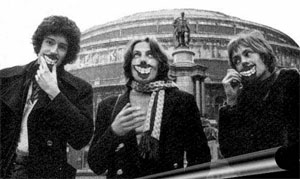
Members and musical character
The core lineup consisted of three young musicians who shared songwriting and performance duties. Guitarist Brian May provided distinctive guitar textures; drummer Roger Taylor contributed energetic rhythms and backing vocals; and bassist and singer Tim Staffell handled the lead vocal role in live shows. Their sound reflected late‑60s rock influences with an emphasis on melodic guitar and tight ensemble playing.
History and transition
Formed while two of the members were in college, Smile spent a few years gigging and recording demos. In 1970 Tim Staffell left the group to pursue other projects. His departure opened the way for the arrival of a new frontman, Freddie Mercury, whose theatrical voice and stage presence prompted a change in style and identity. With Mercury on board the band adopted the name Queen and expanded its ambitions. Bassist John Deacon joined the following year, completing the classic lineup.
Recordings, repertoire and legacy
Smile did not produce a large commercial catalogue, but the material they developed and the working relationships they formed proved important. Some early songs and musical ideas were adapted and refined by the successor band; several tracks and demos associated with Smile have since been collected and circulated among fans and on retrospective releases. Historically, Smile is often mentioned in accounts of how Queen's signature blend of rock, melody and showmanship took shape.
Notable facts
- Smile's existence is significant chiefly because two of its members — the guitarist and drummer — remained key creative forces in the later, globally successful band.
- The transition from Smile to Queen illustrates how changes in singer and repertoire can transform a group's public identity and commercial trajectory.
- Although short‑lived, Smile's story is frequently cited in biographies and timelines of British rock; it appears in many early histories of Queen and related accounts.
For concise biographies of the principal members and further reading, see profiles of Brian May, Roger Taylor, and historical summaries that cover the arrival of Freddie Mercury and the subsequent recruitment of John Deacon.
Related articles
Author
AlegsaOnline.com Smile (band) — the British trio that evolved into Queen Leandro Alegsa
URL: https://en.alegsaonline.com/art/91216