
John Deacon
John Deacon (born 1951) is an English retired musician best known as the bass guitarist of Queen. He wrote several of the band's hit songs and has lived a private life since retiring from public performance.
John Richard Deacon (born 19 August 1951) is an English retired musician best known for his long career as the bass guitarist of the rock band Queen. A founder-era member who joined the group in the early 1970s, Deacon contributed steady rhythmic support, melodic bass lines and a number of commercially successful songs that broadened the band’s popular appeal.
Image gallery
3 Images

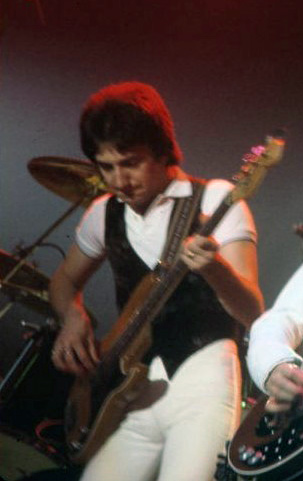
Early life and background
Born in Leicester, Deacon studied electronics and began his working life outside the music industry as a trainee electronics engineer. His technical training influenced his practical approach to instruments and studio work. He married Veronica Tetzlaff on 18 January 1975; the couple have six children and live in Southwest London, in the Putney area where they settled during and after his career with Queen. Putney is often cited in accounts of his residence.
Role in Queen and musicianship
Within Queen, Deacon was known for providing a solid rhythmic foundation and for crafting bass parts that served songs rather than calling attention to themselves. His playing is frequently described as melodic and economical, supporting complex arrangements created by his bandmates while allowing dramatic vocals and guitar work to remain prominent. He also took an interest in the studio side of recording and in electronics related to equipment and effects.
Songwriting and notable contributions
Although Freddie Mercury and Brian May were the band’s most visible songwriters, Deacon wrote several of Queen’s memorable hits and contributions that helped diversify their catalogue. Notable songs credited to him include:
- "You're My Best Friend" — a warm pop ballad that became a hit single and remains a fan favourite.
- "Another One Bites the Dust" — a funk-influenced track that became one of Queen’s biggest commercial successes.
- "I Want to Break Free" and "Spread Your Wings" — examples of his ability to write accessible, radio-friendly material.
Equipment and musical style
Deacon’s choice of basses and amplification evolved over his career; early on he favored instruments known for clear, rounded tone that suited rock and pop styles. His parts typically emphasize groove and harmonic support rather than virtuosic display, a style that contributed significantly to Queen’s ability to cross genres from hard rock to disco-inflected pop.
Later life and legacy
Following Freddie Mercury’s death in 1991, Deacon gradually withdrew from the public eye and did not take an active role in the subsequent incarnations of Queen that toured or recorded with guest singers. He is generally regarded as a private person who prioritized family life over continuing in the spotlight. His bass work and songwriting remain an integral part of Queen’s recorded legacy, and his songs continue to receive airplay and appear on compilation releases.
Related articles
Author
AlegsaOnline.com John Deacon Leandro Alegsa
URL: https://en.alegsaonline.com/art/122414
Sources
- belfasttelegraph.co.uk : "Legacy of music legends: Why Queen will still rock you"