
Slavic Native Faith (Rodnovery): Modern Revival of Slavic Paganism
Slavic Native Faith, or Rodnovery, is a contemporary pagan movement that seeks to revive pre-Christian Slavic beliefs, rituals and seasonal festivals. It is diverse, reconstructionist, and regionally varied.
Overview
Slavic Native Faith, commonly called Rodnovery, is a modern religious movement aiming to reconstruct or reimagine the pre-Christian spiritual traditions of the Slavic peoples. It draws on folklore, chronicles and comparative study of Indo-European religions and is often described as part of the broader category of Slavic paganism. Groups within the movement vary widely in theology, practice and organization.
Image gallery
10 Images



Beliefs and worldview
Many adherents emphasize a polytheistic or henotheistic outlook, honoring a pantheon of deities historically associated with Slavic myth, such as Perun, Veles and Mokosh. Ancestor veneration and a strong orientation toward nature are central themes. Some communities interpret the tradition in explicitly pantheistic or monistic terms, while others follow a more literal reconstruction of mythic figures.
Practices and calendar
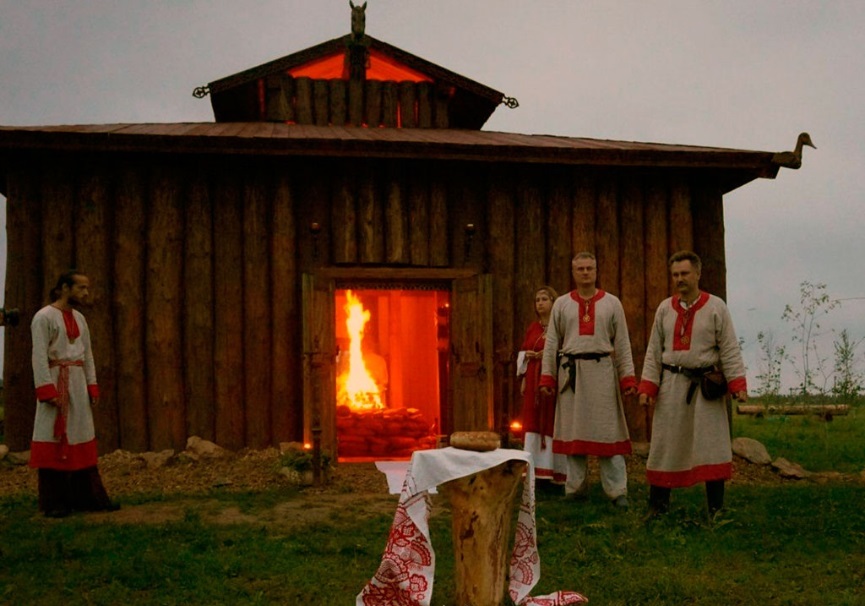
Ritual life often focuses on seasonal festivals, rites of passage and household or communal ceremonies. Celebrations tied to the agricultural cycle—winter gatherings, spring and summer rites, and autumn harvest observances—rely on song, offerings, fire and other symbolic acts. Practices may be informal or structured, and groups adapt folklore, regional customs and modern innovations.
Typical characteristics
- Emphasis on local traditions and historical continuity.
- Use of reconstructed myths, songs and ritual formulas.
- Veneration of ancestors and natural features (trees, rivers, groves).
- Diverse organizational forms: small communities, networks, and informal circles.
History and development
As a recognizable movement, Rodnovery emerged in the late 19th and 20th centuries, gaining momentum during periods of cultural revival and political change. The collapse of communist regimes in Eastern Europe created more space for open practice and public organization, leading to renewed interest across Russia, Ukraine, Poland, Belarus and the Balkans. Scholarship, folklore studies and modern pagan currents have all influenced its growth.
Organization, symbols and contemporary issues
There is no single authority governing Slavic Native Faith; communities range from scholarly reconstructionist circles to eclectic grassroots groups. Common symbols include solar and wheel motifs, while the modern symbol known as the kolovrat is widely recognized among practitioners. The movement has attracted attention and debate: some groups emphasize cultural heritage and ecology, while others have been criticized for associations with nationalist politics. Academic study continues to explore reconstruction methods, legal recognition and the movement's role in contemporary identity.
Related articles
Author
AlegsaOnline.com Slavic Native Faith (Rodnovery): Modern Revival of Slavic Paganism Leandro Alegsa
URL: https://en.alegsaonline.com/art/91060