
Skagway, Alaska: Gold Rush Gateway and Historic Port
Skagway is a coastal Alaskan town known as the Klondike Gold Rush gateway, with a preserved historic downtown, the White Pass railway, maritime access for cruises, and the legacy of con man Soapy Smith.
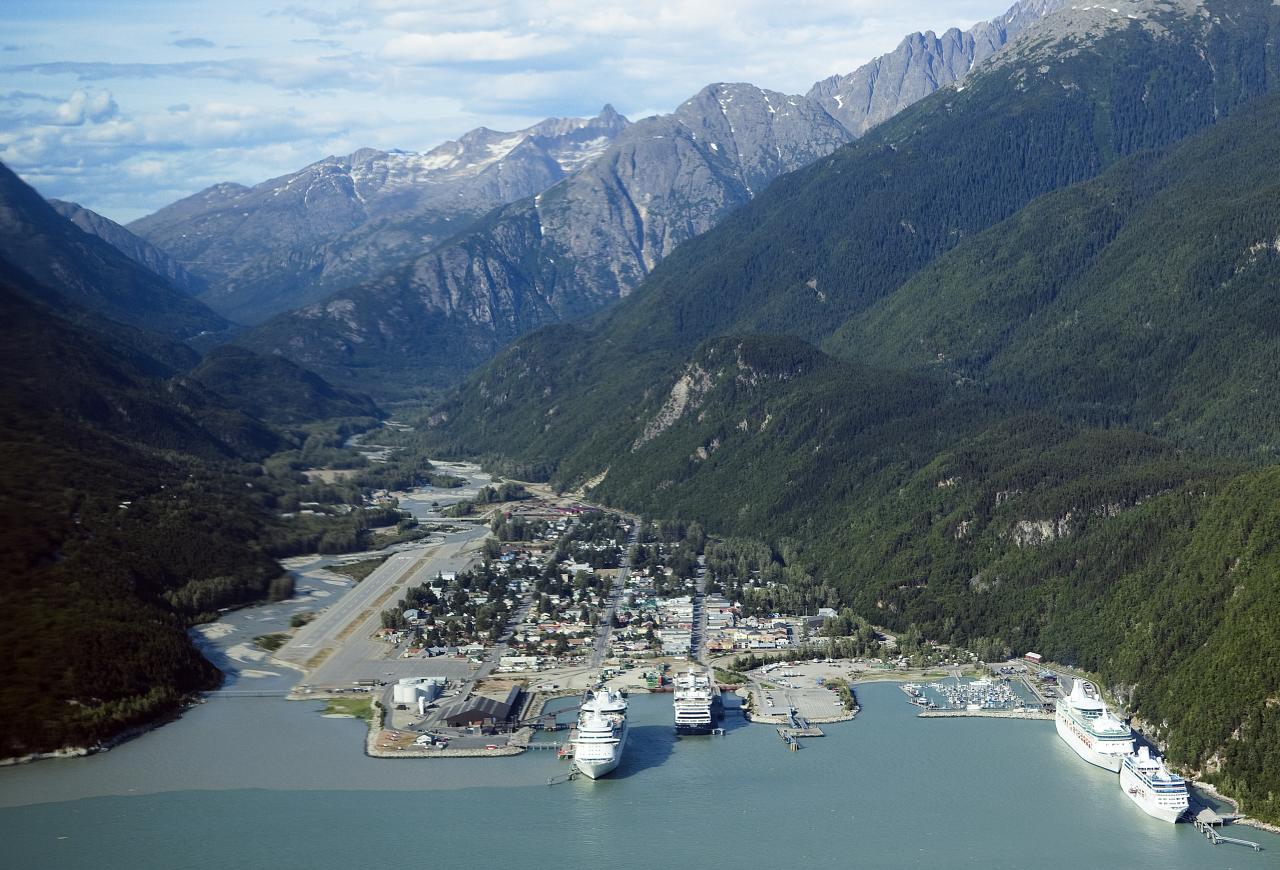
Skagway is a small coastal city and port known for its pivotal role in the Klondike Gold Rush and as a popular stop for visitors to southeastern Alaska. Nestled at the northern end of the Inside Passage, Skagway combines a compact historic downtown with steep mountain terrain and access to inland routes. The town is often described as a living museum because of its well-preserved turn-of-the-century buildings and interpretive sites.
Image gallery
10 Images



History and significance
Skagway rose to prominence in the late 1890s when prospectors used its harbor as a jumping-off point for the overland route to the Yukon gold fields. The inflow of stampeders and goods led to rapid, often chaotic growth. Figures associated with that era include the con man Soapy Smith, whose schemes and ultimate demise are part of Skagway’s dramatic lore. The town’s Gold Rush history is now interpreted by museums and national park exhibits.
Geography and character
Located in southeastern Alaska, Skagway occupies a narrow coastal strip backed by steep mountains and glacial valleys. Its climate and coastal position shaped transport and settlement patterns: maritime access remains important and seasonal weather affects tourism and shipping. The preserved wooden storefronts and boardwalks reflect the town’s 19th-century streetscape.
Attractions and uses
Today Skagway is a hub for heritage tourism and outdoor recreation. Visitors commonly explore:
- The historic downtown and interpretive centers
- The White Pass & Yukon Route railway, a scenic mountain railroad
- Trails leading to alpine passes, waterfalls, and historic prospecting sites
- Maritime excursions and cruise ship landings that connect the Inside Passage
Local services, galleries, and guided tours make the town an accessible base for both cultural and natural exploration. For official municipal information see the town’s pages (for example, Skagway city resources), and for historical interpretation consult national park materials and local museums.
Related articles
Author
AlegsaOnline.com Skagway, Alaska: Gold Rush Gateway and Historic Port Leandro Alegsa
URL: https://en.alegsaonline.com/art/90863