
Sinusitis: causes, symptoms, diagnosis and treatment
Sinusitis is inflammation or infection of the paranasal sinuses causing congestion, facial pain, discharge and reduced sense of smell. Overview of types, causes, diagnosis, treatments and prevention.
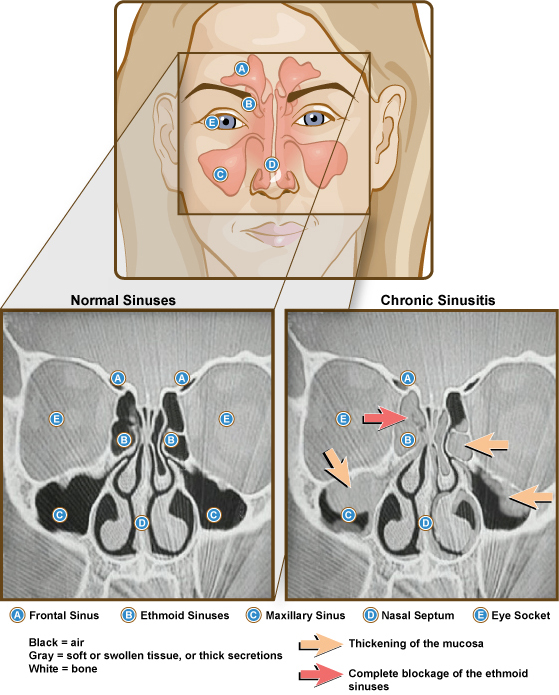
Sinusitis refers to infection or inflammation of the paranasal sinuses, the air-filled cavities in the facial bones. It may follow a viral upper respiratory infection or arise from bacterial, fungal or allergic causes. Many publications distinguish the concepts of infection and inflammation, although both can coexist. Typical complaints include thick nasal mucus, nasal blockage, facial pressure and reduced smell.
Image gallery
10 Images




Types and timeline
Clinically sinusitis is often classified by duration: acute (days to a few weeks), subacute, chronic (persisting for 12 weeks or more) and recurrent (multiple episodes per year). Acute episodes are more often viral; persistent disease suggests ongoing inflammation, structural problems, or chronic infection.
Causes and contributing factors
Common causes include viral colds that obstruct sinus drainage, secondary bacterial infection, allergic rhinitis and, less commonly, fungal infection in susceptible people. Anatomical variants, nasal polyps, smoking, dental infections and impaired immune function can predispose to persistent or severe disease.
Signs, symptoms and diagnosis
Symptoms often combine nasal congestion, purulent or clear discharge, facial pain or pressure (worse when bending forward), headache, cough and diminished sense of smell. Fever may occur in acute bacterial cases. Diagnosis is usually clinical; imaging (CT) is reserved for chronic, complicated or surgical cases. Endoscopic examination and cultures may be used when infections recur or fail to respond.
Treatment and management
- Supportive care for viral sinusitis: saline irrigation, analgesics, nasal decongestants for short-term use and humidification.
- Antibiotics are used selectively for suspected bacterial infections or severe symptoms; choice and duration are guided by clinical judgment.
- Intranasal corticosteroids and antihistamines help when inflammation and allergies contribute.
- For chronic or obstructive disease, endoscopic sinus surgery can improve drainage and symptom control when medical therapy fails.
Complications are uncommon but can include orbital or intracranial spread in severe cases. Prevention emphasizes treating allergies, avoiding tobacco smoke, and prompt care for colds. For further reading or clinical guidelines consult specialist sources and local practice recommendations via the referenced links.
Related articles
Author
AlegsaOnline.com Sinusitis: causes, symptoms, diagnosis and treatment Leandro Alegsa
URL: https://en.alegsaonline.com/art/90711