
Silliman University
Private Christian university in Dumaguete City, Philippines, founded in 1901 by American Presbyterian missionaries; offers basic to graduate education, noted for marine sciences, community extension, and historic campus.
Overview
Silliman University is a private Christian university located in Dumaguete City, Negros Oriental, in the central Philippines. Established at the beginning of the 20th century, it grew from an elementary school to a comprehensive university offering programs from early childhood and basic education through undergraduate, graduate and professional degrees. The institution combines a liberal arts tradition with professional and scientific education and is widely regarded for regional research efforts, particularly in marine and environmental sciences.
Image gallery
10 Images




Founding and historical development
The university traces its origins to American Protestant mission activity that followed the Spanish–American War. The school was organized through the work of mission personnel led by educator David Sutherland Hibbard (D. S. Hibbard) and supported by the philanthropy of Horace Brinsmade Silliman (H. B. Silliman), after whom the institution is named. Early in its history it became known as the first Protestant and American private educational enterprise in the Philippines. Over subsequent decades the institution expanded its academic offerings and facilities, attaining university status and developing a reputation for combining regional service with scholarship.
Campus and facilities
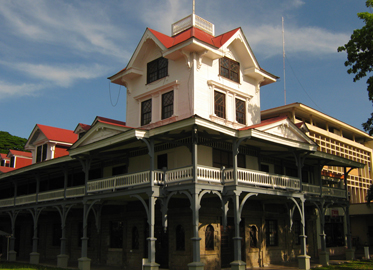
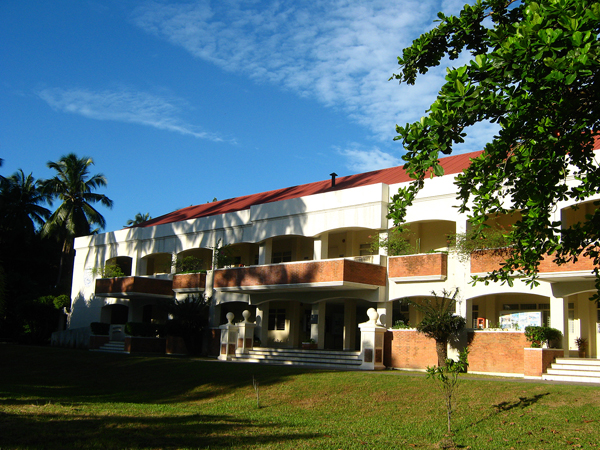
The university campus in Dumaguete is noted for a mix of historic buildings and modern facilities. A number of long-standing structures, green spaces, and laboratories contribute to campus life. Facilities support instruction in the sciences, allied health fields, engineering, the arts and teacher education, as well as offices for student services and outreach. Marine research and coastal fieldwork are supported by laboratories and access to nearby coastal environments, reflecting the university’s maritime setting.
Organization and academic programs
Silliman is organized into multiple colleges, schools and institutes that offer programs across the humanities, natural sciences, social sciences and professional fields. Typical academic areas include business and accountancy, engineering and information technology, health professions and nursing, law, education, marine and environmental sciences, biology, chemistry and physics, as well as theology and philosophy. Graduate degrees and research-oriented programs are available in several fields. The university emphasizes a blend of classroom learning, laboratory work and practical training.
Research, extension and community engagement
Research at Silliman ranges from basic disciplinary studies to applied projects addressing local and regional needs. The university’s extension programs provide services and collaborative projects for rural and coastal communities, including development initiatives, environmental conservation, and public health activities. These outreach efforts are central to the institution’s mission of public service and community partnership.
Student life, culture and international presence
Students come from across the Philippines and from other countries, contributing to a diverse campus community. Student organizations, cultural events, athletic programs and civic activities are part of campus life. Cultural traditions and campus organizations reflect both the university’s Christian heritage and its engagement with local culture. The campus is often described as a regional center for arts, scholarship and civic involvement.
Governance, affiliations and public information
Silliman retains ties to its founding Protestant heritage while operating within the Philippine system of higher education. It is overseen by a governing board and academic leadership that manage institutional policy, academic standards and community relations. For official institutional information, program descriptions and admission guidance consult the university’s published materials and institutional profile (institutional profile), denominational history (denominational history) and national context for higher education in the Philippines (national context).
Historical context and biographical information about early figures are available in mission and institutional records (D. S. Hibbard, H. B. Silliman) and in narratives of the post‑Spanish–American War era that shaped American missionary activity in the region (Spanish–American War).
Questions and answers
Q: What is Silliman University?
A: Silliman University is a private Christian university in Dumaguete City, Philippines. It was founded by American Presbyterian missionaries in 1901 and is the oldest university founded by Americans in Asia.
Q: Who started the school?
A: The school was first started by David Sutherland Hibbard, a pastor from Lyndon, Kansas who was sent by the Presbyterians to start it. Horace Brinsmade Silliman, a businessman from Cohoes, New York provided the money to start it and the school was named after him.
Q: What kind of education does Silliman offer?
A: Silliman offers early childhood, elementary, high school and college education. In college they teach Accountancy, Business Administration, Engineering, Information Technology Law Medicine Nursing Biology Chemistry Education Marine Sciences Physics Theology Philosophy Psychology and Public Administration among others. They also offer masters and doctorate courses.
Q: What other activities does Silliman do aside from teaching?
A: Aside from teaching Silliman is also involved in activities called "extension projects" that help people and different communities.
Q: Where do students come from at Silliman?
A: Students at Silliman come from different parts of the Philippines as well as more than 20 different countries around the world.
Q: How many colleges does Sillimann have?
A:Sillimann has ten colleges, four schools and two institutes.
Related articles
Author
AlegsaOnline.com Silliman University Leandro Alegsa
URL: https://en.alegsaonline.com/art/90427