
Shoghi Effendi — Guardian of the Bahá'í Faith (1897–1957)
Shoghi Effendi was appointed Guardian of the Bahá'í Faith and led its international development, translations, and administrative consolidation from 1921 until his death in 1957.
Shoghi Effendi (1897–1957) was the appointed Guardian of the Bahá'í Faith, the central institution named in the will of his predecessor for the spiritual leadership and authoritative interpretation of the religion's scriptures. During his stewardship he shaped the Bahá'í administrative order, produced English translations of key texts, and directed the community's organized expansion worldwide. His life and work remain central to understanding the modern development of the Bahá'í community.
Image gallery
5 Images


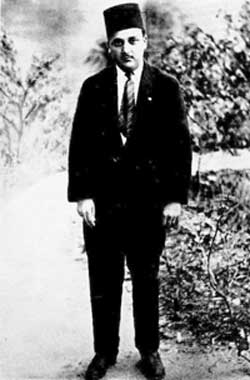
Background and family
Born into a family closely connected to the founders of the Faith, Shoghi Effendi was raised within the Bahá'í community and received both Persian and Western education. His family ties are often noted when recounting his place in the early community, and biographical accounts discuss the influence of that upbringing on his linguistic skills and his later responsibility as interpreter and guardian of the religion's teachings. For further context on his family and early life consult sources on his family background and lineage.
Appointment and authority
Shoghi Effendi's authority derived from the Will and Testament of 'Abdu'l‑Bahá, the son of the religion's founder. In that document 'Abdu'l‑Bahá appointed a single individual as Guardian, charged with protecting the unity of the community and with the exclusive right to provide authoritative interpretation of the teachings. That instrument of guidance and its provisions are often cited in discussions of Bahá'í governance; see a modern edition of the Will and Testament for the original formulation. The position combined spiritual guardianship with administrative leadership rather than prophetic claim.
Contributions and activities
As Guardian, Shoghi Effendi oversaw a wide range of work that shaped the institution and practice of the Faith. His writings, translations and letters provided guidance on doctrine, community organization and global strategy. He also promoted the construction and care of the Bahá'í World Centre and was instrumental in establishing elected administrative bodies at national and local levels.
- Authorized translations of many central texts into English, making the writings accessible to a global audience.
- Development of the administrative system, including the growth of National Spiritual Assemblies and their functioning.
- Guidance of coordinated expansion plans that emphasized teaching, consolidation and international outreach.
Legacy, succession and notable facts
Shoghi Effendi is remembered for consolidating a distinctive administrative framework and for insisting on unity of interpretation to avoid schism. He served from the early 1920s until his death in London in 1957. Because no successor Guardian was appointed before his death, the Bahá'í community relied on established institutions and appointed custodians to preserve unity until the election of the Universal House of Justice in 1963. For summary overviews of the Faith he guided, see general introductions to the Bahá'í Faith and related historical accounts referenced at further resources.
Notable distinctions: the office of Guardian as exercised by Shoghi Effendi is unique to the Bahá'í administrative order; it combined authoritative interpretation with administrative responsibility rather than claiming new revelation. His translations and administrative letters continue to be consulted by Bahá'ís worldwide and form part of the written guidance used in community decision-making.
Related articles
Author
AlegsaOnline.com Shoghi Effendi — Guardian of the Bahá'í Faith (1897–1957) Leandro Alegsa
URL: https://en.alegsaonline.com/art/89939