
She's All That (1999 film)
1999 American teen romantic comedy directed by Robert Iscove; a modern Pygmalion-inspired makeover romance that became a late‑1990s box‑office hit and a cultural touchstone of the genre.
Overview
She's All That is a 1999 American teen romantic comedy directed by Robert Iscove. The film centers on a popular high‑school student who makes a bet that he can transform an art‑class outsider into the school's prom queen. Its blend of romantic comedy conventions and a makeover plotline made it one of the most commercially visible teen films of the late 1990s.
Image gallery
2 Images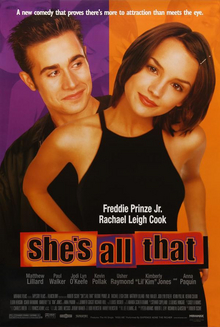
Plot and themes
At its core the story adapts the Pygmalion idea—an attempt to reshape identity and social standing—into a contemporary high‑school setting. The narrative explores themes of appearance versus character, performative popularity, and the consequences of treating people as projects rather than equals. While the premise is light and comedic, several scenes probe the characters' insecurities and the social mechanics of adolescent life.
Cast and characters
The film stars Freddie Prinze Jr. and Rachael Leigh Cook in the leading roles, supported by a young ensemble that included Paul Walker and Matthew Lillard. Other contributors and the broader supporting cast add comic beats and school‑life texture, and the movie also features Owen Wilson in a memorable small role. The characters are deliberately archetypal—popular student, outsider, best friend, rival—which helps the film both conform to and play with genre expectations.
Origins and influences
The screenplay reworks the long‑standing theatrical and cinematic theme of transformation and social mobility exemplified by George Bernard Shaw's play Pygmalion and by classic film adaptations directed by filmmakers such as George Cukor. Critics and scholars have noted parallels between She's All That and earlier works like My Fair Lady, though the modern setting shifts emphasis from manners and language to teen social rituals.
Release, reception, and legacy
Released at the height of a 1990s teen‑movie wave, the film performed strongly at the box office and reached No. 1 during its opening week. Critical response ranged from praise for its charm and cast chemistry to criticism of predictable plotting and reliance on makeover tropes. Over time it became shorthand for the high‑school makeover rom‑com and remains frequently referenced in popular culture and retrospective accounts of 1990s cinema.
Remakes and adaptations
The story's structure and commercial success prompted later interest in revisiting the concept. In 2015 a new version was announced by The Weinstein Company, described as a contemporary reimagining; proposals and reports about remakes attest to the original's enduring place in the genre. The film continues to be used in discussions about representation, gender roles in romantic comedies, and the ethics of transformation narratives.
- Notable features: Pygmalion‑inspired plot, prom climax, soundtrack that captured 1990s teen culture.
- Typical discussions: Makeover trope, social class in teen films, late‑90s pop‑culture influence.
For further reading on teen cinema trends and cinematic adaptations of Pygmalion, see related resources and analyses linked from film history collections and critical surveys.
Genre context · Lead actor · Lead actress · Supporting actor · Supporting actor · Ensemble · Cameo · Pygmalion · Cukor · My Fair Lady · Remake news
Questions and answers
Q: Who directed She's All That?
A: She's All That was directed by Robert Iscove.
Q: What is the movie based on?
A: The movie is a modern retelling of George Bernard Shaw's play Pygmalion and George Cukor's 1964 movie My Fair Lady.
Q: Who stars in the film?
A: The film stars Freddie Prinze Jr., Rachael Leigh Cook, Paul Walker, Matthew Lillard, Richard Hammond and Owen Wilson.
Q: When was it released?
A: She's All That was released in 1999.
Q: How successful was it at the box office?
A: It reached No. 1 at the box office in its first week of release and was one of the most popular teen movies of the late 1990s.
Q: Is there any news about a remake of this movie?
A: In April 2015, it was announced that The Weinstein Company will be remaking She's All That.
Related articles
Author
AlegsaOnline.com She's All That (1999 film) Leandro Alegsa
URL: https://en.alegsaonline.com/art/89714
Sources
- boxofficemojo.com : "She's All That (1999)"
- thewrap.com : "She's All That Remake In The Works"
- natoonline.org : "Night's Skies | In Focus, Volume II, Number 8"
- movies.com : "M. Night Shyamalan on How People See His Movies, Plus: What '90s Rom-Com Did He Secretly Write?"
- popwatch.ew.com : "M. Night Shyamalan and 'She's All That': Did he really write it? | PopWatch | EW.com"
- themarysue.com : "Comment #933013221 on M. Night Shyamalan Probably Did Not Write She's All That"
- decider.com : "M. Night Shyamalan Helped 'She's All That' Deliver The Most Memorable F*ck in Teen Comedy History"
- thedailybeast.com : "'She's All That' 15th Anniversary: Cast and Crew Reminisce About the Making of the '90s Classic"
- huffpost.com : "The Dance Scene No One Wanted: An Oral History Of The 'She's All That' Prom"
- cosmopolitan.com : "10 Things You Probably Never Knew About "She's All That""
- globalfilmlocations.net : "She's All That (1999) Film Locations"
- metacritic.com : "She's All That 1999"
- rottentomatoes.com : "She's All That"