
Barend Biesheuvel — Dutch politician and Prime Minister (1971–1973)
Barend Willem Biesheuvel (1920–2001) was a Dutch statesman of the Anti-Revolutionary Party, served as Prime Minister 1971–1973, and held senior parliamentary and ministerial posts. He studied law at the Free University Amsterdam.
Overview
Barend Willem Biesheuvel (born 5 April 1920 in Haarlemmerliede) was a prominent Dutch politician associated with the Anti-Revolutionary Party (ARP). He served as Prime Minister of the Netherlands from 1971 until 1973 and held several senior positions in government and parliament during a long public career. He died on 29 April 2001 in Haarlem.
Image gallery
4 Images
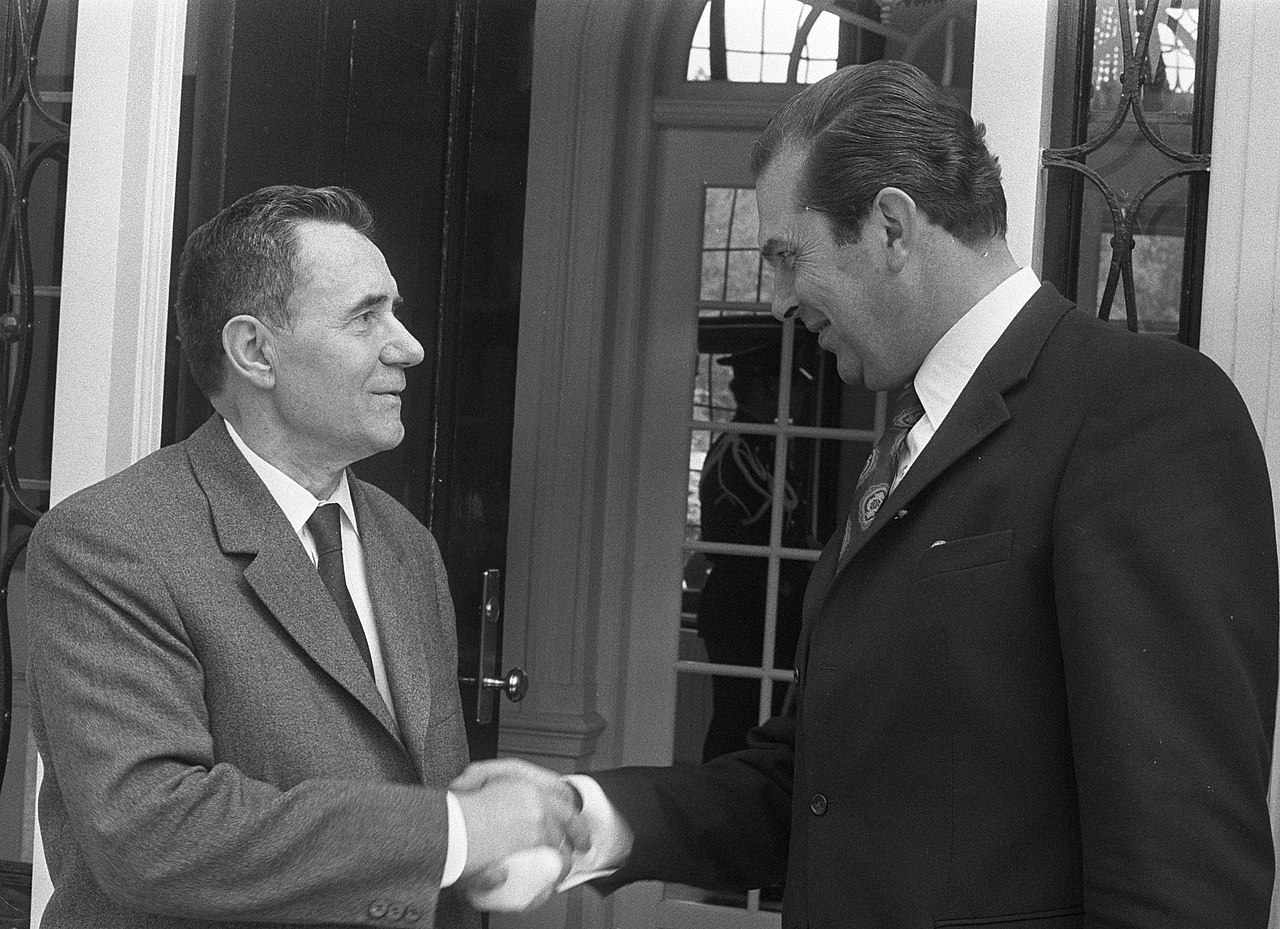


Political career and offices
Biesheuvel's public roles combined executive and legislative responsibilities. He acted as a government minister and as deputy prime minister, served as a member and parliamentary leader in the House of Representatives (the Second Chamber), and later represented Dutch interests in the European Parliament. Key roles include:
- Prime Minister (1971–1973)
- Deputy Prime Minister and cabinet minister at various times
- Member and parliamentary leader in the Second Chamber
- Member of the European Parliament during the era before direct elections
Education and background
He studied law at the Free University Amsterdam, an institution with close ties to several Christian-democratic politicians of his generation; the university is often cited in accounts of his formation and public outlook (Free University). His upbringing and education informed a pragmatic, faith-informed approach to politics.
Context and significance
Biesheuvel led a coalition government in a period marked by social and economic change in the early 1970s. His tenure reflected the coalition-building typical of Dutch politics and the importance of consensus among Christian-democratic and other parties. The Anti-Revolutionary Party of which he was a leading figure later became part of the Christian Democratic Appeal, a major force in post-war Dutch politics.
Later life and legacy
After leaving the premiership he remained active in public life, including involvement in European institutions (European Parliament record) and party affairs. He was a member of the Reformed Christian tradition, a detail noted in many biographical accounts (religious affiliation). Contemporary assessments highlight his role as a consensus politician who navigated coalition complexities and represented an era of pillarized Dutch politics.
Further reading and records
Biographical summaries, parliamentary archives and university records provide primary reference points for his career: birth and local records (birth record), obituary and municipal sources (death notice), parliamentary histories (parliamentary archive), and university material (academic profile). Additional modern overviews and institutional pages give context to his European service and party activity (European profile, confessional background).
Tags
Related articles
Author
AlegsaOnline.com Barend Biesheuvel — Dutch politician and Prime Minister (1971–1973) Leandro Alegsa
URL: https://en.alegsaonline.com/art/8963
Sources
- parlement.com : Bio at Parlement.com
- commons.wikimedia.org : Barend Biesheuvel