
Sestertius — Roman coin of the Republic and Empire
The sestertius was an ancient Roman denomination, worth two and a half asses and commonly four to a denarius. It evolved from a small bronze unit into a large brass imperial coin used for accounting and propaganda.
Overview
The sestertius (Latin: sestertius; plural sestertii or sesterces) was a standard denomination in Roman coinage. Originally a small bronze unit used during the Republic, it became best known in the early Imperial period as a substantial brass or orichalcum coin. Its monetary worth was set at two and a half asses, so that four sestertii equalled one denarius under the classical weight system. The coin served both commercial and official accounting purposes and frequently appears in ancient financial records.
Image gallery
6 Images


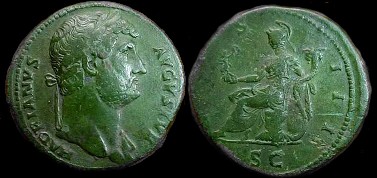
Characteristics and appearance
Under the emperors the sestertius grew into a large, heavy piece that displayed detailed portraits and scenes. Obverses typically bore the emperor's head, while reverses commemorated public works, deities, victories, or dynastic propaganda. The metal and size made it suitable for fine relief and pictorial designs, which are important to archaeologists and art historians studying Roman imagery.
- Value: 2.5 asses; four sestertii = one denarius.
- Common metals: bronze in the Republic; large brass (orichalcum) in the Empire.
- Accounting symbol: often abbreviated HS in inscriptions.
History and development
The denomination has roots in the Republican coin system and continued after Augustus’s monetary reforms, when coin types were standardized. Through the early and high Empire the sestertius remained prominent. Over later centuries, as imperial coinage and monetary systems changed, the coin diminished in importance and eventually disappeared from circulation; however, its image-rich examples persisted in hoards and collections.
Uses, significance and collecting
Sestertii were practical for medium-value transactions and were used in public accounting, wages, and price lists. Their detailed designs also made them vehicles for official messages: emperors used reverses to advertise building projects, military successes, and imperial ideology. Today sestertii are studied by numismatists and collectors for their historical inscriptions, portraits, and the insights they give into Roman economy and propaganda. For general context on Roman coin types and standards see Roman coin studies and resources on ancient coinage.
Notable facts and distinctions
In modern descriptions English writers sometimes call it a sesterce. The plural forms and abbreviations (sestertii, sesterces, HS) can vary in texts. Because many imperial sestertii survive in good condition, they remain among the most informative numismatic sources for portraits of emperors and pictorial programs of the Roman state.
Related articles
Author
AlegsaOnline.com Sestertius — Roman coin of the Republic and Empire Leandro Alegsa
URL: https://en.alegsaonline.com/art/89150