
Sea snail — marine gastropod overview, biology, and significance
Sea snail is the common name for marine gastropod mollusks: diverse, usually shelled animals found from shorelines to the deep sea with varied diets, life histories, cultural uses and conservation concerns.
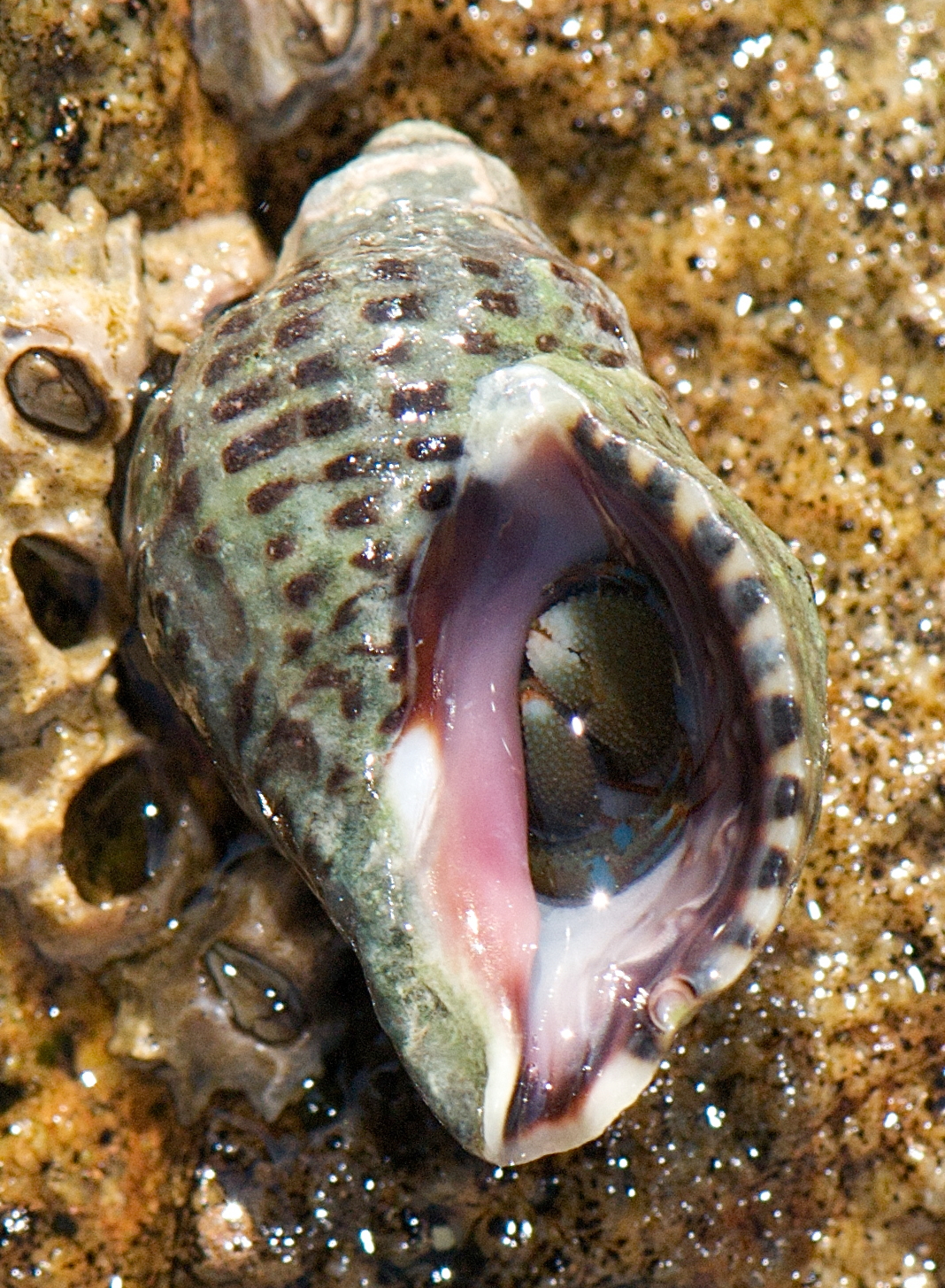
Sea snail is the informal name for marine gastropod mollusks that usually possess an external shell. This common label covers many families and forms, including periwinkles, whelks, conchs, cowries, limpets, abalones and turret shells. Sea snails occur in nearly all marine habitats: rocky intertidal zones, seagrass beds, coral reefs, sandy shores, mudflats and the deep sea.
Image gallery
6 Images




Characteristics
Typical anatomy includes a muscular foot for movement, a mantle that secretes a calcareous shell, and a radula — a rasping ribbon of teeth used in feeding. Shells range from tightly coiled to cap-like plates and vary greatly in size, thickness and ornamentation. Many species have an operculum, a hardened plate that closes the shell aperture when the animal retracts. Respiratory structures include gills or modified mantle cavities; some species have a siphon for drawing water into the mantle.
Ecology and life cycle
Sea snails perform diverse ecological roles: herbivores and grazers control algal growth, predators feed on other mollusks or worms, and scavengers consume carrion. Reproductive strategies vary: some species have separate sexes while others are hermaphroditic. Many produce planktonic larvae (veligers) that disperse with ocean currents before settling and metamorphosing into juveniles, though some have direct development.
Feeding, adaptation and research
The radula is central to feeding and shows adaptations to diet: grazing species scrape algae, predatory species may bore shells or inject venom. Notably, cone snails produce complex peptide venoms used in neurobiological research and drug discovery. Sea snail shells are common in the fossil record and are useful indicators in paleontology and environmental studies.
Human uses and conservation
People harvest some sea snails for food, shells and the aquarium trade. Overharvesting, habitat loss, pollution and ocean acidification threaten many populations by reducing habitat quality and impairing shell formation. Conservation measures include regulated fisheries, protected areas and habitat restoration. Sea snails are ecologically important and also serve as indicators of coastal ecosystem health.
Related articles
Author
AlegsaOnline.com Sea snail — marine gastropod overview, biology, and significance Leandro Alegsa
URL: https://en.alegsaonline.com/art/88277