
Scottish Borders
Council area in southern Scotland on the border with England, known for rolling hills, historic abbeys, textile heritage and market towns such as Galashiels, Hawick and Kelso.
Overview
The Scottish Borders is a council area in the southern part of Scotland that shares a long land border with England. Often shortened to "the Borders," the area combines rural landscapes, market towns and a distinctive cultural identity shaped by centuries of frontier life. The council's administrative centre is at Newtown St Boswells.
Image gallery
5 Images


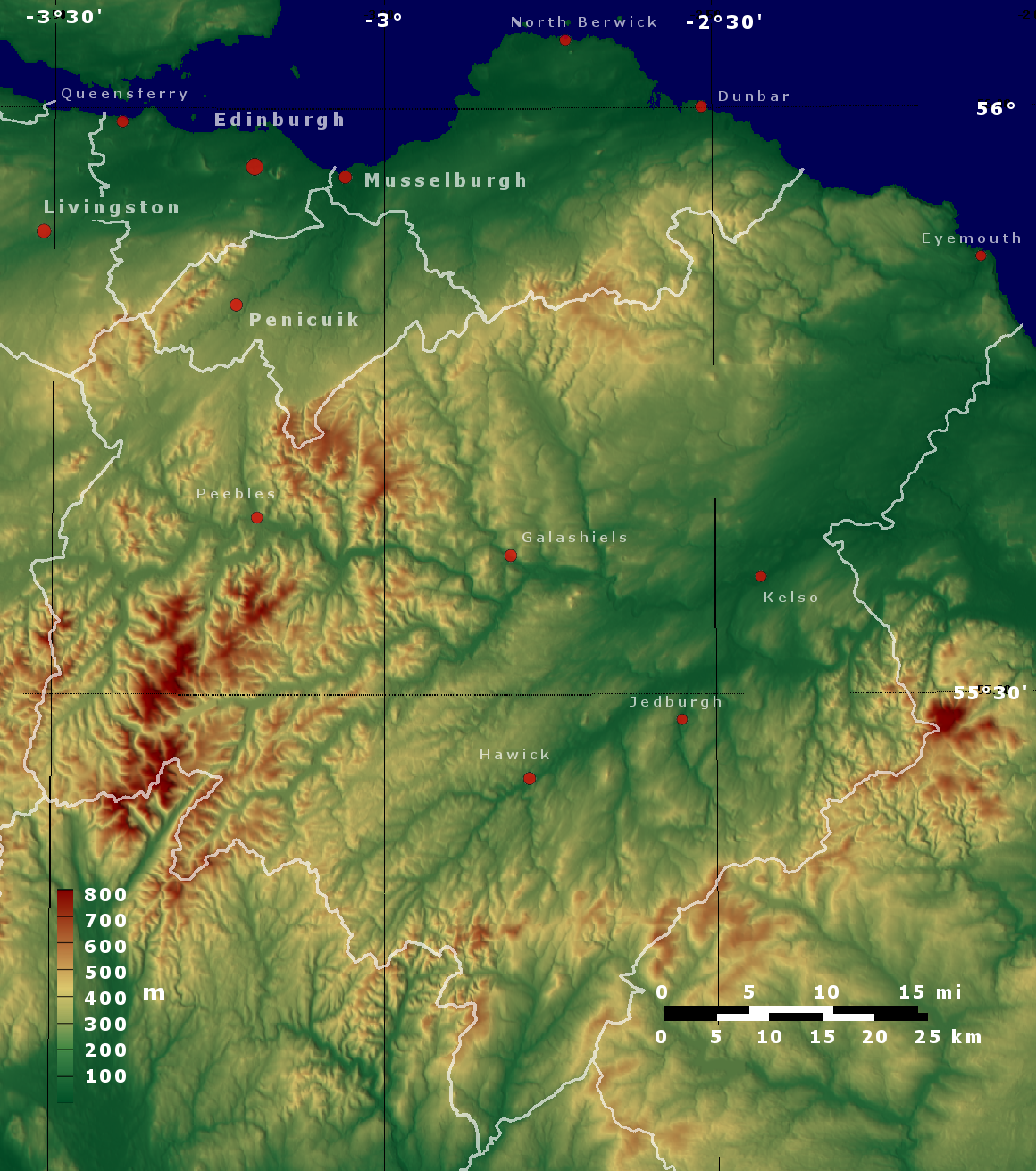

Geography and principal towns
Stretching across the eastern portion of the Southern Uplands, the region is drained by several rivers, most notably the River Tweed, which is famous for salmon fishing and picturesque valleys. The council area incorporates territory from historic counties such as Berwickshire, Peeblesshire, Selkirkshire and Roxburghshire. Principal towns and settlements include:
- Galashiels
- Hawick
- Kelso
- Peebles
- Jedburgh
- Eyemouth and Duns
History and identity
The Borders have a long history as a frontier zone between Scotland and England. Through the medieval and early modern periods the area was marked by warfare, raids and the activities of the Border Reivers — clans and families who raided across the border. Ruined abbeys such as Melrose, Jedburgh and Dryburgh reflect the medieval monastic presence and the turbulent history of the region. The modern administrative area was formed during late-20th-century reorganisations of Scottish local government.
Economy, culture and traditions
Agriculture—especially sheep farming—has been a backbone of the local economy for generations, and the Borders are internationally associated with tweed and knitwear manufacturing. Towns in the area host markets, textile factories and craft producers. Cultural life includes traditional events such as the Common Ridings, which commemorate historic border duties, and a strong tradition of storytelling and ballads; the novelist and historian Sir Walter Scott is closely associated with the region and his former home, Abbotsford, draws visitors.
Attractions and outdoor pursuits
Visitors are drawn to walking and cycling routes through rolling hills, river valleys and forests, as well as to historic sites, castles and abbey ruins. Fishing on the Tweed, equestrian activities, and staged cultural festivals are important for tourism. Transport links were improved in the 2010s when a railway connection to the central belt was restored, helping to make the area more accessible from Edinburgh and beyond.
Administration and further information
The council provides local services from its headquarters and maintains information for residents and visitors; see the local authority pages at Scottish Borders Council for official guidance. The Borders retain a distinctive blend of rural economy, historic sites and living traditions that continue to shape community life today.
Related articles
Author
AlegsaOnline.com Scottish Borders Leandro Alegsa
URL: https://en.alegsaonline.com/art/88124