
Scottish Highlands: geography, history, and culture
Comprehensive overview of the Scottish Highlands: landscape, geology, ecology, cultural history, economy and modern significance, with distinctions from the Lowlands and key natural features highlighted.
Overview
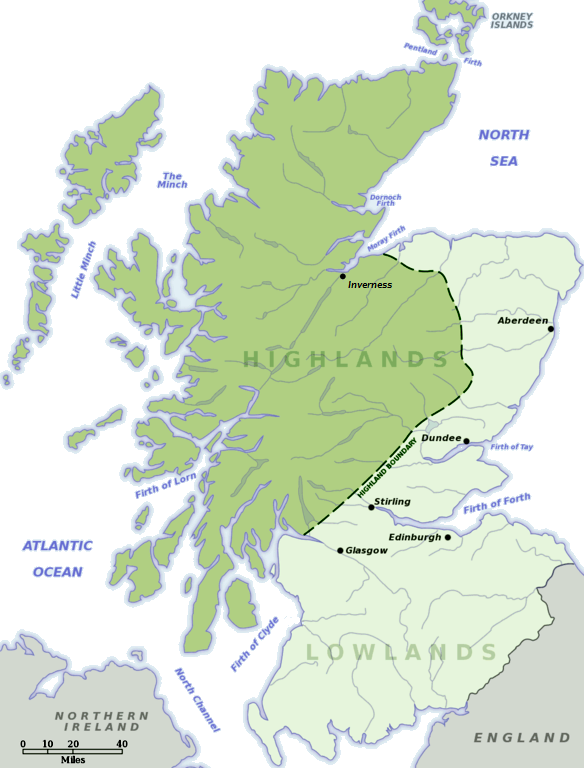
The Scottish Highlands is a historic and geographic region in the northern and northwestern part of Scotland. It is commonly defined as the area north and west of the Highland Boundary Fault and is often described in cultural and travel literature as a distinct historic region. The Highlands are associated with a particular landscape of mountains, deep glens and freshwater lochs, a strong Gaelic heritage in place names and traditions, and a history of clan society and rural communities. For general background see the historic region entry and introductory resources.
Image gallery
10 Images


Geography and geology
The Highland Boundary Fault marks a major division in Scotland's geology and landscape. The Highland Boundary Fault separates the older, harder rocks of the Highlands from the younger sedimentary rocks of the Lowlands; geological summaries and interpretations of the fault are available here. North of the fault the bedrock is mainly ancient crystalline igneous and metamorphic material, contrasted with the softer sedimentary rocks to the south. Geologists often refer to the fundamental rock types when discussing regional variation (igneous and metamorphic versus sedimentary formations), and the distinction helps explain differences in topography and soil.
A prominent internal feature is the Great Glen, a glacially formed rift that runs from southwest to northeast and contains a series of lochs, including Loch Ness. The Great Glen forms a corridor dividing the region: the Grampian Mountains lie to the southeast while the Northwest Highlands lie on the other side. Peaks such as Ben Nevis and upland plateaus like the Cairngorms are among the region's most notable landforms.
Natural environment and notable features
- High plateaus, steep glens and mountain corries shaped by repeated glaciation.
- Deep freshwater lochs, extensive peatlands and heather moorland supporting unique soil and plant communities.
- Wildlife typical of upland Britain: red deer, golden eagle, otter, capercaillie in some areas and a range of specialized upland plants.
- Cultural and landscape attractions: scenic drives, historic sites, whisky distilleries and areas prized for hillwalking and nature study.
History, culture and distinction
The Highlands have a long social history in which clan structures and kinship played an important part. Gaelic language and culture were widespread historically, and many place names retain Gaelic origins. From the 17th to 19th centuries the region experienced military conflict, the Jacobite risings, and social change including the Highland Clearances, all of which altered settlement patterns and land use. These transformations contributed to migration both to Lowland Scotland and abroad, while language and cultural revival efforts have persisted into the modern era.
Economy, land use and modern significance
Traditional activities such as crofting, sheep grazing and small-scale agriculture continue in many glens, often alongside forestry, freshwater fisheries, tourism and a spirits industry centred on malt whisky. Renewable energy projects, notably wind and hydroelectric developments, operate across parts of the Highlands and raise ongoing discussions about landscape, community benefit and conservation. The scenic and cultural values of the region also support a substantial visitor economy focused on outdoor recreation and heritage.
Conservation and management
Conservation efforts address habitats, rare species and peatland restoration as well as the management of deer and invasive species. Parts of the Highlands are protected through national and local designations, conservation initiatives and community land ownership models intended to balance ecological protection with rural livelihoods. For practical information on the region, maps, geological overviews and regional descriptions see linked resources on the Lowlands comparison, the Highland Boundary Fault, rock-type discussions (igneous/metamorphic and sedimentary), the Great Glen, the Grampian Mountains and the Northwest Highlands.
Questions and answers
Q: What is the Scottish Highlands?
A: The Scottish Highlands is an historic region of Scotland.
Q: Where is the Highland Boundary Fault located?
A: The Highland Boundary Fault is located to the north of the Scottish Lowlands.
Q: What type of rocks are found in the Scottish Lowlands?
A: The Scottish Lowlands is made up of softer sedimentary rocks.
Q: What separates the hard rocks of the Scottish Highlands from the softer rocks of the Scottish Lowlands?
A: The Highland Boundary Fault separates the hard igneous and metamorphic rocks to the north from the softer sedimentary rocks of the Scottish Lowlands in the south.
Q: How are the Highlands divided?
A: The Highlands are divided in two parts which are the Grampian Mountains to the southeast and the Northwest Highlands.
Q: What divides the Grampian Mountains and the Northwest Highlands?
A: The Great Glen divides the Grampian Mountains to the southeast from the Northwest Highlands.
Q: Why are the Highlands considered historic?
A: The Highlands are considered historic due to their rich history and cultural significance in Scotland.
Related articles
Author
AlegsaOnline.com Scottish Highlands: geography, history, and culture Leandro Alegsa
URL: https://en.alegsaonline.com/art/88137