
Scar (The Lion King): Disney’s calculating antagonist
Scar is the principal villain of Disney’s The Lion King, a cunning, jealous lion who plots Mufasa’s death and seizes the throne. Voiced by Jeremy Irons with singing by Jim Cummings, he remains an iconic animated antagonist.
Overview
Scar is the principal antagonist of Disney’s animated feature The Lion King, produced by Walt Disney Pictures. He is introduced as the embittered younger brother of King Mufasa and the paternal uncle of the protagonist, Simba. Scar’s defining traits are envy, rhetorical wit and strategic cruelty: he prefers manipulation and planning over direct confrontation, using persuasion and alliances to achieve his ends. His most recognizable musical moment is the menacing number Be Prepared, which underscores his ambition to seize the throne.
Image gallery
4 Images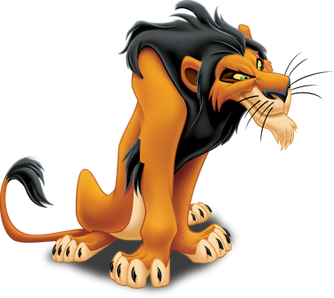


Design and animation
Visually, Scar is intended to contrast sharply with the noble, broad-shouldered Mufasa. Supervising animator Andreas Deja contributed to a design that emphasizes Scar’s gaunt facial structure, darker coat and mane, and a distinctive facial scar that implies past violence and personality. Animators used subtle facial expressions, thin-lipped smiles and sinuous body language to convey his cerebral menace, distinguishing him from more physically dominant characters in the film. The animation choices reinforce Scar’s role as an outsider and a schemer, often framed in shadow or with angled compositions to heighten dramatic tension.
Voice, music and performance
The speaking voice of Scar in the original 1994 film was provided by Jeremy Irons, whose cultured, sardonic delivery shaped public perception of the character. For some of Scar’s singing passages, particularly the more demanding musical sections, additional vocals were supplied by Jim Cummings. This blend of performers allowed the character to maintain consistent vocal personality while meeting musical requirements. Directors and casting teams have noted the importance of vocal nuance in giving Scar his urbane but poisonous charm.
Role in the story
Scar’s narrative function is that of the calculating usurper. He engineers a crisis that results in Mufasa’s death and the exile of Simba, then claims rulership by presenting the exile as the only way to preserve order. With Scar on the throne, the Pride Lands decline, illustrating the consequences of illegitimate rule and mismanagement. The plot culminates when Simba returns to confront Scar, exposing the betrayal and restoring balance.
Themes and interpretations
Critics and scholars commonly read Scar as embodying jealousy and corrupt ambition. His methods—covert persuasion, opportunistic alliances with the hyenas, and rhetorical manipulation—invite comparisons to classical and Shakespearean villains who achieve power through cunning rather than force. The film frames Scar’s reign as destructive to both social order and the environment, reinforcing themes of responsibility, ecological stewardship and rightful leadership.
Appearances and adaptations
- Main 1994 animated film: Scar is the central antagonist in The Lion King, whose actions drive the core drama.
- Expanded media: Scar appears indirectly or in flashback across sequels, television series and ancillary materials; his legacy shapes later conflicts and character motivations in the franchise (see related franchise entries at related pages).
- Stage musical: The Broadway and international stage adaptations reinterpret musical and dramatic elements of Scar’s role, often expanding staging and choreography for his key scenes.
- 2019 reinterpretation: A later photorealistic remake presented a reimagined Scar with a different vocal portrayal and altered visual tone, reflecting a contemporary approach to the character in a new medium.
Reception and legacy
Scar is widely regarded as one of Disney’s most memorable villains. Audiences and reviewers have highlighted his intelligence, dark humor and the unsettling contrast between cultured speech and ruthless intent. The character has been noted in discussions of villainy in popular culture and film studies for the way voice performance, animation and songwriting combine to create a complex antagonist. Scar’s influence can be seen in later portrayals of charismatic villains in animated and live-action media.
Notable facts
- Scar’s alliance with the hyenas operationalizes his status as an outsider, relying on numbers and fear rather than respect from his own pride.
- The role blends spoken acting and separate musical performance to achieve its full effect, a technique used elsewhere in animation when songs demand different vocal qualities.
- Interpretations of Scar’s character often reference classical archetypes and invite readings that connect family betrayal and political ambition to broader dramatic traditions.
- For details on production credits, voice casting and animation techniques, see studio and production notes linked in related resources (credits, animation notes).
Scar remains a frequent subject of analysis in film criticism, theatre studies and fan discussion, in part because his charisma, verbal dexterity and tragic outcomes give the character depth beyond a conventional villain archetype. For readers seeking more on individual performances and adaptations, consult materials on casting and voice work as well as critical essays on the film’s themes and staging (character studies, performance analyses).
Related articles
Author
AlegsaOnline.com Scar (The Lion King): Disney’s calculating antagonist Leandro Alegsa
URL: https://en.alegsaonline.com/art/87776