
Bangladesh Standard Time (BST)
Bangladesh Standard Time is the national time standard for Bangladesh, set at UTC+6 with no current daylight saving time; it aligns broadly with the 90°E meridian.
Overview
Bangladesh Standard Time, commonly abbreviated BST, is the official time observed throughout Bangladesh. It is six hours ahead of Coordinated Universal Time (UTC+6) and applies uniformly across the country. The designation is used in civil, commercial, and governmental contexts to schedule daily activities and coordinate transport, communications, and international interactions. For a general discussion of how time zones are defined and used, see time zone references.
Image gallery
2 Images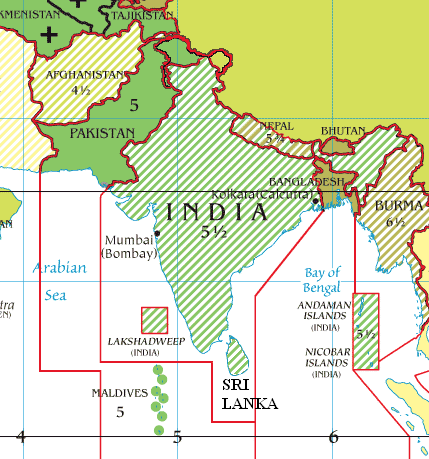

Characteristics
The principal characteristics of Bangladesh Standard Time include:
- UTC offset: +6 hours (UTC+6).
- Single nationwide zone: Bangladesh uses one standard time over its territory rather than regional offsets.
- Geographic basis: the standard closely corresponds to the 90°E longitude, which is consistent with the +6 hour offset from UTC.
- No current daylight saving: Bangladesh does not observe seasonal clock changes at present; see discussion of daylight saving time below.
History and development
Timekeeping in the area now known as Bangladesh has evolved alongside regional political changes. Under colonial and later administrative arrangements, local times followed broader Indian subcontinental practices. After independence, the country established a single national standard anchored to UTC+6 to simplify scheduling and administration. In 2009 Bangladesh briefly introduced summer time as an experimental measure, advancing clocks by one hour for part of the year; the trial ran from June 19 until December 31, 2009, and has not been continued.
Uses, comparisons and notable points
Bangladesh Standard Time is used in all civil affairs, including public transport timetables, television scheduling, government services, and business operations. It is important for international trade and communications because it determines workday overlap with regional neighbors. For example, India operates at UTC+5:30, making Bangladesh 30 minutes ahead of India; Myanmar uses UTC+6:30 while Pakistan is UTC+5.
One notable point is that the abbreviation "BST" can be ambiguous internationally: it is also commonly used for British Summer Time. Context usually clarifies which meaning is intended, but written communication may specify "Bangladesh Standard Time (UTC+6)" to avoid confusion. For legal or technical definitions, official government publications and national legislation are the authoritative sources.
Practical implications
For travelers, businesses, and software systems, Bangladesh Standard Time means setting clocks and timestamps to UTC+6 and not applying automatic daylight saving adjustments. Systems that rely on time zone databases or configuration files should use the region identifier corresponding to Bangladesh to ensure correct offsets and avoid confusion with other uses of the BST label.
Related articles
Author
AlegsaOnline.com Bangladesh Standard Time (BST) Leandro Alegsa
URL: https://en.alegsaonline.com/art/8731
Sources
- timeanddate.com : "Bangladesh Starts Daylight Saving Time on June 19, 2009"
- timeanddate.com : "No Daylight Saving Time in Bangladesh in 2010"