
Sandbach — market town in Cheshire, England
Sandbach is a historic market town in Cheshire, England, known for its Anglo-Saxon stone crosses, market square and community events. It lies within the area once administered as the Borough of Congleton.
Sandbach is a small market town in the historic county of Cheshire, in the United Kingdom. It sits at a local crossroads and has long served neighbouring villages as a place for trade, worship and civic life. Administratively it lies within the area formerly known as the Borough of Congleton, and remains a distinct settlement with a compact town centre and surrounding residential suburbs.
Image gallery
9 Images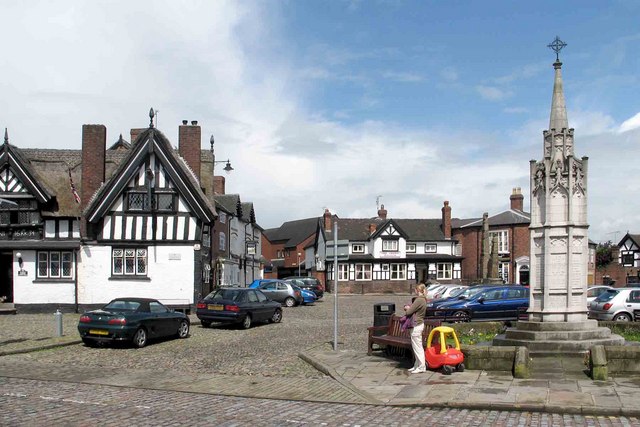


Name and origins
The name Sandbach probably derives from Old English elements meaning a sandy stream or brook and reflects the local landscape. The town grew up around a market square and parish church; evidence of settlement in the area stretches back to early medieval times. Several surviving monuments and buildings show layers of history from the Anglo-Saxon period to later medieval and post-medieval development.
Notable landmarks and character
- Sandbach Crosses — a pair of carved stone crosses standing in the market square, regarded as rare survivals from the early medieval period.
- Market square and town centre — traditional shops, civic buildings and a town hall form the focal point for local markets and gatherings.
- Churches and historic buildings — including parish churches and listed domestic buildings that illustrate local architectural styles.
The town combines a historic core with modern housing, community facilities, and small businesses. Weekly markets, occasional fairs and local festivals contribute to the town's social life and economy.
History, transport and governance
Sandbach's role as a market hub developed over centuries; its position on local roads encouraged trade and services for surrounding rural areas. Transport links have evolved but the town remains accessible by regional roads and public transport, connecting it to larger Cheshire towns and cities. Local governance has changed over time with shifting district boundaries, yet civic identity is centred on town institutions and community groups.
Today Sandbach is often noted for its visible medieval heritage, active market traditions and a mixture of historic and contemporary amenities that make it a focal point for the surrounding rural hinterland.
Related articles
Author
AlegsaOnline.com Sandbach — market town in Cheshire, England Leandro Alegsa
URL: https://en.alegsaonline.com/art/86961