
Sandal Bar — upland region of the Rechna Doab in Punjab
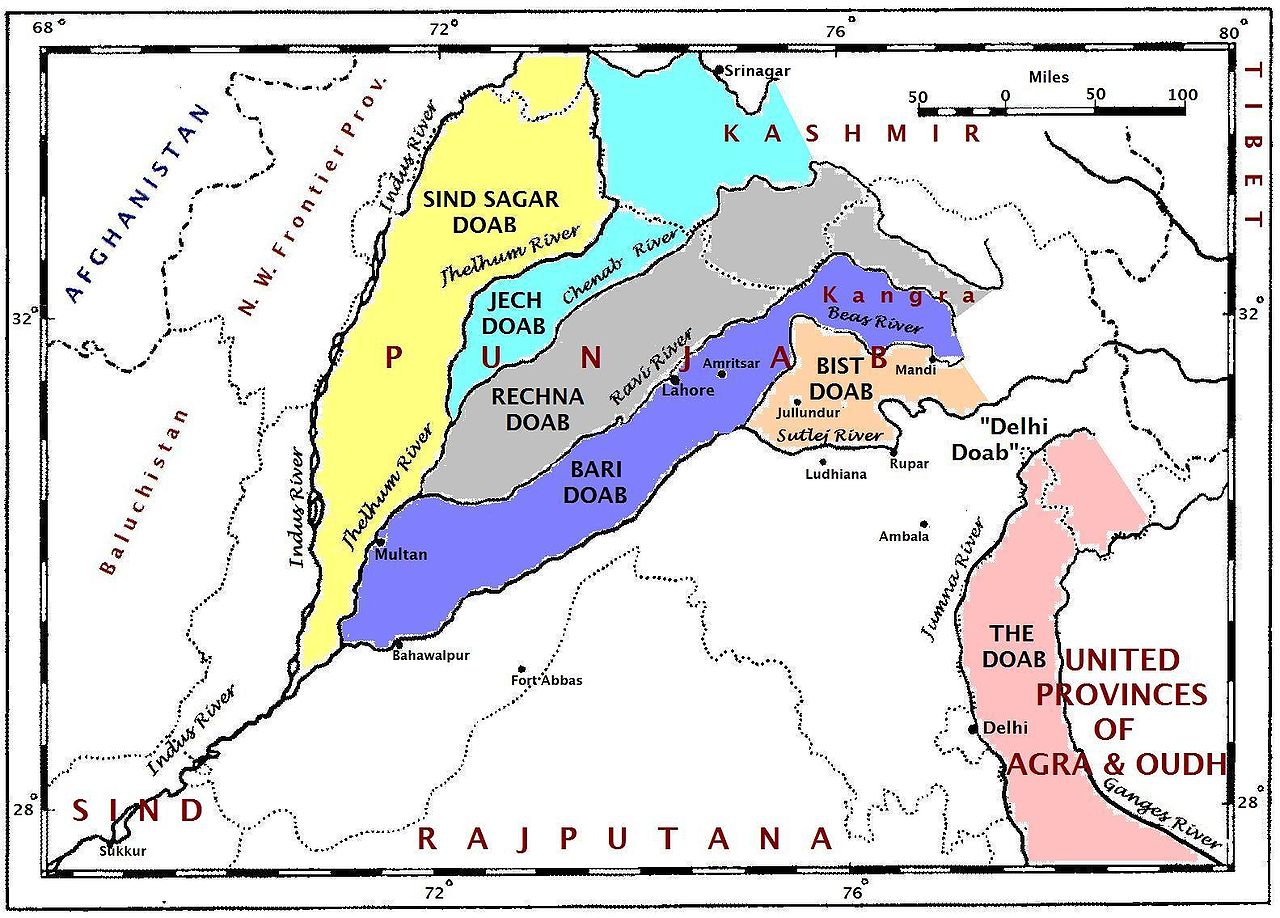
Sandal Bar is a historic upland tract in the Rechna Doab of Punjab, lying between the Ravi and Chenab rivers. Once a wooded pastureland, it was transformed by irrigation and agriculture in the 19th–20th centuries.
Overview
Sandal Bar (Urdu: ساندل بار) is a traditional tract of the Punjab plains located in the Rechna Doab — the land between the Ravi and the Chenab rivers. The name describes a broad upland area; locally, the word "bar" refers to a wooded or grass-covered expanse that lacked naturally available water for settled cultivation. Sandal Bar covers an area roughly on the order of tens of kilometres from east to west and north to south and forms part of the larger cultural and physical region of Punjab.
Image gallery
4 Images


Geography and landscape
Topographically the Bar is a gently undulating plain higher than the adjacent riverbeds. Before modern irrigation, the zone was characterised by dry soils, seasonal grasses and scattered trees or scrub. Soils and drainage vary across the tract, but the common factor was an absence of perennial surface water, which limited traditional agriculture and encouraged pastoral uses.
Key characteristics
- Climate: generally semi-arid with hot summers and a pronounced dry season.
- Vegetation: native grasses, thorny scrub and isolated forests in pockets where groundwater rose near the surface.
- Land use before irrigation: seasonal grazing, woodland resource gathering and some shifting cultivation.
History and development
Historically Sandal Bar was sparsely settled compared with the more fertile riverbanks. During the colonial period of the 19th century, large-scale canal works introduced irrigation across many Bar tracts in Punjab. Canal colonisation altered the economy and settlement patterns: formerly pastoral lands were converted to settled agriculture, villages expanded, and market towns grew. This transformation is part of a wider change that affected several Bar regions across Punjab.
Economy and cultural significance
After irrigation, the area became an important zone for cereal and cash-crop agriculture and for establishing permanent villages and towns. The Bars, including Sandal Bar, remain an important element of Punjabi rural identity and folklore; they are often referenced in Punjabi literature and songs as distinctive landscapes that shaped local livelihoods and social life.
Notable facts and distinctions
Sandal Bar should be understood as a regional landscape type rather than a strict administrative unit. Its boundaries are ecological and cultural, overlapping modern districts and municipalities. The term 'bar' is applied to several upland tracts in Punjab, each with similar origins as once-waterless grazing lands that were transformed by irrigation and settlement over the last two centuries.
Related articles
Author
AlegsaOnline.com Sandal Bar — upland region of the Rechna Doab in Punjab Leandro Alegsa
URL: https://en.alegsaonline.com/art/86956