
San Bernardino, California: Overview, history, and significance
San Bernardino is a major city in Southern California's Inland Empire, serving as county seat with a diverse economy, proximity to the San Bernardino National Forest, and a complex modern history.
Overview
San Bernardino is a city in Southern California that serves as the county seat of San Bernardino County. Located in the western part of the Mojave Desert’s transition to the coastal ranges, it is a principal city of the Inland Empire, a sprawling metropolitan area east of Los Angeles. The city is a regional center for government, education and transportation, and has a population of roughly 210,000 residents by recent estimates. For official information see the city website and county resources at San Bernardino County.
Image gallery
10 Images



Geography and climate
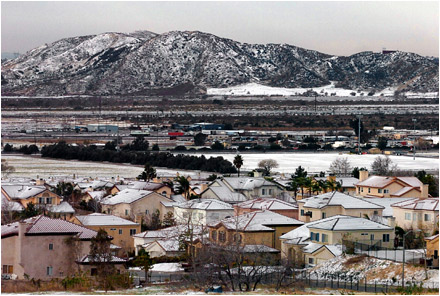
San Bernardino occupies a broad valley rimmed by hills and mountains, with the San Bernardino National Forest rising to the north. The location gives the city a climate characterized by hot, dry summers and cooler winters with occasional mountain snowfall at higher elevations. Climatically it is commonly described as hot-summer Mediterranean (Köppen Csa), which influences local vegetation, water management and outdoor recreation. The city’s position also places it along key transportation corridors used by freight and commuters in the region.
History and development
The area around San Bernardino has earlier Native American settlement and Spanish and Mexican-era land use. European-American settlement intensified in the mid-19th century, including an early Mormon colony and subsequent civic development. Over the 20th century the city grew with the expansion of Southern California, agriculture, and later logistics and manufacturing tied to regional highways and rail lines. San Bernardino once formed part of the historic route of U.S. Route 66 and today remains connected by major freeways.
Economy, institutions and landmarks
San Bernardino’s economy spans public administration, education, healthcare, logistics, and retail. California State University, San Bernardino is a major educational institution in the city and a local employment center. Other notable features include municipal facilities, cultural sites, and access to open space and trails in nearby mountains. Visitors and residents encounter a mix of historic districts, civic architecture and commercial corridors.
Challenges and notable events
The city has faced fiscal and social challenges in recent decades, including a municipal bankruptcy filing in 2012 and efforts to restore services and stabilize finances. It experienced a nationally reported mass shooting on December 2, 2015, which had a profound effect on the community. Recovery and redevelopment initiatives have been part of local government and civic planning efforts since.
Places of interest
- Educational and cultural institutions such as regional universities and museums
- Outdoor access to the San Bernardino National Forest and mountain trails
- Historic corridors and remnants of Route 66 that attract visitors
San Bernardino remains an important inland hub with a layered history, a diverse population, and ongoing initiatives focused on economic resilience, public safety and regional connectivity.
Related articles
Author
AlegsaOnline.com San Bernardino, California: Overview, history, and significance Leandro Alegsa
URL: https://en.alegsaonline.com/art/86780
Sources
- calafco.org : "California Cities by Incorporation Date" · web.archive.org
- sbcity.org : "Elected Officials"
- sbcity.org : "City Manager's Office"
- sbcity.org : "City of San Bernardino - Common Council"
- www2.census.gov : "2016 U.S. Gazetteer Files"
- geonames.usgs.gov : "San Bernardino"
- quickfacts.census.gov : "San Bernardino (city) QuickFacts"