
Banca (Pyrénées-Atlantiques)
Banca is a small rural commune in the French Basque Country, in the Pyrénées-Atlantiques department of southwestern France, known for its mountain setting, pastoral landscape and historic mining heritage.
Overview
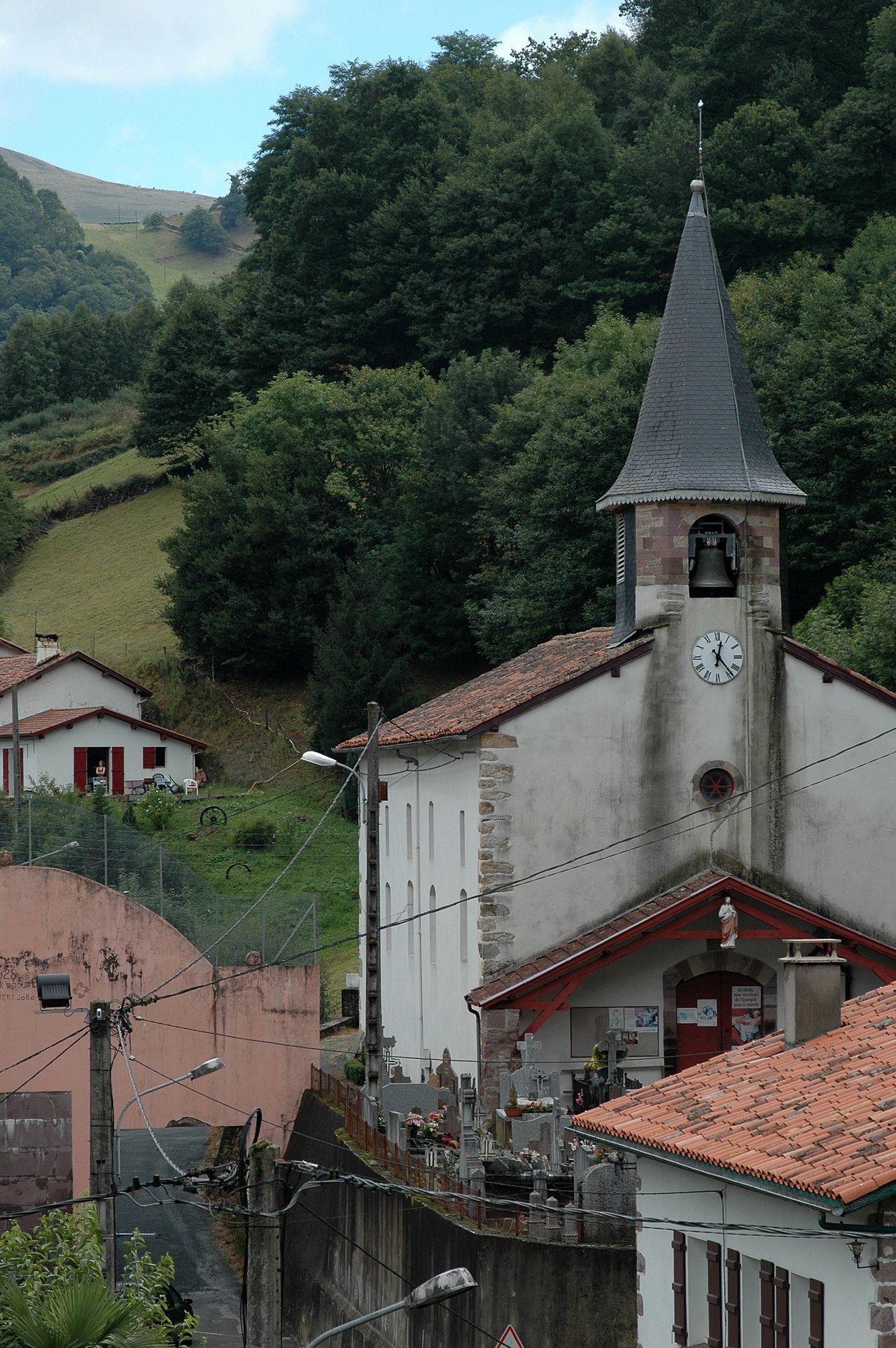
Banca is a commune in the south-west of France, located in the cultural area often called the French Basque Country. Administratively it belongs to the Pyrénées-Atlantiques département and sits within the broad mountain zone of the western Pyrenees of France. The settlement is small and rural, characterised by a village nucleus surrounded by upland pastures, woodland and steep river valleys.
Image gallery
5 Images


Geography and environment
The commune occupies part of a narrow valley in the foothills of the Pyrenees. Its landscape combines mixed forests, grazed commons and rivers descending toward larger basins. The local environment supports traditional pastoral activities and seasonal transhumance in nearby higher pastures. The setting makes it a base for walking, nature observation and experiencing the mountain countryside of the region.
History and heritage
Banca has a long rural history shaped by pastoralism, local trade and mineral extraction. Remnants of historical mining and metallurgical activity are an important part of the local heritage and are visible in the landscape and place names. Over centuries the hamlet developed ties across the nearby border with Spain and shares many cultural traits of the Basque-speaking area.
Local economy and tourism
Economic life in the commune is largely agricultural and pastoral, supplemented by small-scale tourism. Visitors come for hiking, scenery, traditional architecture and to explore traces of the area's industrial past. Local products, artisanal food and seasonal events linked to Basque culture are part of the visitor experience.
Characteristics and notable facts
- Small population and rural settlement pattern typical of mountain communes.
- Strong regional Basque cultural influences and local traditions.
- Visible remains of historical mining activity contribute to cultural tourism.
Administration and access
Banca is administered as a French commune and is linked by local roads to neighbouring villages and valley towns. Its remote mountain location gives it a quiet, largely self-contained character while remaining part of the wider administrative and cultural region of the Pyrénées-Atlantiques.
Related articles
Author
AlegsaOnline.com Banca (Pyrénées-Atlantiques) Leandro Alegsa
URL: https://en.alegsaonline.com/art/8661