
Ballymena — market town in County Antrim, Northern Ireland
Ballymena is a mid-sized market town in County Antrim, Northern Ireland. Known for its market heritage, nearby landscapes, and notable residents, it serves as a local commercial and cultural centre.
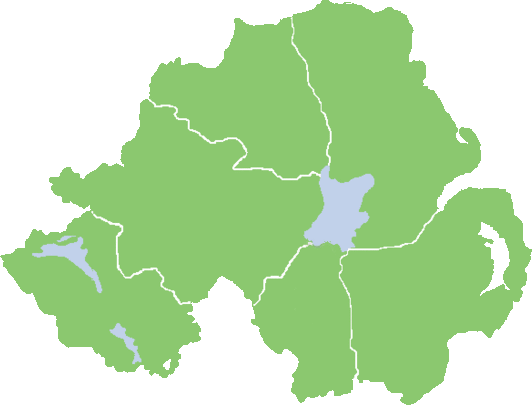
Ballymena is a market town in County Antrim in the north-east of the island of Ireland. Located within modern administrative Northern Ireland, it is also part of the United Kingdom. The town functions as a regional centre for retail, services and light industry and has a long association with markets and local trade. Visitors and researchers can find more basic information about the town through local online resources such as Ballymena information.
Image gallery
8 Images


Origins and development
The name Ballymena comes from the Irish An Baile Meánach, often translated as "the middle town". Its origins lie in a rural market settlement that expanded over centuries. Growth accelerated from the 18th and 19th centuries with improved roads, the arrival of industry and the development of civic institutions. Its location within Northern Ireland shaped political and economic changes in the 20th century, while its ties to the wider United Kingdom influenced infrastructure and administration.
Character, economy and transport
Today Ballymena combines a compact town centre with surrounding suburban and rural areas. Traditional sectors such as linen, textiles and engineering gave way to a more mixed economy: retail, manufacturing, food processing and small enterprises. Transport links include regional roads and bus services that connect the town to neighbouring towns and cities, and it serves as a shopping and service hub for surrounding communities.
Local landmarks and attractions reflect both natural and cultural features. Nearby hills and walking routes appeal to outdoor visitors, and the town supports museums, community theatres and historic churches. Points of local interest typically appear on tourist guides and community pages; further reading is available via general town portals such as local Ballymena pages.
- Notable sporting clubs and a lively high street
- Community festivals and seasonal markets
- Access to nearby rural scenery and heritage sites
Ballymena has been home to several well-known figures. The actor Liam Neeson and the political and church leader Ian Paisley are among those associated with the town, reflecting its cultural reach beyond the immediate region. For more historical or civic details, consult local archives and tourism information provided by regional authorities and community organisations.
Related articles
Author
AlegsaOnline.com Ballymena — market town in County Antrim, Northern Ireland Leandro Alegsa
URL: https://en.alegsaonline.com/art/8565
Sources
- northsouthministerialcouncil.org : NMSC annual report 2002 – Ulster-Scots
- doeni.gov.uk : Carrick Castle – Ulster-Scots
- scots-online.org : The Online Scots Dictionary
- film.guardian.co.uk : The Guardian Film website.
- ninis.nisra.gov.uk : Northern Ireland Neighbourhood Information Service website
- commons.wikimedia.org : Ballymena