
Ian Paisley: Northern Ireland clergyman and unionist politician
Profile of Ian Paisley (1926–2014), founder of the Free Presbyterian Church and the Democratic Unionist Party, long-serving MP for North Antrim and First Minister during the restoration of devolved government.
Overview
Ian Richard Kyle Paisley (6 April 1926 – 12 September 2014) was a prominent and polarizing figure in Northern Ireland public life. Known as a firebrand preacher and a determined unionist politician, he founded a conservative evangelical denomination and a major political party. His career combined religious leadership with decades of parliamentary activity and, late in life, a brief period as First Minister in a power-sharing government.
Image gallery
10 Images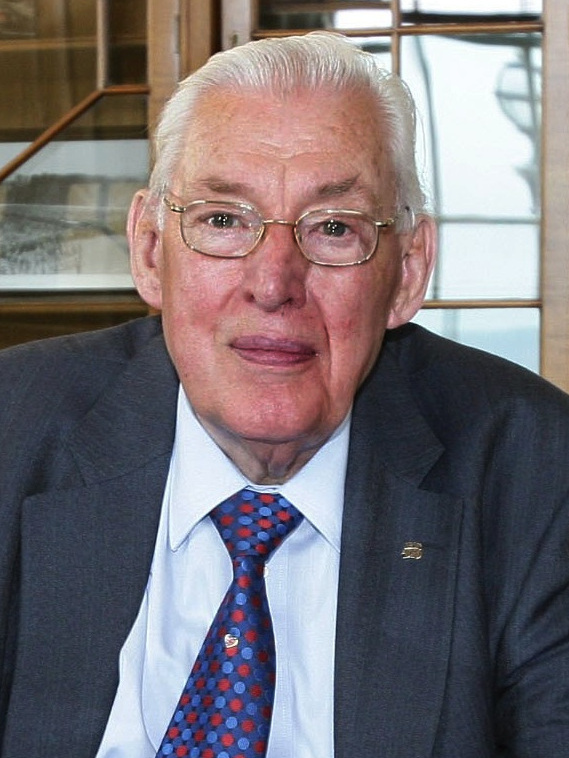





Religious leadership and beliefs
Paisley established the Free Presbyterian Church of Ulster in 1951, emphasizing evangelical Protestant doctrine, strict worship practices and opposition to Roman Catholic influence. He was commonly addressed as the Reverend Doctor Ian Paisley in public life. His sermons and speeches were marked by plain language and uncompromising theology, which attracted a dedicated following but also deep criticism for sectarian rhetoric.
Political career and offices
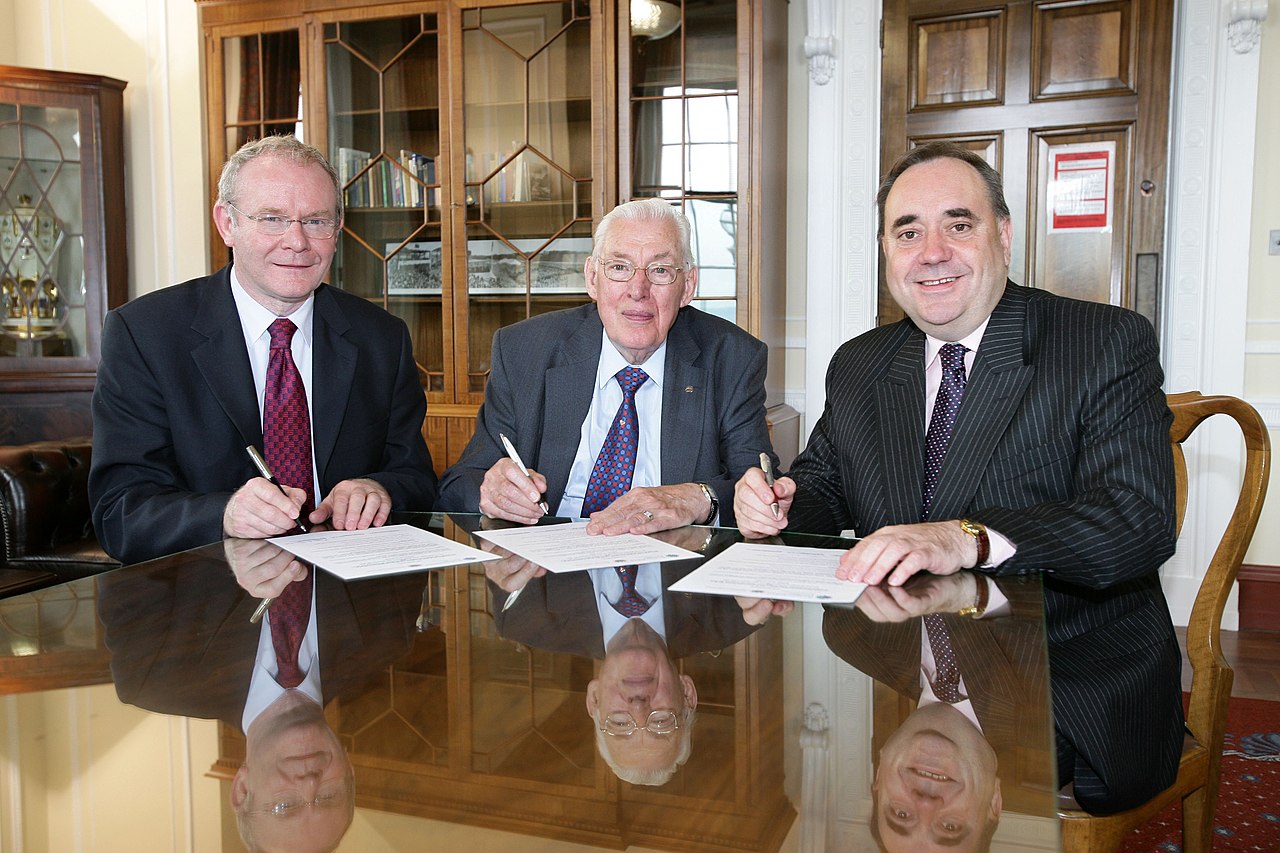
He moved from pulpit to politics and founded the Democratic Unionist Party (DUP) in 1971. Paisley represented North Antrim in the UK Parliament from 1970 until his retirement in 2010. After decades of opposition to agreements he saw as weakening Northern Ireland’s union with Great Britain, he ultimately agreed to participate in the power-sharing institutions established by the peace process. In May 2007 he became First Minister of Northern Ireland, serving jointly with Martin McGuinness as deputy First Minister until June 2008.
- Founder: Free Presbyterian Church (1951)
- Founder: Democratic Unionist Party (1971)
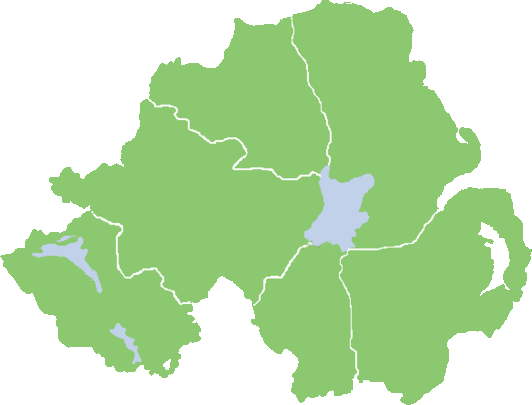
- Member of Parliament: North Antrim, 1970–2010
- First Minister: May 2007–June 2008
Controversy and later moderation
Paisley’s early career was marked by staunch anti-Catholic statements and an uncompromising unionist stance that many critics described as inflammatory. Over time, particularly during the negotiations and implementation of the St Andrews Agreement and the restored Assembly, he displayed a more pragmatic side by entering into power-sharing with former opponents. The public scenes of cooperation he later showed with nationalist leaders were seen by some as a major shift and by others as tactical.
Personal background, honours and death
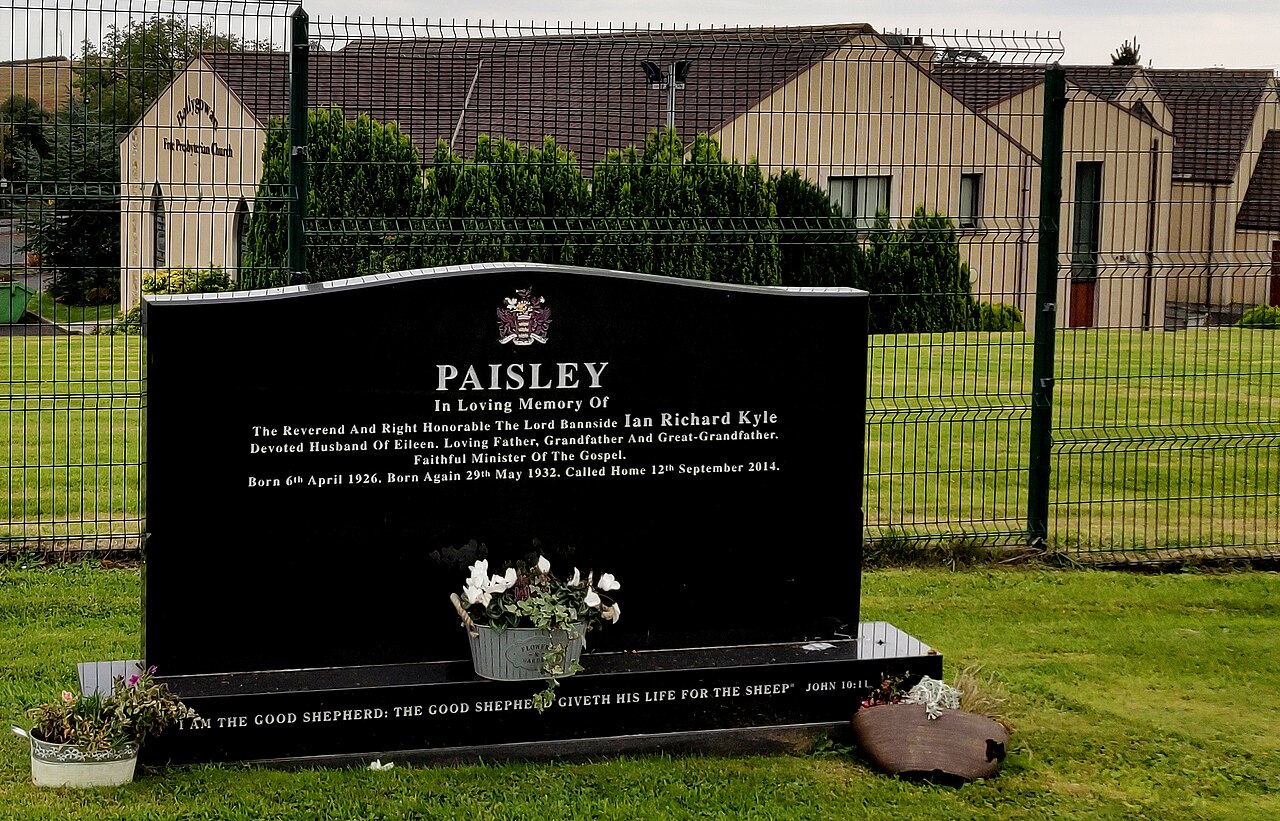
Born in Armagh and raised in Ballymena, Paisley remained closely associated with the communities of Northern Ireland throughout his life. After leaving the House of Commons he accepted a life peerage as Baron Bannside and sat briefly in the House of Lords. He died in Belfast on 12 September 2014 at the age of 88; health reports indicated he suffered from cardiomyopathy in his final years.
Further reading and context
The complexity of Paisley’s impact—religious, cultural and political—continues to be the subject of study. For contemporary accounts and more detailed chronology, see sources on his political role as a politician, the history of Northern Ireland, the founding of the Democratic Unionist Party, and his early life in Armagh and Ballymena. His long parliamentary constituency is covered under North Antrim, and accounts of his death were reported from Belfast with medical details noting cardiomyopathy.
Related articles
Author
AlegsaOnline.com Ian Paisley: Northern Ireland clergyman and unionist politician Leandro Alegsa
URL: https://en.alegsaonline.com/art/46339
Sources
- bbc.co.uk : "Former first minister and DUP leader Ian Paisley has died"
- bbc.co.uk : "Ian Paisley admitted to Ulster hospital"