
Roosevelt Island: history, landmarks, transport and contemporary life
Compact encyclopedia entry on Roosevelt Island: location in the East River, historical uses, key landmarks, transport links, governance and contemporary residential and institutional development.
Overview
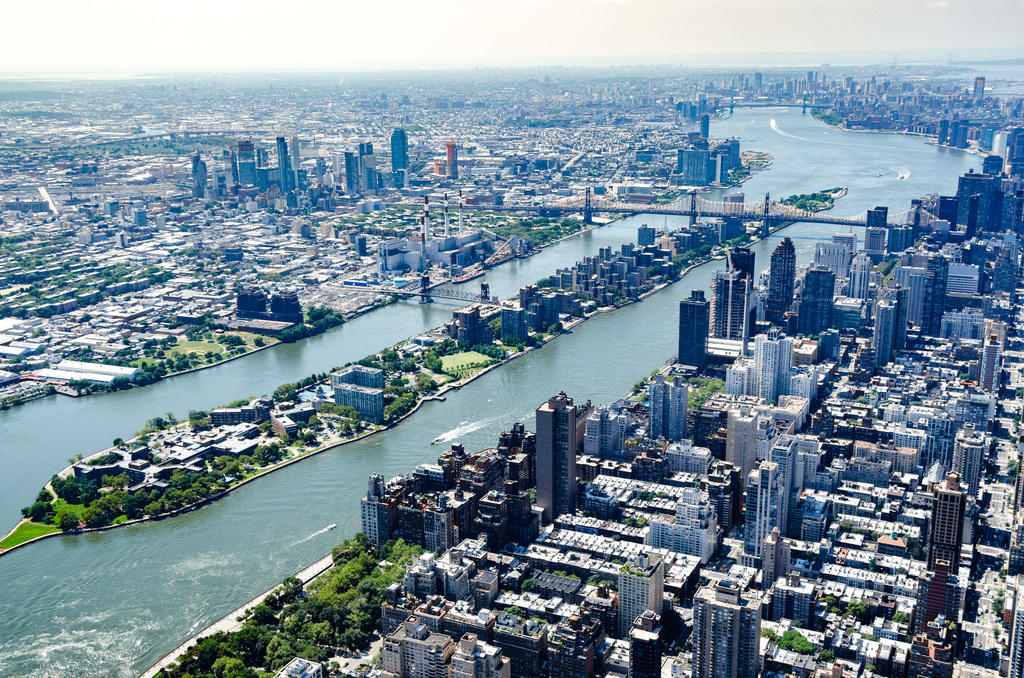
Roosevelt Island is a narrow, elongated island in the East River situated between the main island of Manhattan and the borough of Queens. Administratively it is part of the borough of New York City's Manhattan. The island today combines residential neighborhoods, public parks, academic and research facilities, and a number of historic institutional buildings.
Image gallery
10 Images



Geography and public spaces
The island's long, narrow shape produces extensive waterfront promenades and several small parks that offer views across the river. The southern tip hosts a prominent memorial park. Tree-lined paths and benches, as well as shoreline greenways, make the island a distinct, largely pedestrian-friendly enclave in the city's dense riverscape.
History and landmarks
Historically known by other names, the island was long the site of public institutions: hospitals, an asylum, an almshouse and a penitentiary shaped the built environment and public perception. Surviving landmarks include the ruins of a 19th-century hospital, a distinctive octagonal building reused for residential purposes, and a lighthouse from the island's institutional era. The southern memorial commemorates President Franklin D. Roosevelt and his public ideals.
Transport and access
Roosevelt Island is connected to Manhattan and Queens by several transport modes. A well-known aerial tram links the island to Midtown Manhattan, there is a subway stop on the IND 63rd Street line serving the island, and a road bridge connects it to Queens. Local pedestrian routes and bicycle facilities support day-to-day movement across the island.
Governance and development
The island has seen planned redevelopment since the late 20th century, led by public agencies and authorities that manage land use, services and infrastructure. Recent decades have brought mixed-income housing, new academic campuses and public open space, turning the island into an active residential and research neighborhood while retaining visible traces of its institutional past. For municipal and planning materials consult New York City sources, transit maps linked from Manhattan service pages, and regional guides referencing the Queens and East River context. Additional local histories and visitor information are available through dedicated Roosevelt Island resources.
Questions and answers
Q: Where is Roosevelt Island located in New York City?
A: Roosevelt Island is located in the East River, between Manhattan Island and the borough of Queens, and is part of Manhattan.
Q: Is Roosevelt Island a large or small island?
A: Roosevelt Island is a narrow island, meaning it is relatively small in size.
Q: What bodies of water surround Roosevelt Island?
A: Roosevelt Island is surrounded by the East River to the north, south, and west.
Q: Which borough is Roosevelt Island a part of?
A: Roosevelt Island is part of the borough of Manhattan.
Q: How can one access Roosevelt Island?
A: There are several ways to access Roosevelt Island, including by subway, bus, tramway, and ferry.
Q: What landmarks or attractions are located on Roosevelt Island?
A: Some landmarks and attractions on Roosevelt Island include the Franklin D. Roosevelt Four Freedoms Park, the Smallpox Hospital ruins, and the Roosevelt Island Tramway.
Q: Can pedestrians walk or bike across Roosevelt Island?
A: Yes, pedestrians and cyclists can access Roosevelt Island via the Roosevelt Island Bridge and the Roosevelt Island tramway, and there are several bike paths and walking trails on the island itself.
Related articles
Author
AlegsaOnline.com Roosevelt Island: history, landmarks, transport and contemporary life Leandro Alegsa
URL: https://en.alegsaonline.com/art/84055
Sources
- factfinder.census.gov : "FactFinder"
- nytimes.com : "An Island Joins the Mainstream"
- nytimes.com : "Name that Island"