
Romulus Augustus (Romulus Augustulus)
Last ruler usually called Western Roman Emperor, reigned 475–476 as a child and was deposed by Odoacer; his fall is a conventional marker for the end of the Western Roman Empire.
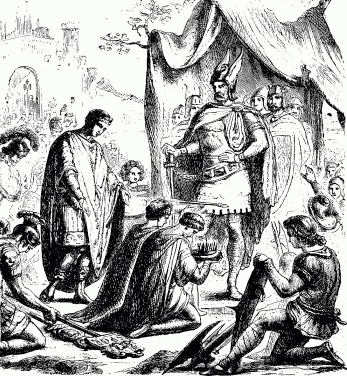
Romulus Augustus, commonly known by the diminutive Romulus Augustulus, is traditionally regarded as the last ruler of the Western Roman Empire. He held the imperial title for a short period from October 475 until his deposition on 4 September 476. Installed as a figurehead by his father, the magister militum Orestes, Romulus's reign was brief and largely symbolic, and his removal by the Germanic leader Odoacer is often cited as the end of Roman imperial rule in the west.
Image gallery
7 Images


Background and identity
Romulus was a young man—often described as a teenager—when elevated to the throne. His full name was Flavius Romulus, and he is sometimes given the birth year c. 461 in modern summaries. The nickname Augustulus ("little Augustus") appears in sources as a contemptuous reference to his youth and the limited authority he actually possessed. He succeeded to power following a coup that forced the previous emperor from office; real control rested with his father, who hoped to secure influence through a pliant son.
Deposition and immediate consequences
The decisive event of Romulus's brief reign was his overthrow by forces led by Odoacer, a commander of foederati (Germanic troops in Roman service). The revolt was prompted by refusals to satisfy the demands of these troops and by wider political instability. When Odoacer deposed Romulus on 4 September 476 he did not claim the imperial title for himself but sent the imperial regalia to the Eastern Roman court and accepted the title of patrician from Emperor Zeno, effectively placing Italy under his rule without restoring a Western throne.
- Reign: 31 October 475 – 4 September 476 (conventional dates)
- Known facts: son of Orestes; installed as a puppet emperor
- Aftermath: spared from execution and pensioned off; later life uncertain
Afterlife and historical significance
Contemporary and near-contemporary accounts say Romulus was spared by Odoacer and sent to live in a villa in Campania—later traditions associate this with the Castellum Lucullanum, the site of the Castel dell'Ovo in Naples. Precise details of his later life and death are not firmly recorded. Historians emphasize that while Romulus's deposition is a convenient symbolic end-point, the reality was more complex: the Eastern emperor continued to be a central authority in theory, and figures such as Julius Nepos are sometimes argued to have remained the lawful Western emperor in exile. Nevertheless, Romulus's removal marked a clear break in the pattern of imperial rule in western provinces and has become the conventional date for the fall of the Western Roman Empire.
Notes on sources and interpretation
Primary evidence for Romulus's life is limited and comes through later chroniclers and fragmentary records. Modern discussion therefore balances the traditional symbolic importance of 476 with recognition of ongoing political continuities and regional rulers. For overviews of the period and its personalities see general treatments of late antiquity and the transition from Roman to barbarian rule (Western Roman Emperor entries and surveys).
Related articles
Author
AlegsaOnline.com Romulus Augustus (Romulus Augustulus) Leandro Alegsa
URL: https://en.alegsaonline.com/art/83952