
Rocinha (largest favela in Brazil)
Rocinha is the largest and best‑known favela in Brazil, on a steep hillside in Rio de Janeiro. It is a densely built, mixed residential and commercial community with varied estimates of population and services.
Overview
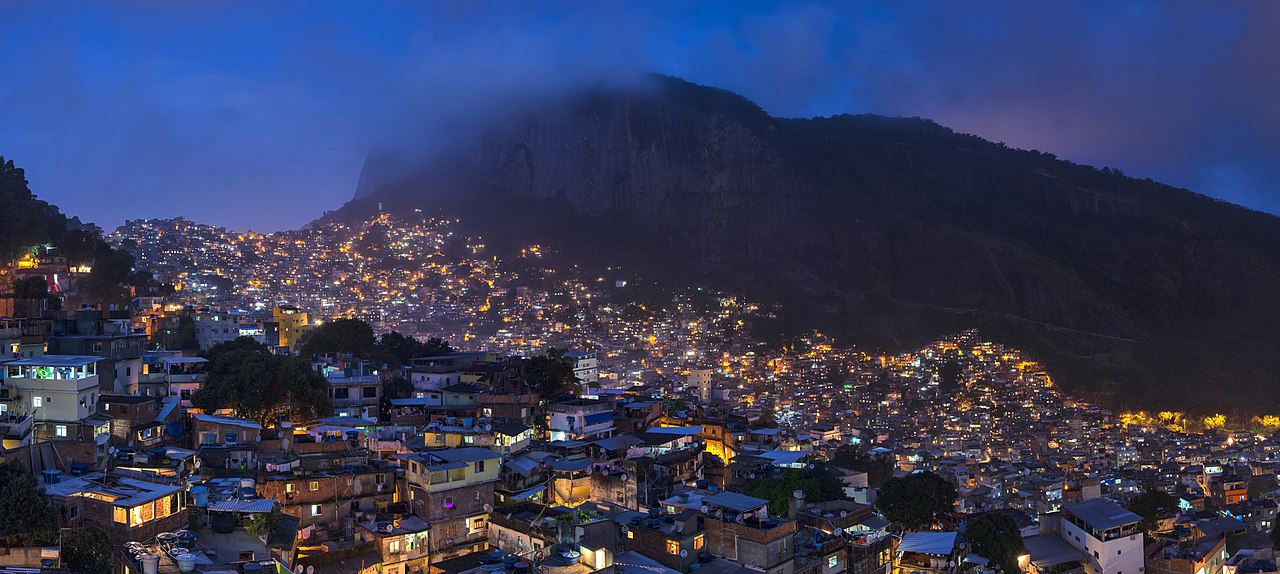
Rocinha is widely regarded as the largest favela in Brazil. It sits on a steep, densely settled hillside in the South Zone of Rio de Janeiro. Estimates of its population vary by source; some official counts and independent studies report figures in the tens of thousands, while other estimates are larger. Rocinha is notable for its compact urban fabric, strong local economy and visibility in Brazilian culture and media.
Image gallery
7 Images




Geography and urban form
The neighbourhood occupies a steep slope and is characterised by tightly packed housing stacked up the hill, narrow alleys and stairways, and a mix of self-built dwellings and more permanent brick or concrete structures. Streets are often too narrow for standard vehicles, and the built environment has grown organically rather than by formal urban planning. Despite these constraints, Rocinha contains a wide range of local services, small shops and community facilities.
History and development
Rocinha developed in the 20th century as migrants and low‑income workers moved toward Rio's south zone seeking employment. Over decades the settlement densified and transformed from informal shacks to many more solidly built homes. Efforts by municipal authorities, civil society and residents have alternated between periods of neglect and initiatives to improve infrastructure, sanitation and legal recognition of property.
Community life and economy
- Local economy: a mix of informal commerce, small enterprises, and formal businesses serving residents and visitors.
- Services: schools, clinics, churches, and cultural groups operate within the community despite limited public resources.
- Culture: Rocinha has contributed to music, art and popular culture and is a frequent subject in Brazilian media.
Challenges and notable facts
Rocinha faces common urban challenges such as uneven access to services, infrastructure deficits and public safety concerns. At the same time it demonstrates significant social resilience: strong neighborhood ties, entrepreneurial activity and community organizations play a central role in daily life. The favela also attracts tourists and researchers interested in urbanism, social policy and culture, which has brought both economic opportunity and controversy over representation and impact.
For further context on favelas and urban policy, see general resources on informal settlements and Rio's neighbourhoods.
Related articles
Author
AlegsaOnline.com Rocinha (largest favela in Brazil) Leandro Alegsa
URL: https://en.alegsaonline.com/art/83500
Sources
- portalgeo.rio.rj.gov.br : "Bairro: Rocinha"