
Robin Hood (1922 film)
A silent, lavish adventure starring Douglas Fairbanks, directed by Allan Dwan; noted for its scale, its 1922 Grauman's Egyptian Theatre premiere, and its place in early Hollywood spectacle.
Overview
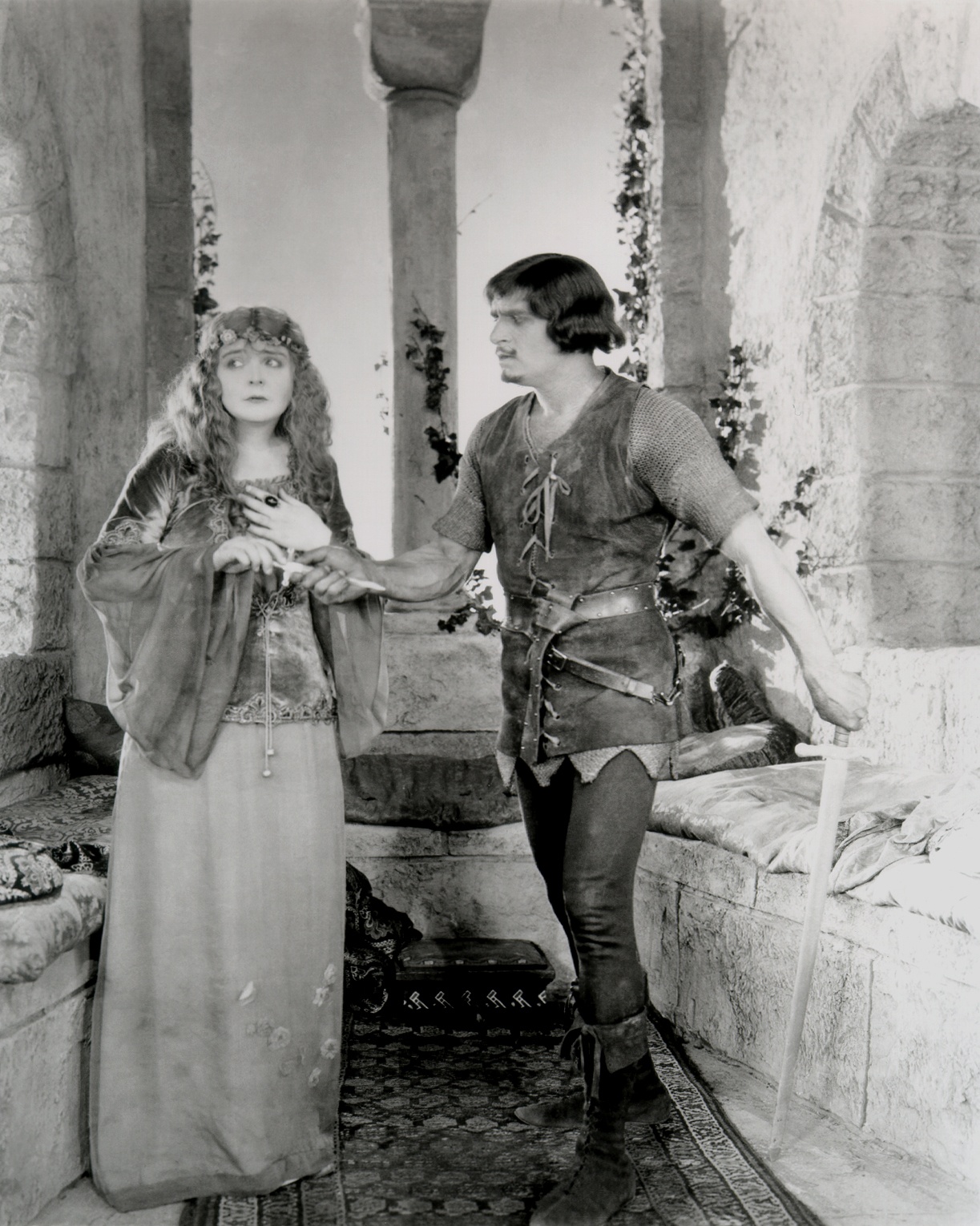
Robin Hood (full release title: Douglas Fairbanks in Robin Hood) is a 1922 silent film adaptation of the medieval English outlaw legend. Directed by Allan Dwan and headlined by Douglas Fairbanks, it is a large-scale costume adventure typical of the period's star-driven spectacles. The picture combined action, pageantry and elaborate sets to create a cinematic recreation of the Robin Hood story tailored to the tastes of 1920s audiences.
Image gallery
4 Images


Production and characteristics
The production was notable for its expense and ambition. Fairbanks, already a major box-office star, helped shape the film's heroic, athletic central figure and extravagant staging. Costumes, armed combat sequences and massed extras were emphasized to give the film a rich visual feel. As a silent film, much of its storytelling depended on physical performance, expressive direction and pictorial composition rather than spoken dialogue.
Cast, crew and release
- Star: Douglas Fairbanks, whose athletic persona defined the role
- Director: Allan Dwan
- Production: one of the most expensive films of its decade, widely reported to have cost around $1,000,000
The film premiered in Hollywood at Grauman's Egyptian Theatre on October 18, 1922, an event often cited as the first major Hollywood premiere. The choice of venue, Grauman's Egyptian Theatre, helped establish a template for future film openings in Los Angeles.
Contemporary reception
Contemporary critics generally praised the movie's spectacle and Fairbanks's charismatic lead performance, though not all responses were enthusiastic. Some commentators admired the film as a landmark in movie craft, while others felt parts of it were overly ornamental. For example, poet-critic Vachel Lindsay considered elements of the production ponderous and heavy on visual display rather than dramatic movement. The film's focus on spectacle over psychological nuance was a frequent point of discussion.
Legacy and significance
Robin Hood helped cement Fairbanks's image as a swashbuckling hero and demonstrated how popular legend could be adapted into screen spectacle. It is often contrasted with later sound-era versions, notably the popular Technicolor 1938 adaptation starring Errol Flynn, which emphasized different aspects of romance and action and reached a wider enduring popular audience. The 1922 film remains important in film history as an early example of large-scale Hollywood production, the star-centered costume epic, and as a milestone in the presentation of premieres and publicity.
Notable facts and further reading
While the film draws on the traditional Robin Hood legend, its tone and staging reflect Fairbanks's public persona and the filmmaking conventions of the early 1920s. As an artifact of silent-era cinema, it illustrates how physical acting, set design and cinematography were used to convey sweeping narratives before sound. For more context on Fairbanks, silent-era production practices and the film's place in Hollywood history, see contemporary and retrospective accounts available through film archives and reference collections: silent-era resources, studio histories and biographies of Douglas Fairbanks or studies of early Hollywood exhibition practices such as the institution of the Hollywood premiere.
Author
AlegsaOnline.com Robin Hood (1922 film) Leandro Alegsa
URL: https://en.alegsaonline.com/art/83438