
Rieden, St. Gallen (former municipality)
Rieden was a German-speaking former municipality in the See-Gaster district of the canton of St. Gallen, Switzerland; it merged with Ernetschwil in 2013 to form Gommiswald.
Overview
Rieden was a small, German-speaking former municipality located in the See-Gaster district of the canton of St. Gallen, in eastern Switzerland. Until its administrative change in 2013 it functioned as an independent local community with rural characteristics typical of the pre-Alpine landscapes of the region. The settlement pattern, local farms and wooded slopes reflect a village-scale economy and way of life rather than an urban centre.
Image gallery
3 Images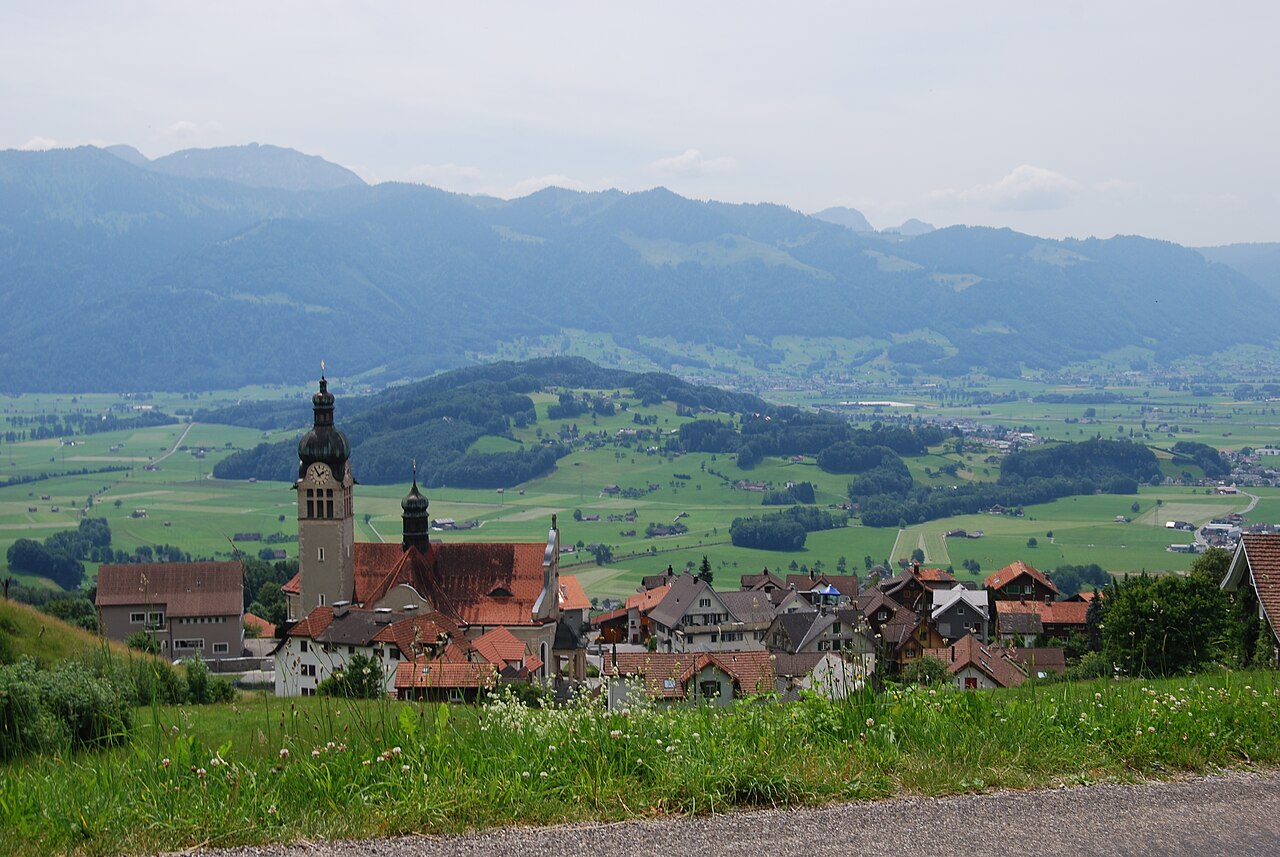


Geography and characteristics
The locality lay amid gentle hills and mixed agricultural land, with small clusters of houses and dispersed farmsteads. Key characteristics included:
- predominantly rural land use with pastures and arable plots,
- local roads connecting to nearby towns and public transport nodes,
- a community structure centred on a village core and surrounding hamlets.
Like many municipalities in the region, Rieden combined residential areas, small-scale agriculture and forested parcels, contributing to local biodiversity and scenic value.
History and development
Rieden has roots in the traditional settlement history of northeastern Switzerland: small farming communities, parish life and ties to regional market towns. Over centuries these communities adapted to changes in agriculture, transport and administration, while retaining local customs and built features such as a village church, farmhouses and communal infrastructure.
On 1 January 2013 the municipality joined with nearby Ernetschwil to form the new municipality of Gommiswald. This consolidation reflected wider cantonal efforts to streamline local governance, pool services and strengthen financial sustainability for small municipalities.
Today Rieden is referenced as a locality and former political entity. Its landscape, community facilities and traditions continue to contribute to the character of the larger municipality, while administrative responsibilities and many public services are managed at the Gommiswald level.
Related articles
Author
AlegsaOnline.com Rieden, St. Gallen (former municipality) Leandro Alegsa
URL: https://en.alegsaonline.com/art/82844
Sources
- bfs.admin.ch : Amtliches Gemeindeverzeichnis der Schweiz