
Renault 5 — compact hatchback and small‑car icon
Compact supermini produced by Renault from 1972 to 1996. Two generations, 3- and 5-door hatchbacks, petrol and diesel engines, notable Turbo performance versions, and a lasting influence on urban car design.
The Renault 5 is a compact supermini produced by Renault between 1972 and 1996. Designed as an economical, practical city car, it was offered primarily as a three- or five-door hatchback and became one of Renault's best-known small models. Its compact footprint, versatile interior and low running costs helped establish the 5 as a popular choice across Europe and in other markets where it was sold under alternative names.
Image gallery
10 Images

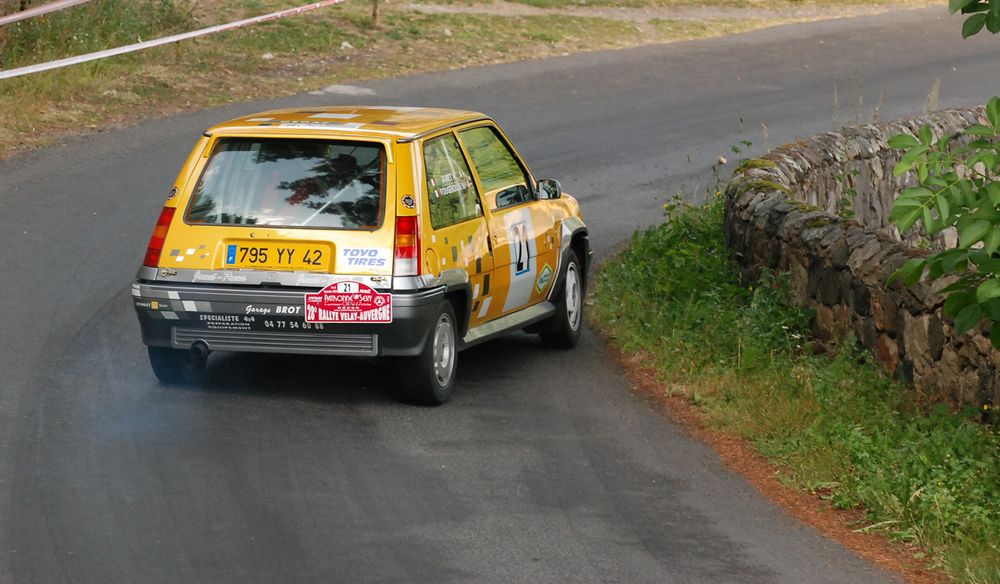


Design and characteristics
The car used a front-wheel drive layout with a transverse-mounted engine in standard versions, a configuration that maximised interior space for a small exterior size. Typical features included foldable rear seats for increased cargo flexibility, simple instrumentation aimed at cost-effective production, and a range of modestly sized four-cylinder petrol and diesel powerplants. Published engine outputs for production models ranged from around 35 to 94 hp, covering frugal commuter versions through to brisker mid-range trims.
Generations and production history
The Renault 5 was produced in two main generations. The first generation launched in 1972 and established the car's basic layout and popularity. A substantially revised second generation arrived in 1985 with updated styling and improved equipment. Although the Renault Clio (the model that followed the 5) took over as Renault’s mainstream supermini in 1990, the 5 continued as a budget-oriented Campus model and remained on sale until 1996.
Performance and special editions
Beyond economical city variants, Renault developed several high-performance versions to broaden the model's appeal. These included sporty factory-tuned trims often carrying names like Alpine or Gordini in some markets, and the much more radical Renault 5 Turbo. The Turbo models were engineered with a mid/rear-mounted turbocharged engine and a widened body to suit rallying and high-speed road use; official figures for Turbo power outputs are commonly given as roughly 110 or 160 hp depending on version, markedly higher than standard cars.
Uses, motorsport and legacy
The Renault 5 was used as an everyday urban transport, a family runabout and, in its sportier forms, a motorsport contender. Turbo variants were developed for competition and homologation, helping to raise the model’s profile in rallying. The 5 left a lasting legacy as an influential small car that showcased how packaging efficiency and affordability could be combined with a lively driving character in performance versions. In some markets it was marketed under local names, and it remains a familiar sight among classic-car enthusiasts.
- Body styles: 3- and 5-door hatchbacks
- Engines: four-cylinder petrol and diesel units; wide range of outputs — see engine options
- Generations: two main generations (1972 launch; 1985 revision)
- Successor: Renault Clio; Campus budget model continued until 1996
Today the Renault 5 is remembered both for its role in democratizing compact hatchbacks and for the contrast between its economical mainstream versions and its eye-catching Turbo performance models. Collectors prize well-preserved examples of the sporting variants, while the basic forms remain an important chapter in the evolution of small-car design.
Related articles
Author
AlegsaOnline.com Renault 5 — compact hatchback and small‑car icon Leandro Alegsa
URL: https://en.alegsaonline.com/art/82110