
Renault Espace: European MPV introduced in 1984
The Renault Espace is a multi-purpose vehicle (MPV) first shown in 1984. A seven-seat family car that helped define the European MPV segment, it evolved through five generations into a more crossover-like model.
The Renault Espace is a seven-seat multi-purpose vehicle (MPV) produced by Renault since 1984. Launched as an alternative to conventional estate cars and vans, the Espace is widely regarded as one of the pioneers of the European MPV category. Over its life the model has been offered with a range of petrol and diesel engines and with flexible seating arrangements intended for family and leisure use. Its name has been applied across multiple generations as the vehicle adapted to changing tastes and safety regulations.

Image gallery
10 Images




Design and defining characteristics
From the start the Espace emphasized interior space, modular seating and a high driving position. Early examples were notable for their unusual construction and packaging that maximized cabin volume and allowed up to seven occupants. Across subsequent generations the vehicle adopted more conventional automotive construction while retaining features valued by buyers: removable or fold-flat rear seats, a flat load floor when seats were stowed, and numerous storage compartments. Later models added modern safety, infotainment and driver assistance systems as these became standard in the market.
Generations and development
The Espace has passed through distinct generations, each reflecting shifts in engineering and market demand. Broadly:
- First generation (1984–1991): introduced the Espace concept to Europe, with an emphasis on interior flexibility and an innovative approach to body design.
- Second generation (1991–1996): refined styling and equipment levels to meet growing expectations for comfort and crash protection.
- Third generation (1996–2002): introduced a stretched variant often called the Grand Espace, offering extra passenger and luggage room.
- Fourth generation (2002–2014): the longest-running iteration, it received facelifts and incremental improvements during its lifetime to remain competitive.
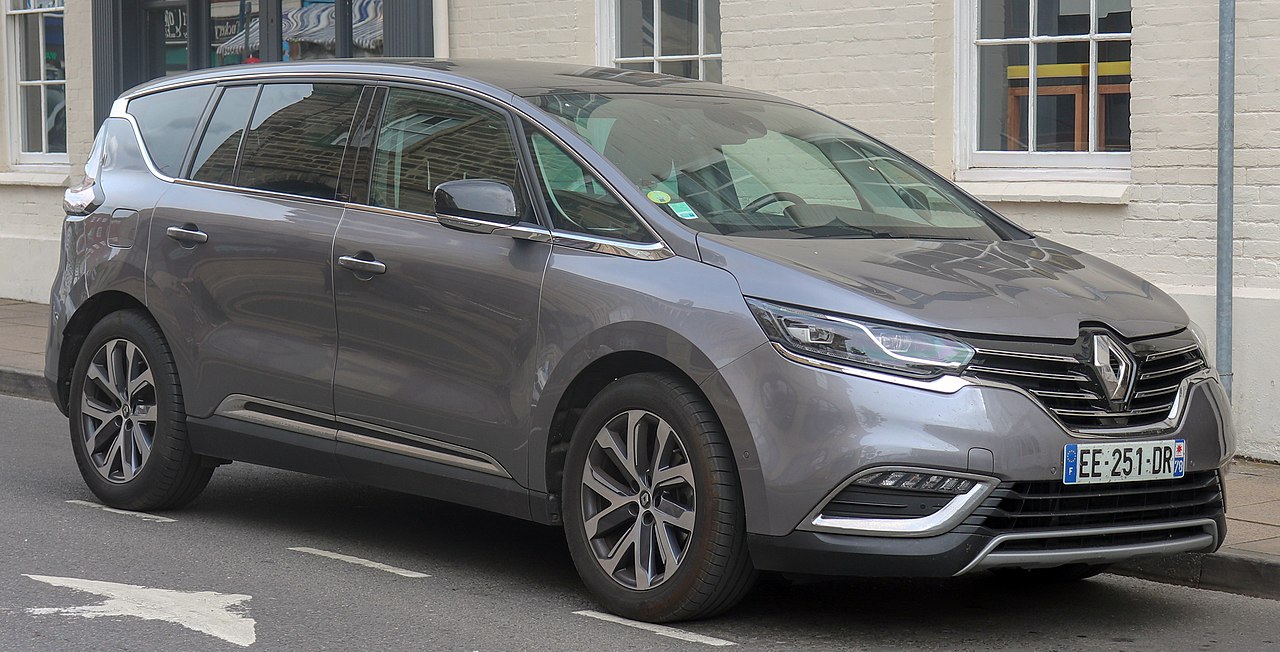
- Fifth generation (2015–present): reworked with a more dynamic, crossover-like silhouette and contemporary interior technology; in some markets the configuration or availability differs (for example, certain right-hand drive markets did not receive this version).

Engines, trim and market positioning
The Espace has been offered with a variety of four- and six-cylinder petrol and diesel powerplants and with transmission choices adapted to each era. Trim levels typically ranged from practical family specifications to more luxurious, comfort-focused versions. Buyers who valued interior flexibility often chose the Espace over traditional saloons or station wagons; it competed with other large people carriers and MPVs across Europe. For an overview of typical powertrain choices and configurations, see engine options.

Uses, importance and legacy
Primarily marketed as a family and people‑carrier vehicle, the Espace helped popularize the MPV concept across Europe. Its influence can be seen in the way many manufacturers increased focus on interior packaging, sliding or folding seats, and versatile storage. In later years the market shifted toward crossover SUVs, prompting the Espace to take on more coupe‑SUV styling cues while retaining its people‑carrier roots. The nameplate remains one of Renault’s long-running models and is often cited in discussions of vehicle class evolution in late 20th‑ and early 21st‑century Europe.

Notable distinctions
Two points often noted about the Espace are its role as an early and influential European MPV and its evolution from an experimental, space‑focused design into a mainstream family vehicle. Over successive generations the Espace responded to regulatory changes, safety expectations and shifting buyer preferences, transitioning from a pure people carrier to a model that blends MPV practicality with contemporary styling cues.
Related articles
Author
AlegsaOnline.com Renault Espace: European MPV introduced in 1984 Leandro Alegsa
URL: https://en.alegsaonline.com/art/82112