
Relay (electrical switch)
A relay is an electrically operated switch that uses a coil or electronic circuit to open or close contacts, enabling control, isolation and remote switching in telegraphy, vehicles, industry and electronics.
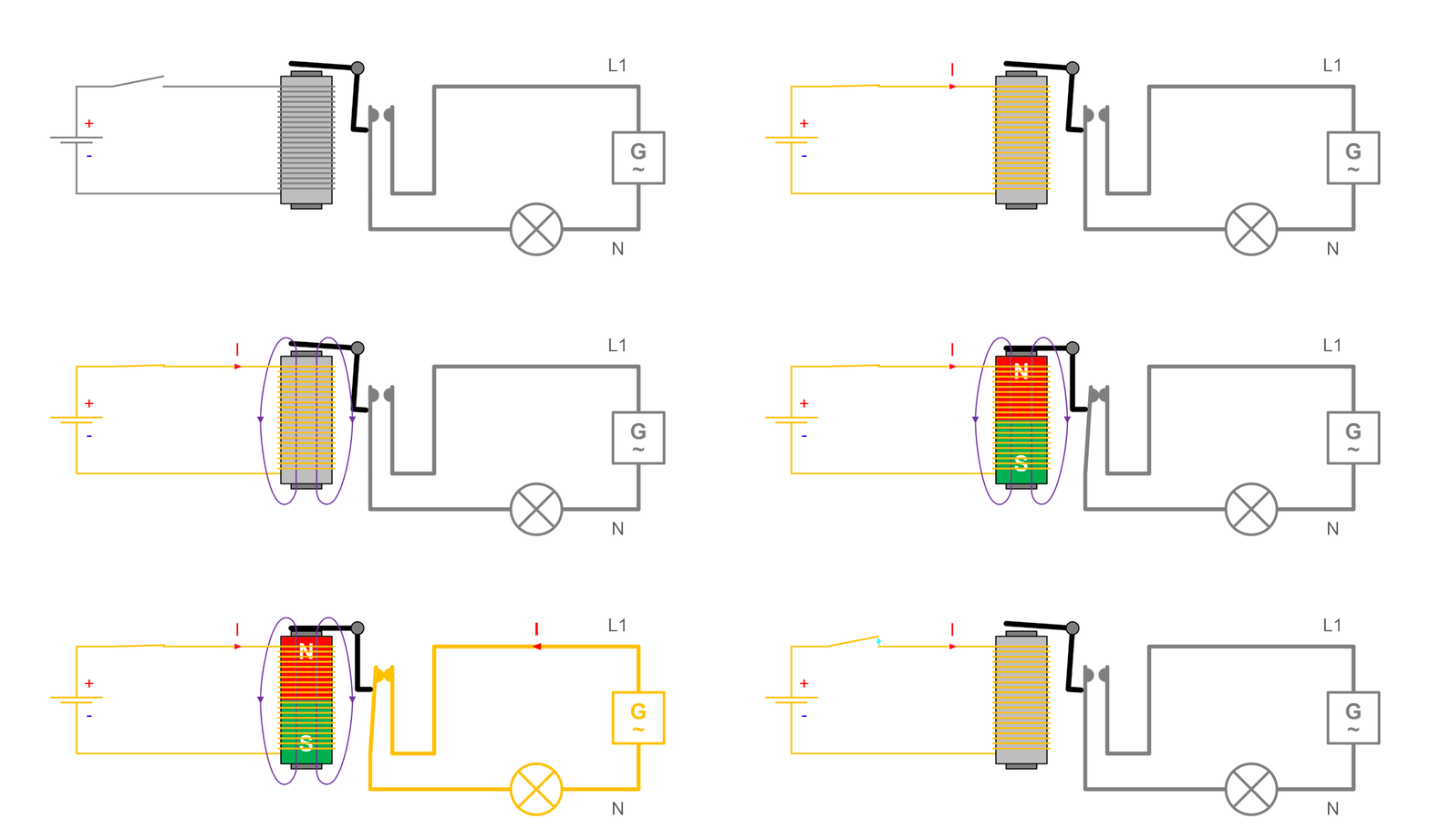
A relay is a device that uses a small electrical signal to open or close one or more larger circuits. Traditional relays operate electromagnetically: energizing a coil moves an internal contact so that current can flow through a separate circuit. Modern designs also include solid‑state relays that perform the same control function without moving parts. Relays let low‑power control circuits manage higher voltages or currents while providing electrical isolation between control and load.
Image gallery
10 Images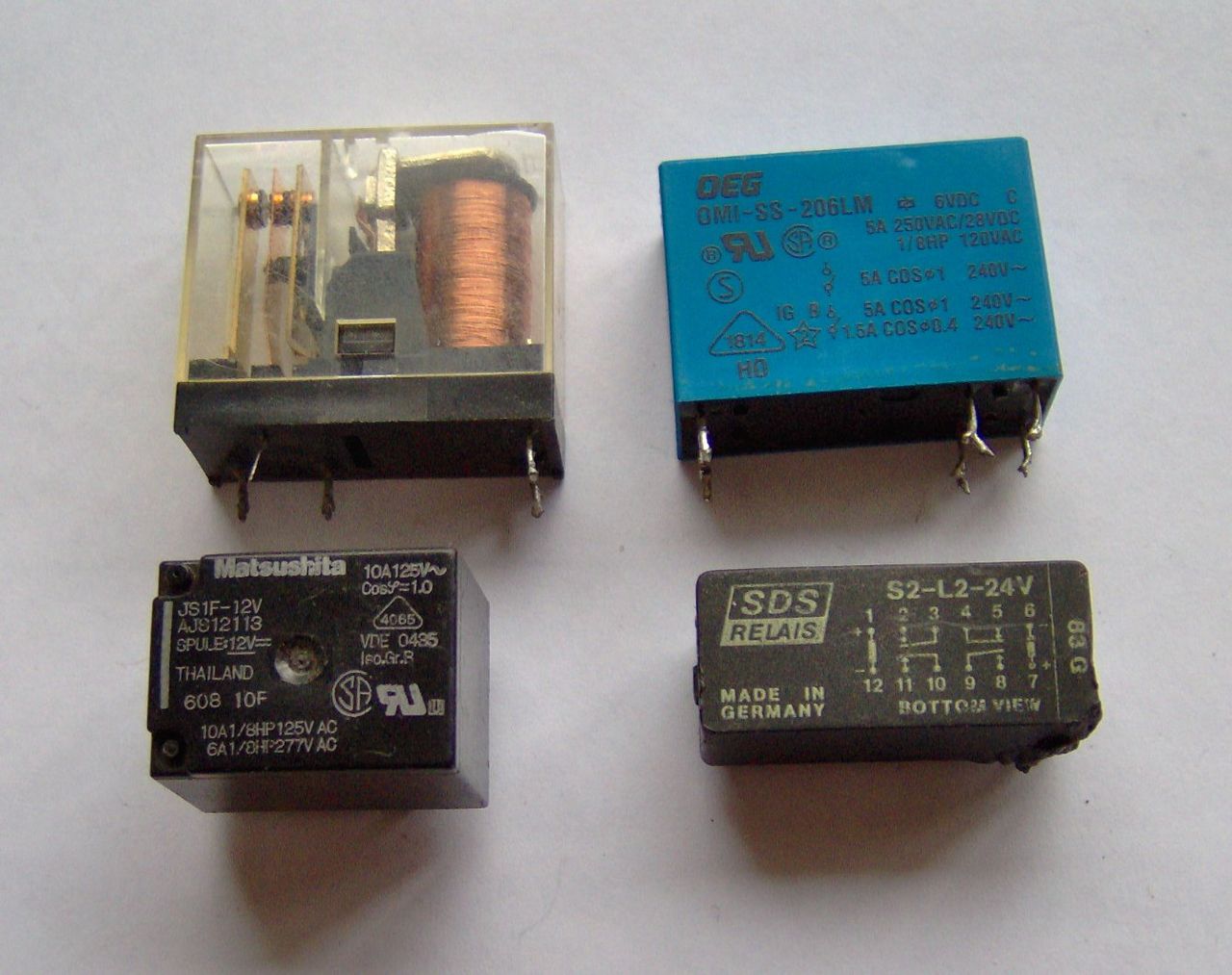





Basic parts and operation
Most electromechanical relays share a common set of components: a coil that generates a magnetic field, an armature or movable element, stationary contacts, and a spring or mechanism to return the armature when the coil is de‑energized. Contact arrangements vary (for example SPST, SPDT, DPDT) and determine whether the device makes, breaks, or changes connections. In essence the coil controls a switch that is physically separate from the control wiring.
Types and notable variants
- Electromechanical relays — classic design with physical contacts, used where visible isolation and heavy current switching are needed.
- Reed relays — compact devices with sealed magnetic blades, useful for fast switching and low currents.
- Latching relays — remain in their last state without continuous coil power, useful for energy‑saving control.
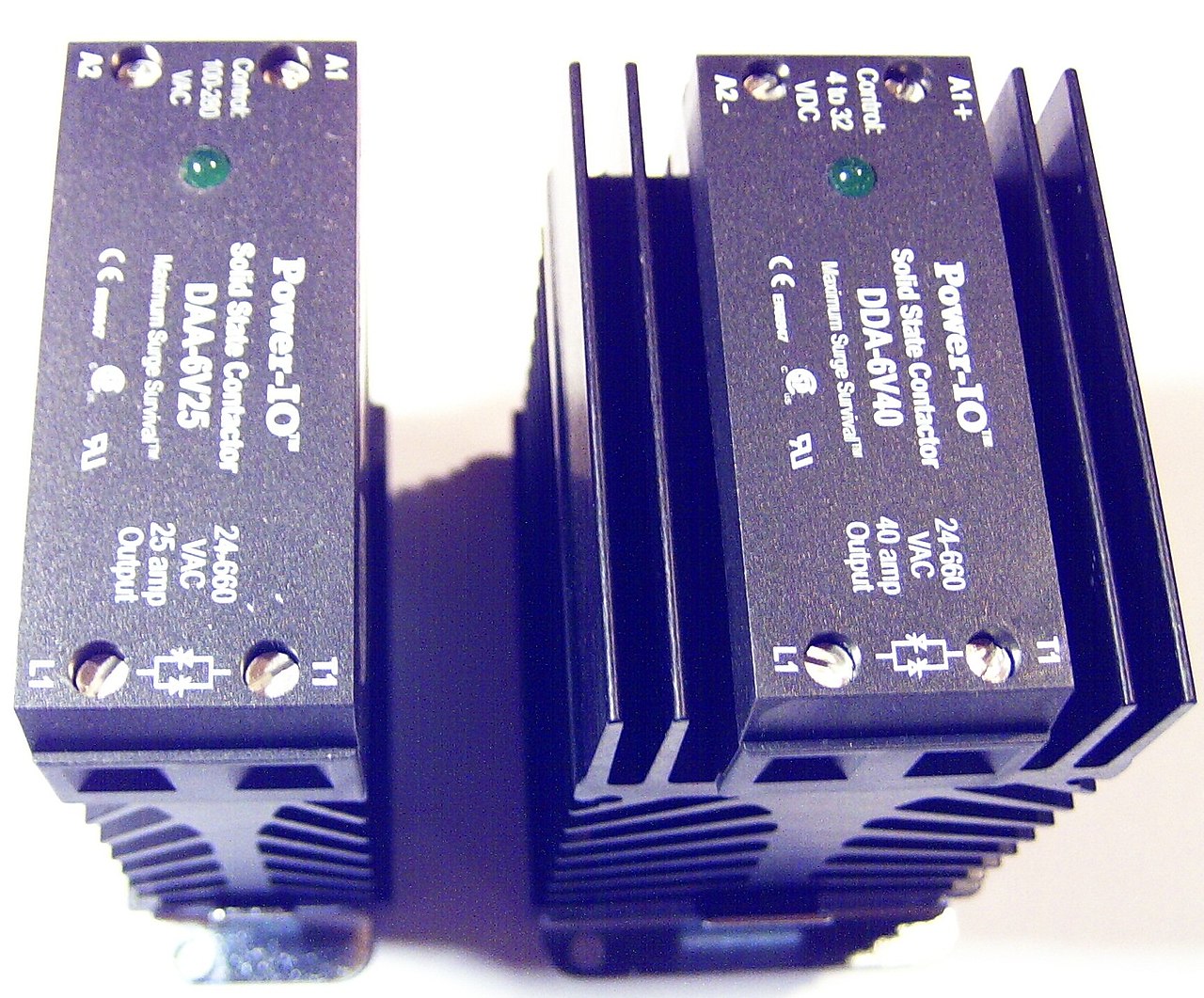
- Solid‑state relays (SSRs) — use semiconductor devices to switch without moving parts, common in electronics for silent, rapid switching.
Relays are also available as contactors, which are heavy‑duty relays designed for switching motors and other high‑power loads.
Relays were first developed in the 19th century to extend and repeat telegraph signals across long distances, providing a way to relay a signal from one line to the next without manual intervention. Over time their role expanded from communications to general electrical control, and they became fundamental components in early automated and industrial systems.
Common uses include controlling starter circuits and lighting in vehicles, enabling interlocks and safety functions in industrial machinery, and providing isolation and timing functions in control panels. Designers choose relays based on coil voltage, contact current rating, switching speed, lifetime (mechanical and electrical operations), and resistance to arcing. Because mechanical contacts can produce sparks when switching inductive loads, suppression measures such as diodes, RC snubbers, or varistors are often used to protect contacts and driving electronics.
Advantages of relays include clear galvanic separation between control and load and the ability to switch large currents with a small control signal. Limitations include contact wear, slower switching speed compared with semiconductors, audible operation for mechanical types, and the need to match contact materials to the type of load. Understanding these tradeoffs helps when selecting relays for power control, signal routing, safety circuits, and automation tasks.
Related articles
Author
AlegsaOnline.com Relay (electrical switch) Leandro Alegsa
URL: https://en.alegsaonline.com/art/82015