
Reverberation: acoustic persistence of sound in enclosed spaces
Reverberation is the persistence and decay of sound in an environment after the source stops. It shapes perception, affects clarity, and is measured, controlled, and used in architecture, audio and music.
Reverberation is the gradual fading of sound in an environment after the original source has stopped. It arises when emitted sound waves reflect from surfaces and continue to combine in the space, producing a dense series of reflections that the ear perceives as a sustained tone rather than a single delayed repeat. In everyday terms, reverberation is what makes a room sound "live" or "dead" and influences how we hear speech, music and ambient noise.
Reverberation vs. echo. A single distinct repeat of a sound is usually called an echo, which occurs when a reflected sound arrives clearly separated in time from the direct sound. Reverberation consists of many closely spaced reflections that overlap so the ear perceives a continuous decay rather than separate echoes. Early reflections (the first few arrivals) and the later diffuse tail together shape clarity, warmth and spatial impression.
Image gallery
2 Images
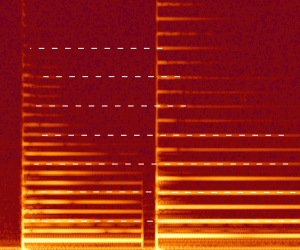
Characteristics and measurement
The most common quantitative measure of reverberation is reverberation time, often referred to as RT60: the time it takes the sound level to drop by about 60 decibels after the source stops. Reverberation time depends on room volume, surface absorption, and frequency. A larger room with hard, reflective surfaces yields longer reverberation; soft furnishings and absorptive treatments shorten it. Acoustic designers use these relationships to predict and tune acoustic behavior.
History and scientific development
Systematic study of reverberation dates to the late 19th and early 20th centuries when researchers such as Wallace Clement Sabine developed empirical methods to relate room geometry and surface absorption to reverberation time. Sabine's work established a practical link between physical parameters and perceived acoustics, forming the foundation of modern architectural acoustics and room design.
Control, applications and practical importance
Controlling reverberation is central to many disciplines. In concert halls and churches, designers often aim for longer reverberation to enrich musical timbre; in lecture halls, classrooms and recording studios shorter reverberation improves speech intelligibility and clarity. Common control techniques include adding absorptive materials, using diffusers to scatter sound, modifying room geometry, and employing electronic reverberation in audio production to create or enhance spatial effects.
Notable distinctions and considerations
- Reverberation affects intelligibility: too much reverberation blurs consonants and reduces speech clarity.
- Perception is frequency dependent: low and high frequencies may decay at different rates, influencing warmth or muddiness.
- Measurement and modeling: modern acoustic simulation and standardized measurement techniques let engineers predict RT60 across frequencies and optimize designs before construction.
Understanding and managing reverberation is essential for architects, audio engineers, musicians and anyone concerned with how sound interacts with space. Appropriate reverberation can enhance musical richness and listener immersion; inappropriate reverberation can make communication difficult or recordings unusable.
Related articles
Author
AlegsaOnline.com Reverberation: acoustic persistence of sound in enclosed spaces Leandro Alegsa
URL: https://en.alegsaonline.com/art/82398