
Reggio Calabria
Reggio Calabria is a port city on Italy’s southern tip, gateway to Sicily. Known for its Greek origins, the Riace Bronzes and a scenic seafront, it is the chief city of the Metropolitan City of Reggio Calabria.

Reggio Calabria is a coastal city in southern Italy occupying the toe of the Italian peninsula on the Strait of Messina. It is the administrative centre of the Metropolitan City of Reggio Calabria, a modern territorial entity established in 2015. The urban core and its wider metropolitan area together form a regional hub for trade, services and transport linking mainland Italy with Sicily. The city’s population is in the several hundreds of thousands when the wider urban area and metropolitan territory are counted; its compact historic centre and an extensive waterfront are defining parts of its urban identity.
Image gallery
10 Images




Origins and historical development
The site of Reggio has been inhabited since antiquity. Settled by Greek colonists around the 8th century BCE as Rhegion, it became an important city within the network of Magna Graecia settlements and later passed through Roman, Byzantine, Norman and Spanish rule. Its long history is reflected in archaeological remains, churches and fortifications. Devastating events, most notably the earthquake and tsunami of 1908, destroyed much of the older fabric and prompted a large-scale rebuilding that shaped the city’s present layout. Over succeeding decades Reggio evolved as a regional capital and commercial port.
Culture, monuments and museums
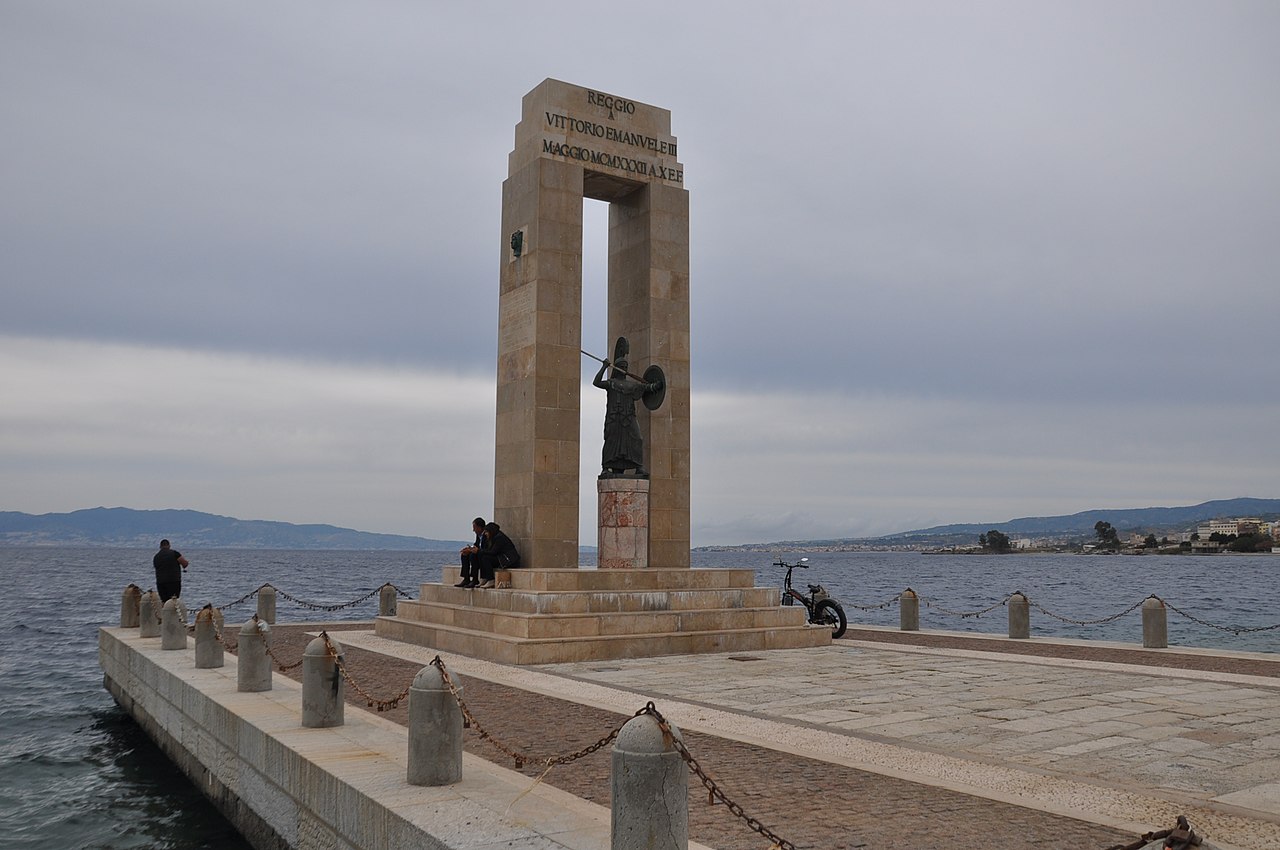
Reggio Calabria is best known internationally for the Bronzes of Riace, two full-sized fifth-century BCE Greek warrior sculptures discovered offshore near the town of Riace; they are housed in the National Archaeological Museum, one of the city’s principal cultural institutions. The waterfront promenade, often called the Lungomare Falcomatà, is a celebrated public space offering views across the strait to Sicily and to Mount Etna on clear days. Other notable sites include the cathedral rebuilt after the 1908 quake, remnants of ancient walls, and modern cultural venues that stage exhibitions and festivals.
Economy, transport and contemporary role
The economy of Reggio Calabria combines port activity, commerce, public administration and tourism. The port handles regional shipping and ferry connections, especially the short crossing to Messina in Sicily. Road and rail links connect the city to the national network via the A2 motorway and the southern railway line; an airport near the city provides domestic and limited international flights. Agriculture in the surrounding province—citrus fruits, olives and other Mediterranean crops—also contributes to the local economy.
Setting, climate and natural surroundings
Positioned along the Strait of Messina, Reggio enjoys a Mediterranean climate with hot, dry summers and mild, wet winters. The city sits between the sea and the Aspromonte mountains, offering easy access to coastal beaches and inland natural areas. The strait’s currents and coastal topography have long shaped local fishing and navigation, and the surrounding landscape supports outdoor recreation, hiking and rural tourism.
Main attractions and practical information
- National Archaeological Museum: home to the Bronzes of Riace and regional collections.
- Lungomare and seafront parks: central promenade with panoramic views.
- Reggio Cathedral and historic churches: examples of post‑1908 reconstruction and earlier foundations.
- Port and ferry links: regular short crossings to Messina, local boat excursions.
Further notes and resources
For pronunciation details and language references see the audio and Italian pronunciation links: US pronunciation and Italian pronunciation. For comparative context with other Italian cities and the region’s ancient Greek heritage consult general overviews such as city comparisons and historical surveys of Magna Graecia. Reggio Calabria remains an important cultural and transport gateway at Italy’s southern edge, celebrated for its antiquities and its scenic seafront while serving as a living regional capital with both Mediterranean character and a complex historical legacy.
Related articles
Author
AlegsaOnline.com Reggio Calabria Leandro Alegsa
URL: https://en.alegsaonline.com/art/81858