
Reductionism: concepts, types, history, uses and criticisms
Overview of reductionism: the idea that complex systems or theories can be explained by their parts. Covers forms (ontological, methodological), history, examples, uses, and limits, including emergence and holism.
Overview
Reductionism is the view that explanations of complex systems, phenomena or theories can be given by reference to their simpler components and the relations between those components. In practice this involves analyzing wholes into parts and showing how the parts and rules of combination suffice to account for the behaviour or laws of the whole. Reductionist approaches appear across science and philosophy: from attempts to derive chemistry from physics, to efforts to explain mental states in terms of brain states.
Image gallery
2 Images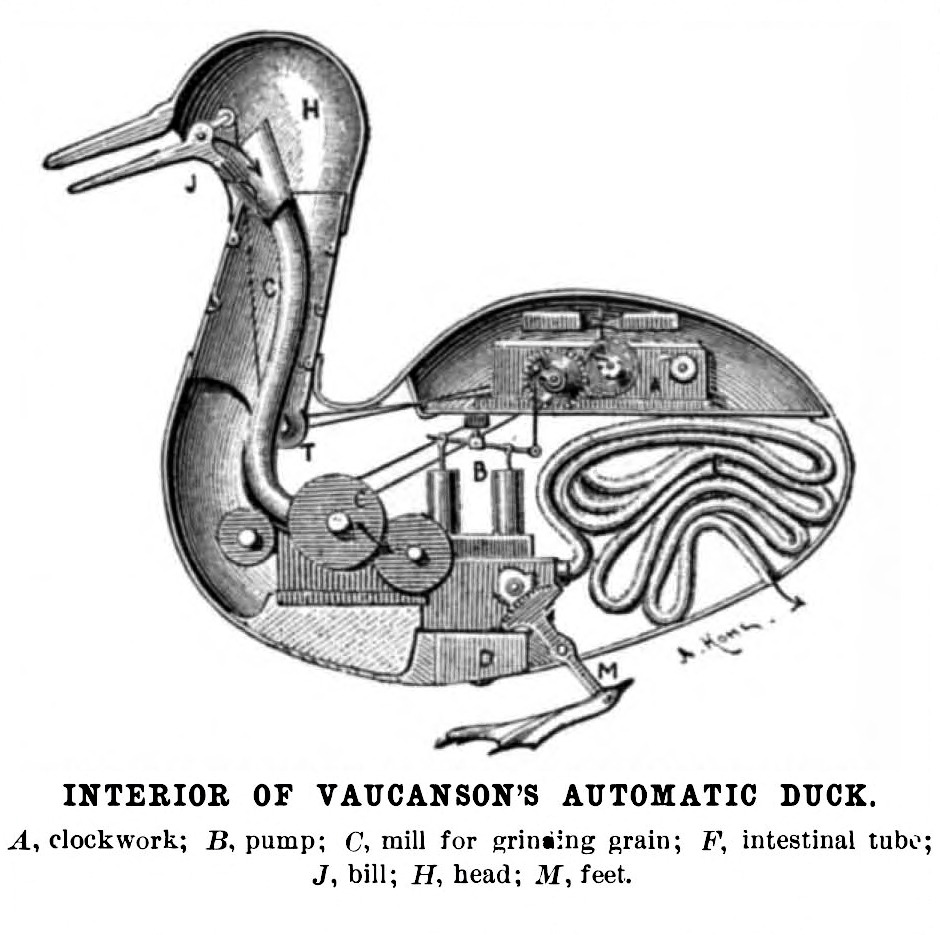
Forms and characteristics
Reductionism is not a single doctrine but a cluster of related ideas. Common distinctions include:
- Ontological reductionism: the claim that wholes are nothing over and above their parts.
- Methodological reductionism: the research strategy of investigating systems by studying constituent parts.
- Theoretical reduction: the effort to show that one theory can be derived from or translated into another, simpler theory.
Logical structure is often important to reduction: advocates may seek formal rules or definitions that connect higher-level concepts to lower-level descriptions (for example, relating psychological terms to neural descriptions or macroeconomic variables to individual behaviour). Some of these efforts use formal logic and model-theoretic tools; others are more pragmatic.
History and development
Reductionist thinking has roots in ancient atomism and in early modern science, which emphasized analysis and mechanistic explanation. During the 19th and 20th centuries the ideal of reducing fields to fundamental physics gained influence with the success of physical theories. In philosophy of science, debates about reduction intensified with attempts to relate thermodynamics to statistical mechanics and with discussions of how one scientific theory might be reduced to another.
Uses and examples
Reductionism guides many successful scientific programs. Examples include:
- Explaining chemical bonding using quantum mechanics.
- Relating biological processes to biochemistry and molecular interactions.
- Using neuronal and computational models to account for aspects of perception and memory.
In each case, a reductionist program aims to show how higher-level regularities follow from lower-level entities plus laws or mechanisms. Practical benefits include clearer mechanisms, predictive models and the ability to transfer techniques across disciplines. Critics point out, however, that translation from levels is not always straightforward; see below.
Limits, criticisms and alternatives
Several objections temper strong forms of reductionism. One important challenge is the phenomenon of emergence: novel properties and regularities at a higher level that are not easily predicted from lower-level descriptions alone. Another widely discussed issue is multiple realizability — the idea that the same higher-level function might be instantiated by different lower-level arrangements, complicating simple one-to-one reductions.
Alternatives or complements to reductionism include holistic and systems approaches that emphasize interactions, organizational constraints and context. Many scientists and philosophers adopt a pragmatic stance: use reductionist methods where they are fruitful, but recognize higher-level descriptions and laws as useful and sometimes irreducible for explanation and practice.
Relevant distinctions and further reading
When reading about reductionism, distinguish between translating concepts, deriving laws, and explaining mechanisms. The task of connecting concepts often involves formal explication or operational definition; for discussions of how theoretical claims relate to observable data see observational and theoretical relations. For treatments that focus on logical structure and formal derivation consult sources on logic and theory reduction. For debates about meaning and the status of higher-level terms see materials that discuss how concepts relate to things in science and philosophy.
Related articles
Author
AlegsaOnline.com Reductionism: concepts, types, history, uses and criticisms Leandro Alegsa
URL: https://en.alegsaonline.com/art/81761