
Red Hat Linux — discontinued community distribution and its legacy
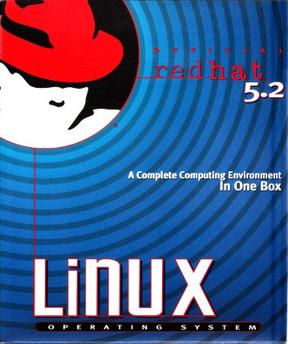
Red Hat Linux was a widely used, freely distributed Linux distribution produced by Red Hat. Discontinued in 2003, it was succeeded by Red Hat Enterprise Linux (commercial) and Fedora (community upstream).
Overview
Red Hat Linux was a popular, freely distributed Linux operating system produced by the company Red Hat. It combined the Linux kernel with GNU utilities, graphical environments and server software into a coherent distribution suitable for desktops, workstations and servers. The project served both individual users and organizations, and it helped establish many conventions found in later enterprise and community distributions.
Image gallery
4 Images


Key characteristics
Red Hat Linux followed a typical distribution model of assembling components from the wider free software ecosystem. Typical technical characteristics included:
- Use of the RPM packaging format and a package-management toolchain to install and update software.
- Graphical installers and setup tools designed to simplify installation on x86 systems.
- Integration of desktop environments (such as GNOME in later releases) and standard server services (web, mail, file sharing).
- Regularly updated kernels and libraries, plus configuration utilities intended for administrators and end users.
History and development
Red Hat Linux emerged in the 1990s as one of the first broadly available distributions that prioritized ease of installation and an up-to-date package set. Over time Red Hat shifted its business model toward enterprise support, and the company introduced Red Hat Enterprise Linux (RHEL) as a commercially supported product line while continuing a separate community project as an upstream testing ground. The last freely distributed Red Hat Linux release for general users was version 9, produced in 2003; afterwards, the company focused on RHEL for paying customers and Fedora as the community-driven successor.
Uses, examples and influence
During its active years Red Hat Linux was used in a wide range of environments: personal computers, developer workstations, university labs and production servers. Its prominence influenced packaging standards, system administration practices and the expectations users had for a Linux distribution. Many system administrators learned Linux on Red Hat systems, and elements such as the RPM format and packaging conventions continue to be used in descendant distributions.
Distinctions and legacy
Two distinct projects trace their roots to Red Hat Linux’s end-of-life. Red Hat Enterprise Linux (RHEL) is a commercially supported product intended for enterprise deployments, with subscription-based support and a longer maintenance lifecycle. Fedora, originally released as Fedora Core, is the community-driven project that serves as an upstream development and testing platform for technologies that may later appear in RHEL. Information about the Fedora community can be found via the project pages at Fedora.
Redistributions and compatibility
Because RHEL is distributed under open-source licenses but with Red Hat trademarks reserved, third parties created rebuilds and compatible distributions that remove Red Hat branding while preserving binary compatibility. Notable examples include community rebuilds and specialized distributions used in academic and commercial settings. These redistributions allowed organizations to run RHEL-compatible systems without Red Hat subscriptions, though they did not carry Red Hat’s commercial support.
Related articles
Author
AlegsaOnline.com Red Hat Linux — discontinued community distribution and its legacy Leandro Alegsa
URL: https://en.alegsaonline.com/art/81658