
Refrigerator: household cooling appliance and its design, history, and uses
A refrigerator cools and preserves food and drinks by removing heat. This article explains how refrigerators work, their parts and types, the history from iceboxes to modern models, uses, and environmental issues.
Overview
A refrigerator (often called a fridge or historically an icebox) is an appliance that slows the spoilage of perishable items by keeping an enclosed space at a low temperature. People commonly store food and drinks inside to keep them cold and thereby extend freshness and safety. Domestic refrigerators are typically set to just above freezing — many manufacturers and food-safety agencies recommend temperatures around 4 °C (about 40 °F) to reduce bacterial growth while avoiding freezing.
Image gallery
10 Images

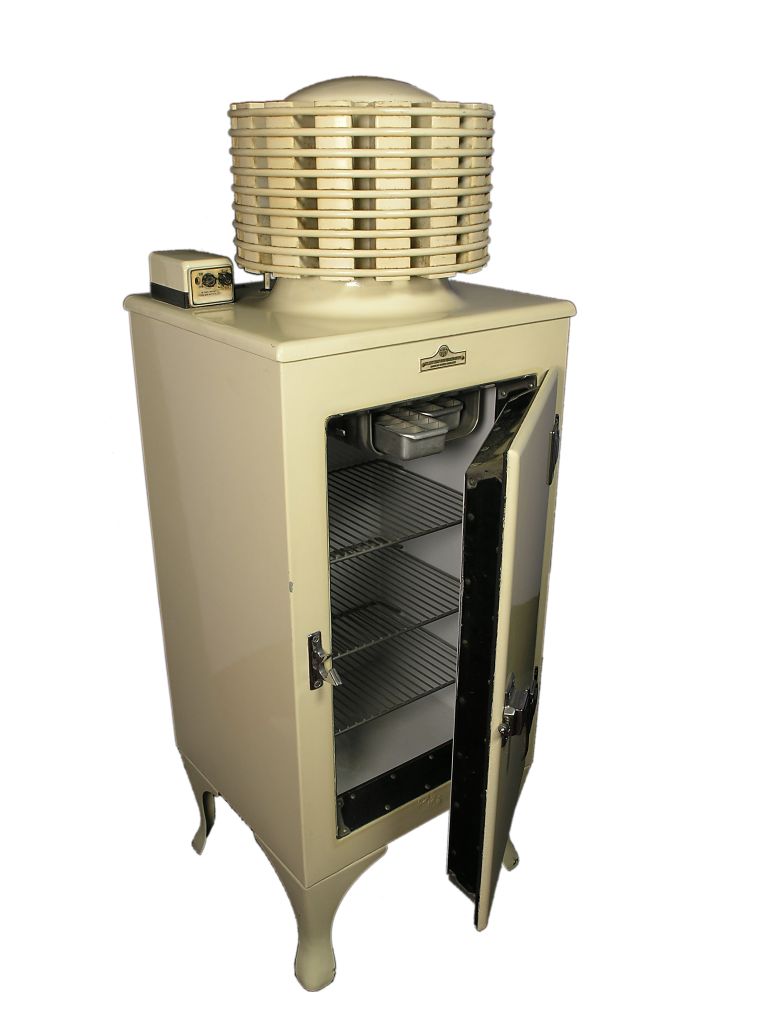


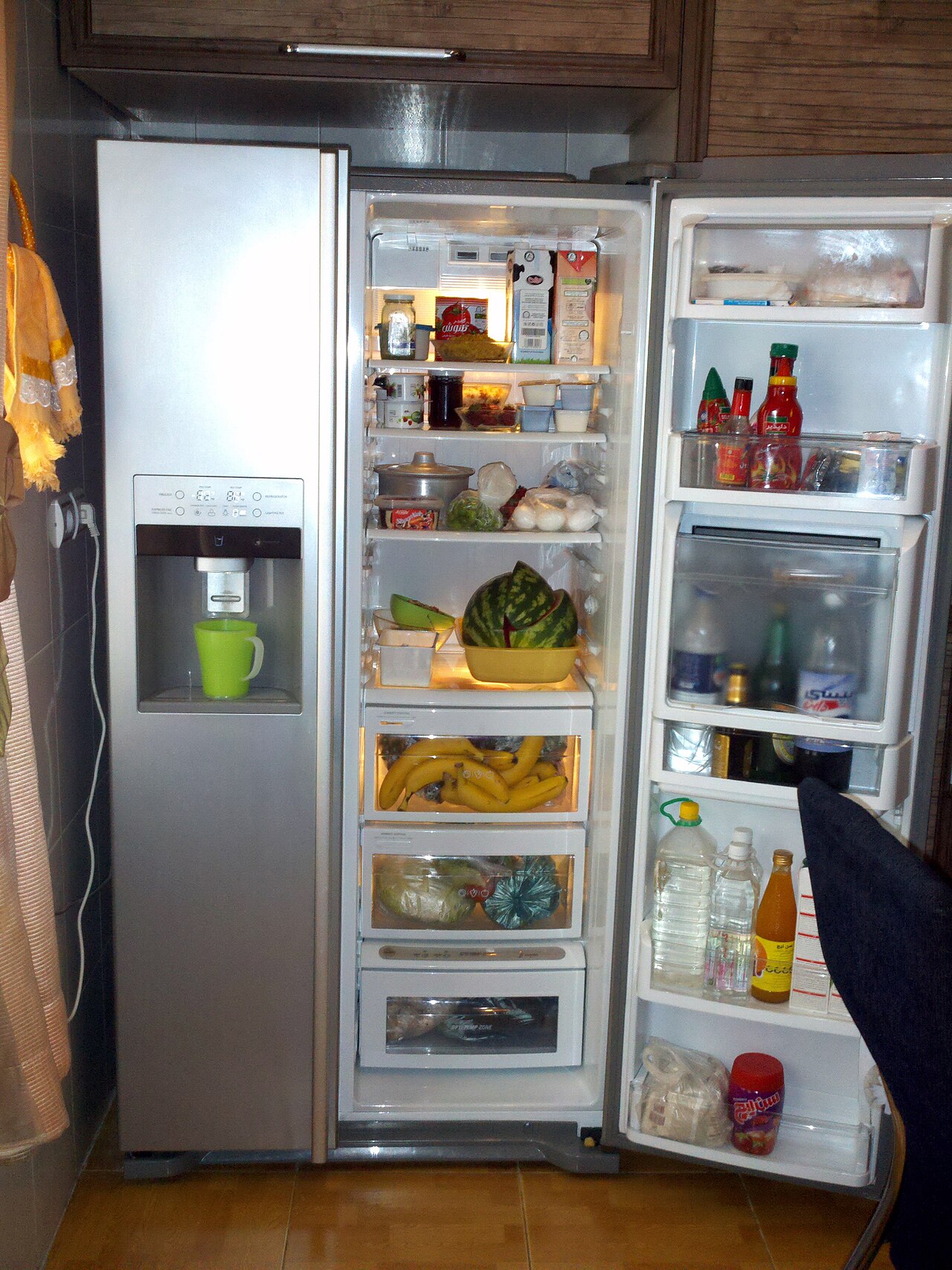


How it works
Modern electric refrigerators operate on a vapor-compression refrigeration cycle. A circulating refrigerant absorbs heat from the interior when it evaporates in the evaporator coil; that heat is then released outside when the refrigerant condenses. Key components include a compressor (driven by an electric motor), condenser coils, an expansion device, and evaporator coils. The system functions as a compact heat pump: it takes heat from the interior air and moves it to the surrounding environment, often aided by fans. The basic principle — removing heat from one place and depositing it elsewhere — is fundamental to refrigeration and heating technology (heat pump, air exchange).
Parts and types
- Major parts: compressor, condenser, expansion valve, evaporator, thermostat, insulated cabinet.
- Common refrigerants: over time these have changed for safety and environmental reasons.
- Popular layouts: top-freezer, bottom-freezer, side-by-side, French door, and compact or "mini-fridge" models often used in small spaces.
History and alternatives
Before electric refrigeration became widespread, insulated ice boxes kept perishable goods cold by using blocks of ice. These were important in homes and businesses until mechanical refrigerators became affordable in the early 20th century. Today, non-electric coolers and portable ice chests still serve camping and temporary transport needs; the term "cooler" or "icebox" is commonly used for such containers.
Uses, placement, and appearance
Beyond household kitchens, refrigerators appear in workplaces, laboratories, and medical settings for storing medication and samples. Smaller units are common in hotels and college dormitories. Many manufacturers offer models in a range of colours and finishes to match interiors. Typical everyday uses include keeping leftovers, dairy, produce, and chilled beverages accessible and safe (unspoiled).
Environmental and practical considerations
Refrigeration consumes electricity, so energy efficiency and proper sizing are important for cost and environmental impact. Refrigerants historically used in many systems were phased out or modified because of their effects on ozone or climate; modern appliances use alternatives with lower global warming potential. Proper maintenance — regular cleaning of coils and seals, correct thermostat settings and timely repairs — extends appliance life and preserves food safely. Small specialized units are available for transport or remote use, while household refrigerators remain central to food storage and daily routines.
Further reading and product information can be found through general appliance resources and manufacturer guides (food storage advice, beverage cooling, and safety references at temperature guidelines).
For additional context on portable refrigeration and historical models, see sources about iceboxes and camping coolers (camping) or hospitality use (hotel appliances). Technical and engineering summaries often discuss the heat-transfer elements and mechanical components of the refrigeration cycle (heat pump, air, electric motor).
Note: descriptive links here use placeholders such as unspoiled food and college dorm supplies to indicate typical contexts where refrigerators are found.
Questions and answers
Q: What is a refrigerator?
A: A refrigerator is a machine used for keeping things cold.
Q: What are some other names for a refrigerator?
A: A refrigerator is sometimes called a fridge or an icebox.
Q: What temperature is a refrigerator normally maintained at for household use?
A: A refrigerator is normally maintained at 4-5 degree Celsius for household use.
Q: What is the function of the heat pump in a refrigerator?
A: The heat pump in a refrigerator takes heat away from the air inside the fridge and moves it outside.
Q: What drives the heat pump in a refrigerator?
A: The heat pump in a refrigerator is usually driven by an electric motor.
Q: What are ice boxes and how do they differ from refrigerators?
A: Ice boxes are containers filled with ice to provide a colder temperature, and they do not use electricity. They can keep things cold until the ice melts.
Q: Where are smaller versions of refrigerators mainly used?
A: Smaller versions of refrigerators are mainly used in hotels and college dorm rooms.
Related articles
Author
AlegsaOnline.com Refrigerator: household cooling appliance and its design, history, and uses Leandro Alegsa
URL: https://en.alegsaonline.com/art/81820
Sources
- fsis.usda.gov : "Freezing and food safety" · web.archive.org