
Reagan County, Texas
Reagan County, Texas, is a small West Texas county centered on Big Lake, historically tied to oil production in the Permian Basin. It includes Big Lake, Best, Stiles and Texon and has roughly 3,367 residents.
Overview
Reagan County is a sparsely populated county in West Texas whose economy and settlement patterns have been shaped by oil exploration. The county seat and largest community is Big Lake. Contemporary population counts are small — about 3,367 residents according to the source provided — and the area retains a largely rural character.
Image gallery
2 Images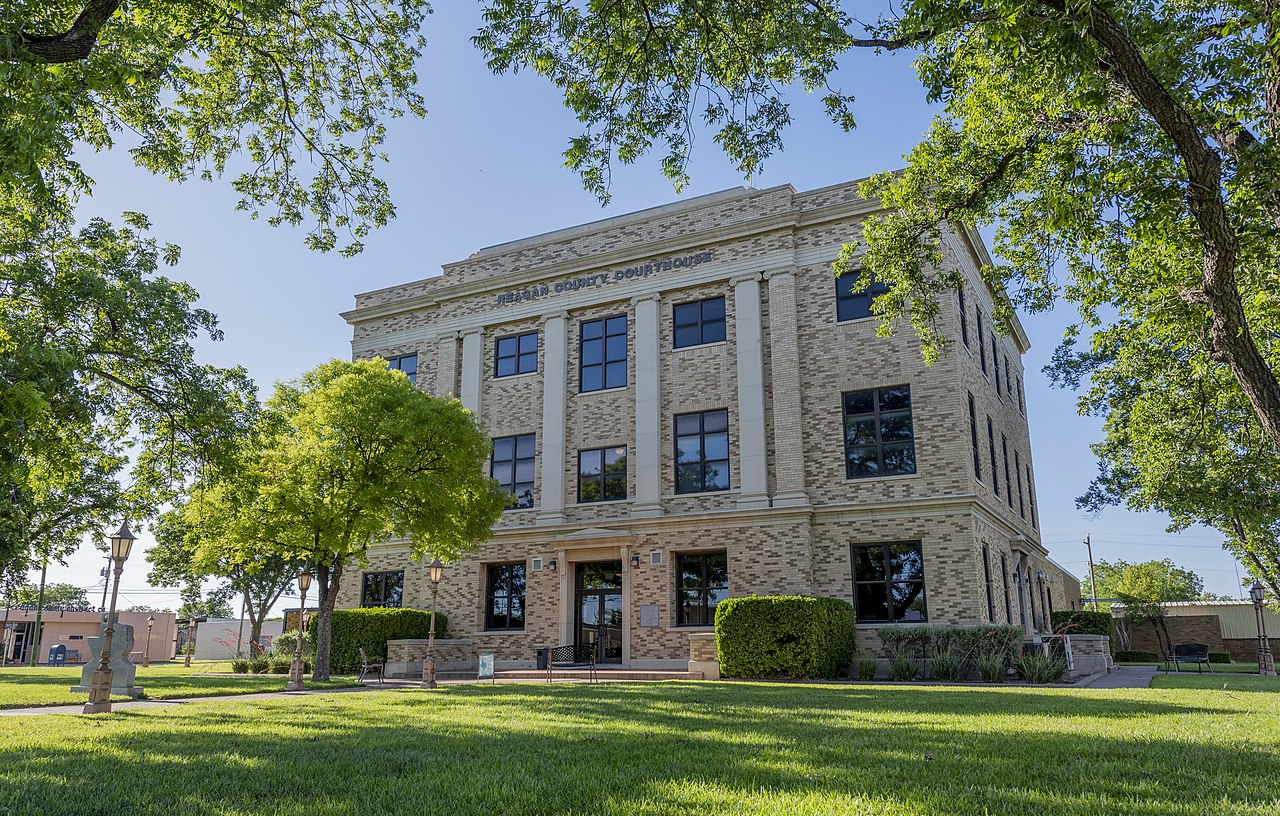

Characteristics
The county combines arid plains, ranch land and oil fields typical of the Permian Basin region. Settlements are few and widely spaced; local governance and services are centered in the county seat. Transportation routes primarily support local commerce, ranching and energy operations rather than dense urban travel.
History and name
Reagan County takes its name from John H. Reagan, a prominent 19th-century Texas political figure. The county's development accelerated when oil was discovered in the early 20th century, creating company towns and drawing workers for drilling and production. Oil and gas exploration have been the dominant historical drivers of population and land use.
Economy and importance
Energy production, especially crude oil extraction in the Permian Basin, is the county's primary economic activity. Supporting industries include pipeline services, equipment maintenance, and transportation. Ranching and limited agriculture also contribute to the local economy, but on a much smaller scale than energy.
Communities
- Big Lake — county seat and principal town, serving as the administrative and service center.
- Best — a small community with historical ties to regional ranching and oil operations.
- Stiles — an unincorporated settlement reflecting the county's rural pattern.
- Texon — originated as an oil company town and is notable for its connection to early petroleum development.
Notable facts and distinctions
Reagan County is representative of many West Texas counties where energy extraction shaped settlement, infrastructure and local identity. Its low population density and concentration of services in a single town make it distinct from more urbanized counties. For more local details, historical records and administrative information, county offices and regional histories are useful starting points.
Related articles
Author
AlegsaOnline.com Reagan County, Texas Leandro Alegsa
URL: https://en.alegsaonline.com/art/81458