
Red Hills (Gypsum Hills) — distinctive red rock region of southern Kansas
A dry, dissected landscape of redbeds and gypsum outcrops in southern Kansas, the Red Hills (Gypsum Hills) form a rugged counterpoint to the Great Plains and support ranching, wildlife, and unique geology.
The Red Hills, often called the Gypsum Hills, are a physiographic region in southern Kansas. They lie principally within Clark County, Comanche County and Barber County, and are one of the state's most visually distinctive landscapes. The area contrasts markedly with the broad, flat expanses usually associated with the Great Plains and with much of Kansas.
Image gallery
1 Image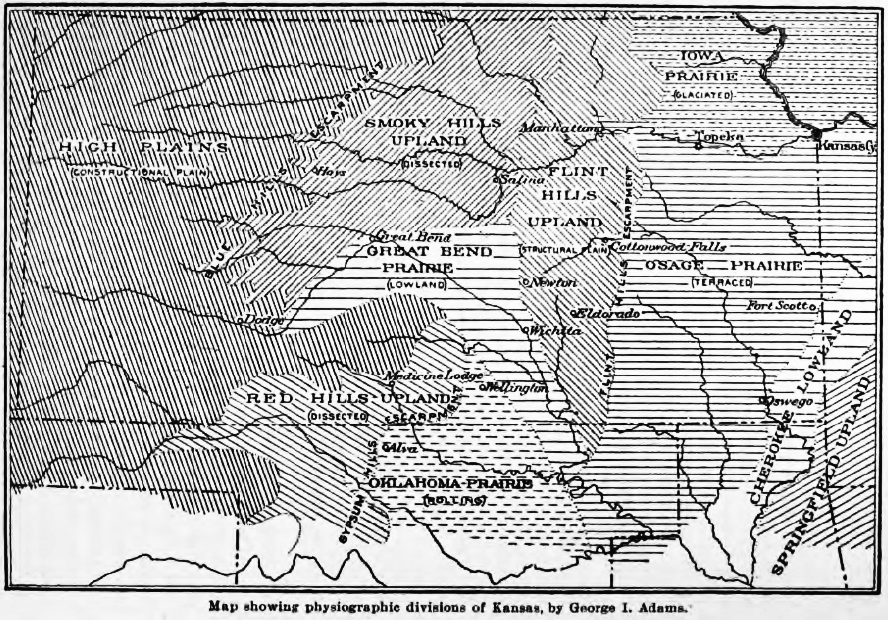
Physical characteristics and geology
The Red Hills are underlain by Permian-age redbeds: sandstones, siltstones and shales stained by iron oxides that give the country its characteristic red and orange hues. Interlayered evaporites and gypsum beds produce ledges, bluffs and locally unstable ground where soluble gypsum has been dissolved by groundwater. Erosion has dissected the plateau into rounded hills, mesas, buttes and shallow canyons, producing scenery that is more broken and rugged than surrounding prairie.
Ecology and land use
Vegetation is typically mixed-grass prairie with patches of shortgrass on drier slopes and more diverse grasses and forbs in valleys. Where gypsum and saline soils occur, salt-tolerant and specialist plants may be present. The Red Hills support grazing and ranching as the dominant human use; they also provide habitat for upland game birds, deer and other wildlife, and are used for hunting and nature recreation.
Origins and development
Deposited in a shallow inland sea during the Permian period, the redbeds and evaporite layers accumulated under alternating wet and arid conditions. Subsequent uplift and long-term erosion exposed these strata at the surface and sculpted the irregular topography seen today. The presence of gypsum and other soluble minerals has influenced soil chemistry, hydrology and land stability in places.
Human history and significance
Indigenous peoples occupied and traveled through the area for thousands of years before Euro-American settlement. In more recent times the Red Hills have been valued for cattle ranching, limited mineral extraction (including gypsum where economic), and outdoor recreation. Special sites and preserves in the region protect representative prairie and geologic features, such as the deep basin depressions and scenic escarpments that are locally prominent.
Notable distinctions and guidance for visitors
- The Red Hills differ from the flat plains: they are more dissected and colorful, with visible strata and gypsum exposures.
- Because gypsum dissolves in water, visitors and land managers watch for sinkholes, saline seeps and unstable slopes.
- Recreation focuses on dispersed activities — hiking, wildlife viewing, hunting and scenic drives — and on a few managed preserves and public areas that interpret local geology and prairie ecology.
For county-level information and local resources see links to Clark County, Comanche County and Barber County, and for broader context consult treatments of Kansas physiography and the Great Plains.
Questions and answers
Q: What is Red Hills?
A: Red Hills is a physiographic area in southern and central Kansas, referred to as Gypsum Hills.
Q: What kind of rock dominates Red Hills?
A: Red rock dominates the landscape of Red Hills, giving it its name.
Q: In which counties is Red Hills located?
A: Red Hills is majorly located in Clark, Comanche and Barber counties in Kansas.
Q: Can we describe Red Hills as typical Great Plains land?
A: No, Red Hills does not fit the normal description of the Great Plains land of Kansas.
Q: What is the other name given to Red Hills?
A: Red Hills is also referred to as Gypsum Hills.
Q: Is Red Hills just a natural area or is there any civilization on this land?
A: The text doesn't mention whether Red Hills is just a natural area or if there is any civilization on this land.
Q: What makes Red Hills stand out from the Great Plains land?
A: Red Hills' red rock-dominated landscape makes it different from the typical Great Plains land of Kansas, making it a must-see for visitors.
Related articles
Author
AlegsaOnline.com Red Hills (Gypsum Hills) — distinctive red rock region of southern Kansas Leandro Alegsa
URL: https://en.alegsaonline.com/art/81661
Sources
- kgs.ku.edu : "Red Hills: Rocks and Minerals"