
Qiao Shi: Chinese Communist Party Leader and Chairman of the National People's Congress
Overview of Qiao Shi (1924–2015), his roles in the Communist Party of China, tenure on the Politburo Standing Committee, chairmanship of the National People's Congress, and his political significance in the 1990s.
Qiao Shi (December 1924 – 14 June 2015) was a senior Chinese politician who played a prominent role in the Communist Party of China and the state system during the late 20th century. He was a member of the party's highest decision-making body, the Politburo Standing Committee, from 1987 until 1997. In the 1990s he was widely regarded as a contender for the country’s top leadership before serving as Chairman of the National People's Congress from 1993 until his retirement in 1998.
Image gallery
1 Image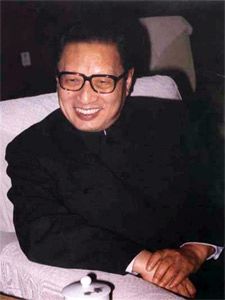
Early career and rise
Qiao Shi’s political career began within the Communist movement of the mid-20th century and advanced through party and state institutions over several decades. He rose through administrative and organizational ranks, gaining experience within party structures that manage personnel, policy coordination and legislative affairs. By the 1980s he had established himself as a trusted senior official and was promoted into the Politburo Standing Committee, the small group that shapes major national decisions.
Main positions and responsibilities
- Member of the Politburo Standing Committee (1987–1997), participating in the collective leadership of the party.
- Chairman of the National People's Congress (1993–1998), a role that placed him among the top state officials and made him the nominal head of China’s legislature.
- Senior party figure involved in policy deliberations during a period of rapid economic and social change in China.
Political significance and the 1990s leadership transition
During the late 1980s and early 1990s Qiao Shi was regarded as one of several leading contenders to succeed older leaders at the pinnacle of the party-state hierarchy. His bid for the paramount leadership overlapped with a period of factional negotiation and generational turnover. Ultimately Jiang Zemin emerged as the dominant leader and assumed the presidency in 1993, while Qiao Shi accepted the chairmanship of the National People's Congress, the third-ranked official position in the official order of precedence.
Style, reputation and legacy
Observers described Qiao Shi as a seasoned practitioner of party governance who emphasized institutional roles within the party and state. He was often associated with managerial competence and an ability to navigate internal politics. After leaving senior office he retired from public life in 1998 and died in 2015. Political analysts and historians note his career as illustrative of elite transition in China during the reform era and the sometimes complex balance between party authority and state institutions.
Further reading and context
For brief profiles and official summaries, many readers consult party and legislative sources as well as contemporary obituaries. Useful starting points include a general biography entry, the Communist Party of China overview, commentary on Jiang Zemin’s leadership, and records of the National People's Congress. See biographical summary, party background, contemporary rival and legislative role for further context.
Notable facts: Qiao Shi served on the Politburo Standing Committee for a full decade, held one of the highest state offices as chairman of the legislature, and remained a figure of interest to scholars studying China’s political development during the post-Mao reform period.
Related articles
Author
AlegsaOnline.com Qiao Shi: Chinese Communist Party Leader and Chairman of the National People's Congress Leandro Alegsa
URL: https://en.alegsaonline.com/art/80325