
Pyramids (novel) — Terry Pratchett's Discworld satire on Egypt and tradition
Pyramids is a 1989 comic fantasy novel by Terry Pratchett, the seventh Discworld book. It satirizes ancient Egypt, religion and monarchy through the story of a young pharaoh returning home after assassin training.
Overview
Pyramids is a comic fantasy novel by Terry Pratchett, first published in 1989 as the seventh book in the Discworld sequence. It mixes farce, parody and affectionate worldbuilding to examine belief, ritual and the effects of unquestioned tradition. The narrative follows a young protagonist who returns to rule a tiny, isolated kingdom that models aspects of ancient Egypt.
Image gallery
1 Image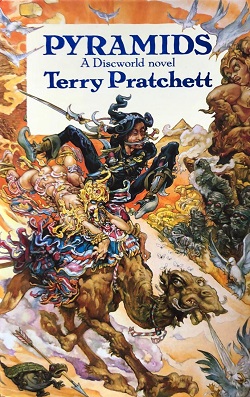
Plot and setting (spoiler-light)
The plot centers on a newly crowned pharaoh who has been trained away from home and must reconcile modern skills with the expectations of a conservative priesthood. The kingdom’s obsession with monumental pyramid-building becomes central to the story: the scale of its rituals and the weight of custom begin to have unpredictable consequences for the society and for the landscape of the Discworld itself. Pratchett balances comedic set pieces with reflections on change and responsibility.
Characters and structure
- Protagonist: a young ruler returning to his homeland after training elsewhere.
- Priesthood and court: guardians of ritual, tradition and the mechanics of power.
- Supporting figures: outsiders and locals whose perspectives highlight the kingdom’s oddities.
The book is relatively self-contained within the broader Discworld continuity, making it accessible to new readers while rewarding fans familiar with recurring institutions and running jokes.
Themes and style
Pratchett uses witty dialogue, satirical set-ups and absurd situations to probe the nature of faith, the inertia of institutions and the cost of clinging to the past. The prose alternates between concise comic observation and moments of sharper social commentary. Readers often note how the novel lampoons archaeological tropes and the mystique surrounding monumental architecture.
Reception and legacy
Pyramids was well received on publication and won a British science fiction award in 1989, helping to cement Pratchett’s reputation as a leading humorous fantasist. It remains a popular and frequently recommended entry in the Discworld canon for its blend of satire, character-driven comedy and inventive worldbuilding.
Related articles
Author
AlegsaOnline.com Pyramids (novel) — Terry Pratchett's Discworld satire on Egypt and tradition Leandro Alegsa
URL: https://en.alegsaonline.com/art/80233
Sources
- worldswithoutend.com : "1989 Award Winners & Nominees"
- sfreviews.net : "SF REVIEWS.NET: Pyramids / Terry Pratchett"
- theguardian.com : "Revisiting Terry Pratchett's Discworld taught me why I love reading"