
Pyongyang Metro
The rapid transit network serving North Korea's capital, noted for deep, ornate stations, two lines and around 17 stations; significant for daily commuter traffic and as a Cold War–era infrastructure project.
The Pyongyang Metro is the underground rapid transit network that serves Pyongyang, the capital of North Korea. It is the country's only metro system and comprises two lines and roughly 17 stations used for daily commuting and occasional official displays. Ridership estimates vary widely, with commonly cited figures ranging from several hundred thousand passengers per day depending on methodology. The system is often noted for its unusual combination of practical transport function and symbolic architectural features.
Image gallery
10 Images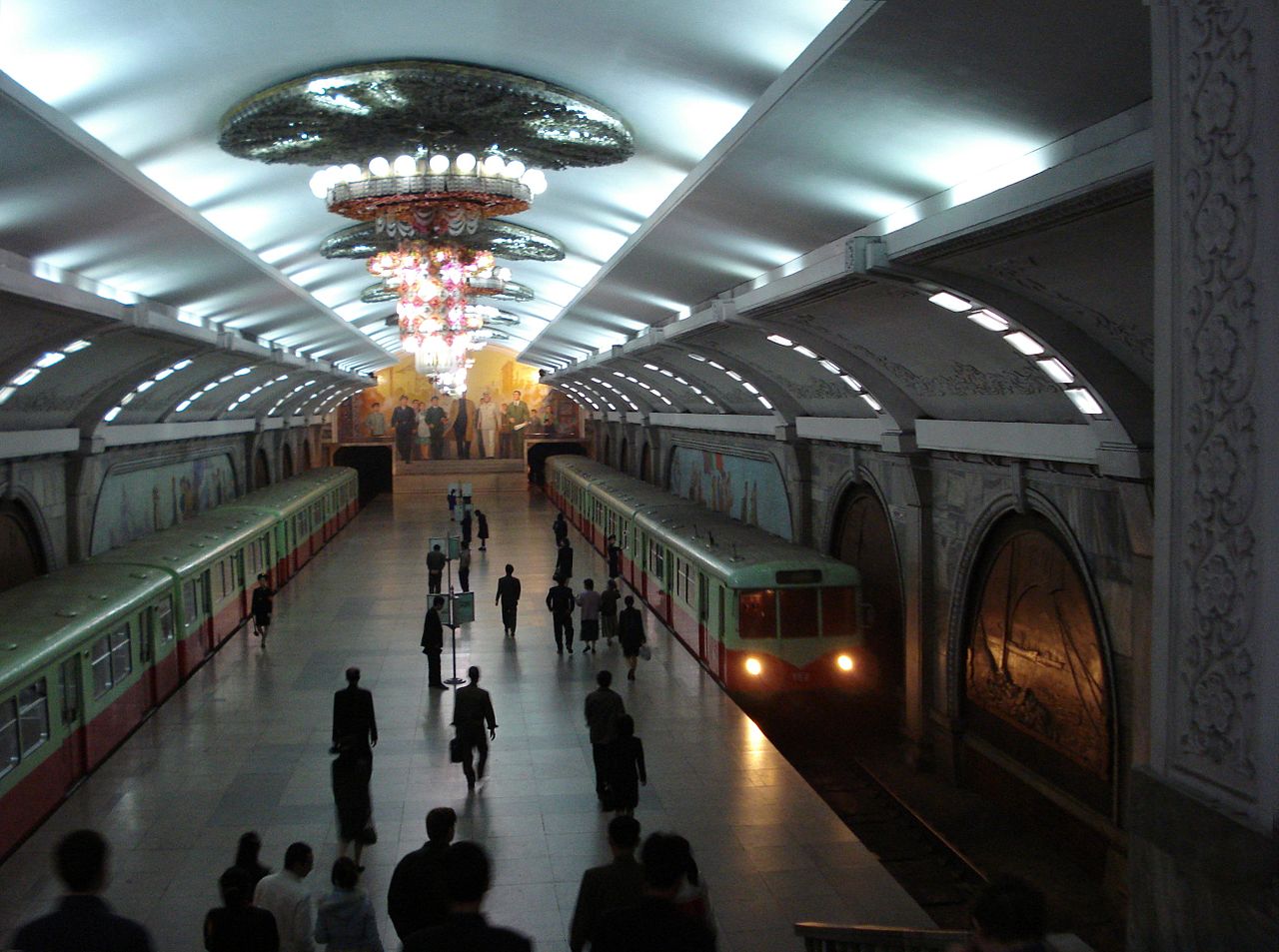




Layout and stations
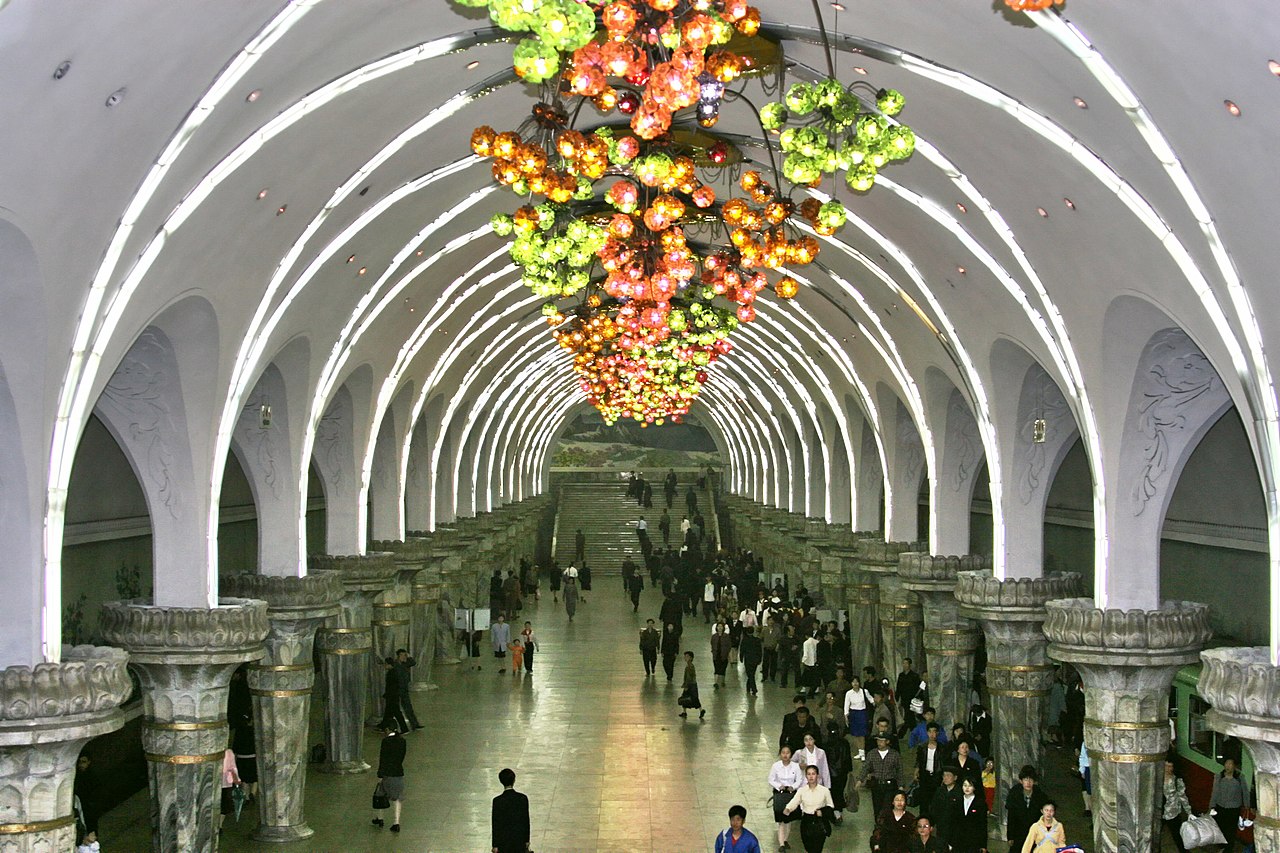
The network consists of two primary routes commonly referred to by their line names. Each line links residential districts with central areas of the city. Stations are known for their deep-sited construction and generous interior finishes. Many platforms feature murals, mosaics, chandeliers and other decorative elements reflecting the state's aesthetic preferences.
- Chŏlima Line (commonly associated with the red route): Pulgunbyol, Chonu, Kaeson, Tongil, Sungni, Ponghwa, Yonggwang, Puhung.
- Hyoksin Line (commonly associated with the green route): Kwangbok, Konguk, Hwaggumbol, Konsol, Hyoksin, Chonsung, Samhung, Kwangmyong, Rakwon.
Characteristics and infrastructure
Many stations lie at considerable depth below ground, a design choice that also allows them to serve as civil defence shelters in times of emergency. The rolling stock and signalling were originally supplied through socialist bloc cooperation and later upgrades have been reported. Trains and platforms are arranged for high-capacity commuter flows during peak hours, while station interiors reflect an emphasis on monumental public space rather than minimal, purely utilitarian design.
History and development
Construction and expansion of the metro took place during the mid-to-late 20th century as part of broader urban planning in the nation's capital. The project drew on engineering and material support from allied countries at the time and was developed in parallel with other major civic works. Over time the system has undergone maintenance cycles and selective refurbishment to preserve both function and decorative elements.
Uses, access and significance
For residents the metro is an important daily transport mode that links dense residential neighborhoods with workplaces, schools and civic centers. For outside visitors it has been a point of interest because of its distinctive station decor and depth, but access is typically regulated; foreign visitors normally see stations as part of a guided tour rather than traveling independently. Photography and movement in stations may be restricted at times. The system is also referenced in discussions of Cold War-era infrastructure and in studies of urban transport in closed societies.
Further information and resources
Summaries, maps and station lists are maintained by a variety of transit reference sources and travel guides. For official or detailed operational material consult local transport authorities or specialized publications. Additional background on urban context and planning appears in resources about the city of Pyongyang and the country's transport policies: system overview, Pyongyang city, North Korea, station list.
Related articles
Author
AlegsaOnline.com Pyongyang Metro Leandro Alegsa
URL: https://en.alegsaonline.com/art/80222