
Purine: structure and biological role in nucleic acids and metabolism
Purines are bicyclic nitrogenous bases found in DNA and RNA. This article explains their chemical structure, biological functions, metabolism, common examples and medical relevance.
Overview
Purines are a class of nitrogen-containing heterocyclic molecules that form two of the standard bases in nucleic acids: adenine and guanine. These bases pair with complementary pyrimidines to encode genetic information in both DNA and RNA. In biochemical contexts the term "purine" is used for the parent bicyclic ring system as well as for substituted derivatives that function as biological bases and signaling molecules.
Image gallery
3 Images

Chemical structure and properties
At the chemical level a purine consists of a six-membered ring fused to a five-membered ring. It is classified as a heterocyclic and aromatic organic compound, containing multiple nitrogen atoms within its rings. The six-membered portion resembles a pyrimidine ring, while the five-membered portion is similar to an imidazole; together the fusion creates the characteristic purine scaffold. The ring system provides sites for glycosidic linkage to ribose or deoxyribose when incorporated into nucleotides.
Biological roles and examples
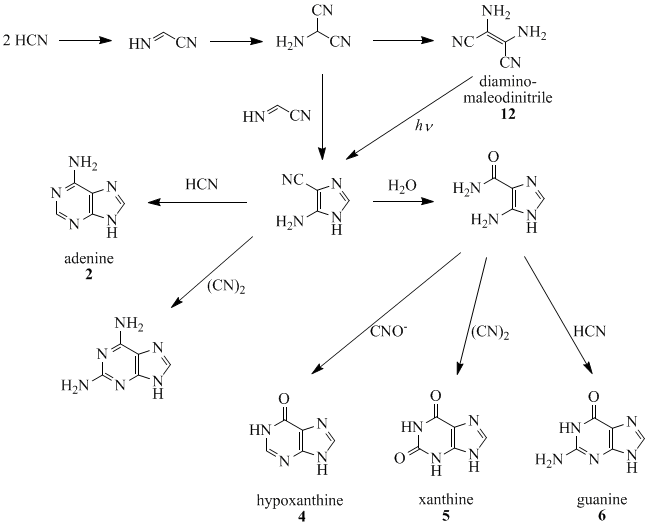
Purine bases become part of nucleotide monomers that build nucleic acids and act as energy carriers and signaling molecules. Common naturally occurring purines include:
- Adenine — a nucleobase in DNA/RNA and part of ATP and ADP.
- Guanine — a nucleobase in DNA/RNA involved in base pairing and structure.
- Hypoxanthine and xanthine — intermediates in purine degradation and salvage pathways.
- Caffeine and theobromine — plant-derived methylxanthines that are purine alkaloids with physiological effects.
Beyond their genetic role, purine nucleotides such as ATP and GTP transfer chemical energy, while cyclic nucleotides (e.g., cAMP, cGMP) serve in intracellular signaling.
Metabolism, occurrence and medical importance
Organisms synthesize purines de novo and also recycle bases via salvage pathways. Catabolism of purines leads to the production of uric acid in humans; elevated uric acid can crystallize in joints and cause gout. Defects in purine metabolism and salvage enzymes are linked to inherited disorders—e.g., severe enzyme deficiencies can have neurological or hematological consequences. Purine analogs and inhibitors are also important in medicine: some anticancer and antiviral drugs mimic purine structures to interfere with DNA/RNA synthesis, and agents that reduce uric acid production are used to treat gout.
History, nomenclature and notable distinctions
The purine framework was identified and characterized during the 19th and early 20th centuries as chemists elucidated the composition of nucleic acids and related compounds. The name "purine" is used both for the basic bicyclic ring system and for substituted derivatives encountered across biology and pharmacology. In contrast to the single-ring pyrimidines, purines are bicyclic; this difference influences base pairing geometry and the size of nucleic acid grooves.
For further reading and reference materials, see related entries on specific bases, nucleotides, biochemical pathways and disorders: adenine and guanine, DNA, RNA, heterocyclic chemistry, aromaticity, organic compounds, pyrimidines, nitrogen biology, nucleotides.
Related articles
Author
AlegsaOnline.com Purine: structure and biological role in nucleic acids and metabolism Leandro Alegsa
URL: https://en.alegsaonline.com/art/80136