
Province of Caserta
Province in Campania, southern Italy, centered on Caserta city; known for the Reggia di Caserta (a UNESCO site), diverse landscapes from coast to Matese mountains, agriculture, industry and archaeological heritage.
Overview
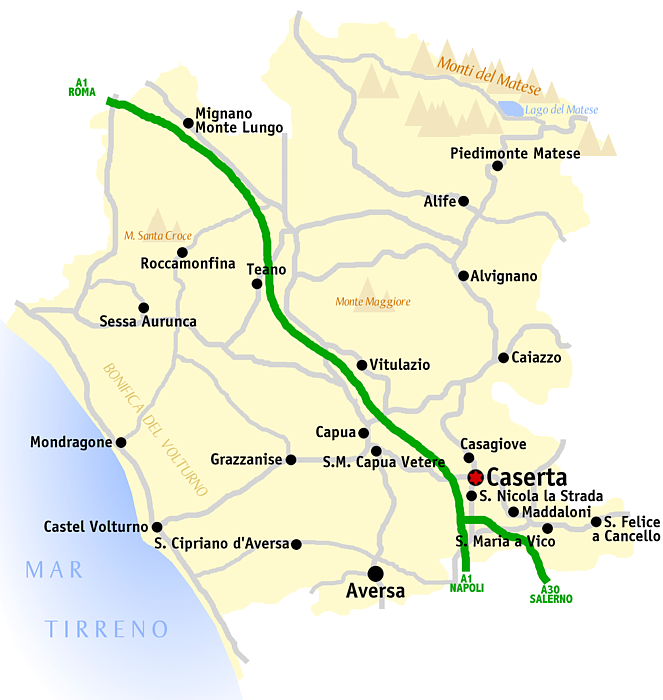
The Province of Caserta is an administrative area in southern Italy, forming part of the region of Campania. Its capital is the city of Caserta, a centre for administration, culture and transport. The province combines coastal plains, river valleys and upland ranges, and is best known internationally for the Bourbon royal palace and park at Caserta, the Reggia di Caserta, which is recognised as a major historic and artistic monument.
Image gallery
10 Images



Geography and climate
Topographically the province extends from low-lying Tyrrhenian coastal areas inland to the Matese massif. The Volturno river system crosses the territory, contributing to fertile alluvial plains used for cultivation. The climate is Mediterranean along the coast, becoming cooler and more continental at higher elevations; this variation supports a mix of agriculture, woodland and pastures. The landscape includes karst features in the uplands, small lakes and forested slopes popular for outdoor recreation.
Administrative divisions and principal towns
The province contains a number of comuni ranging from small hill towns to larger urban centres. The capital, Caserta, provides regional services and is the gateway to the Reggia. Other important centres include Aversa, Santa Maria Capua Vetere — noted for Roman remains — Sessa Aurunca, Maddaloni and Marcianise, each with local markets, industry or historic quarters.
History and cultural heritage
The territory preserves evidence of long settlement, from ancient Italic and Roman phases through medieval and early modern periods. The Reggia di Caserta, an 18th-century royal palace designed by Luigi Vanvitelli for the Bourbon kings of Naples, is a focal point of the province's cultural identity and its landscaped gardens and fountains are of international interest. Archaeological sites such as the amphitheatre at Santa Maria Capua Vetere reflect the region's classical past.
Economy, transport and tourism
The provincial economy is diverse: agriculture (cereals, vegetables, fruit, olives and dairy in upland areas), food processing, light industry, logistics and services all play roles. Tourism is driven by historic sites, museums, regional festivals and natural areas such as the Matese mountains. Good road and rail links connect the province with Naples, Rome and other parts of Italy, supporting commerce and visitor access.
Conservation and contemporary issues
Local authorities and communities address challenges common to many mixed rural–urban provinces: conserving heritage sites, managing land use between agriculture and development, and promoting sustainable tourism. Cultural institutions, conservation projects and seasonal events help maintain local traditions and attract visitors while seeking to balance economic growth with environmental protection. The province is commonly referred to in Italian as the Provincia di Caserta.
Related articles
Author
AlegsaOnline.com Province of Caserta Leandro Alegsa
URL: https://en.alegsaonline.com/art/79604