
Prince George, British Columbia
Prince George is the largest city in northern British Columbia, Canada. A regional service and resource hub, it is known for forestry, transportation links, the University of Northern British Columbia and outdoor recreation.
Prince George is a city in central-northern British Columbia, Canada, located at the confluence of the Fraser and Nechako rivers. It is the largest urban centre in northern British Columbia and is commonly nicknamed "BC's Northern Capital." For municipal information and services consult local city resources. The city lies within the traditional territory of the Lheidli T'enneh First Nation.
Image gallery
10 Images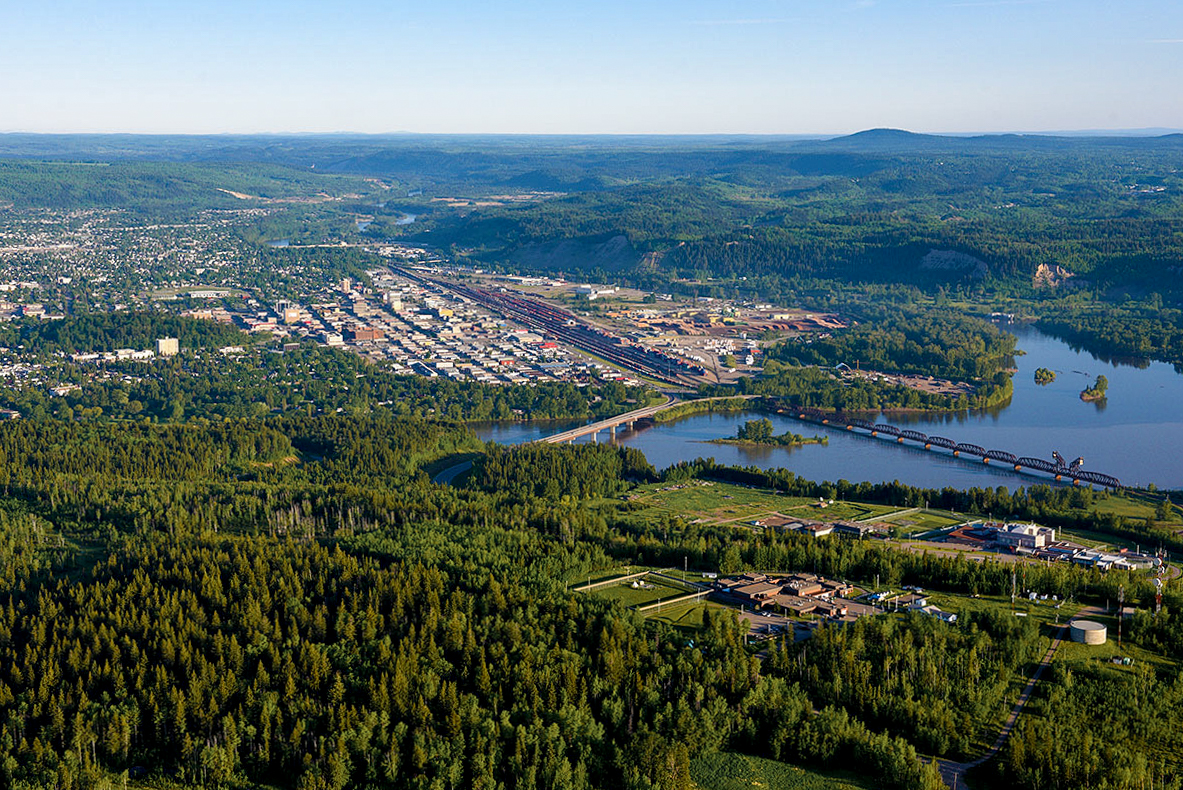


Overview and name
Prince George developed as a meeting point for river, rail and overland routes and grew into a regional service centre for a broad interior region. The community bears a royal name, honouring King George V and Prince George, Duke of Kent. As a hub it supports surrounding smaller communities and resource operations across northern Canada.
History and development
The settlement began around trading posts and early pioneer activity. Expansion followed the arrival of rail lines and road networks and the growth of forestry and related industries. Over the 20th century the city evolved from a frontier trading point into a centre for processing, transport and administration for the northern interior.
Economy and institutions
The regional economy is anchored by forestry and wood processing, with significant activity in mining, energy and transportation. Prince George hosts health and administrative services for the north and is home to the University of Northern British Columbia, a research-oriented campus that draws students and staff to the region. Other institutions include colleges, a regional hospital and facilities that support natural-resource sectors.
Transport and infrastructure
- Transport hub: intersection of major highways and rail corridors that connect northern communities to the rest of the province, including the Yellowhead route across the interior.
- Regional airport provides passenger and cargo links; freight rail serves long-distance transport of goods.
- Local infrastructure supports forestry operations, education and seasonal tourism.
Culture, recreation and environment
Set among forested hills and river valleys, Prince George offers diverse outdoor recreation such as hiking, fishing, skiing and boating. Cultural life includes community museums, arts venues and festivals that reflect both Indigenous and settler histories. The city contends with environmental issues typical of the region, including wildfire risk and resource-landscape management, and participates in provincial and local planning initiatives. For visitor planning see regional tourism information and provincial BC resources.
Government and demographics
Prince George functions as a regional administrative centre, providing services to a wide hinterland. It had a population of about 71,974 in 2011; the city is governed by an elected council and serves as a focal point for public services and regional economic activity.
Related articles
Author
AlegsaOnline.com Prince George, British Columbia Leandro Alegsa
URL: https://en.alegsaonline.com/art/79165
Sources
- www12.statcan.gc.ca : "Focus on Geography Series, 2011 Census – Census agglomeration of Prince George, British Columbia"
- princegeorge.ca : "Our City!"