
President of Venezuela
Overview of the office of the President of Venezuela: role, powers, election rules, historical development, and the 2019 leadership dispute involving Nicolás Maduro.
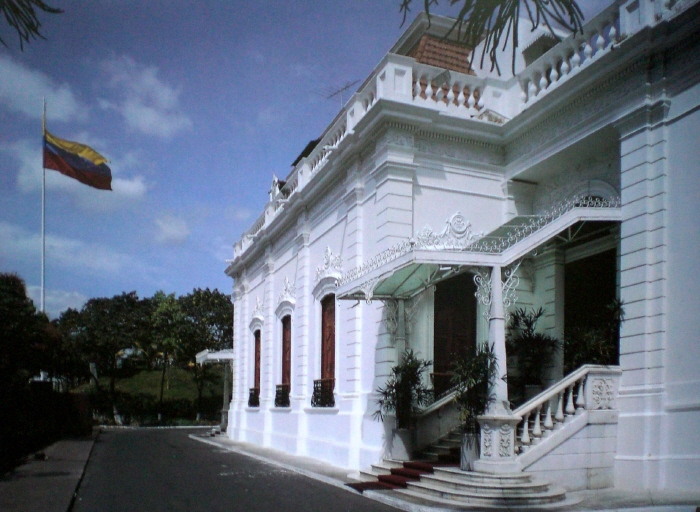
The President of Venezuela is the head of state and head of government of the Bolivarian Republic of Venezuela. The office combines ceremonial duties with executive authority over national policy, defense and foreign relations. The presidential residence and main workplace is the Miraflores Palace in Caracas, and the holder leads the country's executive branch alongside appointed ministers and a vice president.
Image gallery
5 Images



Powers and responsibilities
The president directs national administration, implements laws, proposes legislation, commands the armed forces and represents Venezuela internationally. In ordinary times the president manages the cabinet and public policy; in extraordinary situations the constitution grants temporary emergency powers subject to legal limits and oversight. The president also appoints senior officials, ambassadors and members of certain state agencies.
Election, term and eligibility
Under the current constitutional framework the president is chosen by popular vote. The constitution sets eligibility criteria and establishes the procedures for elections, inauguration and succession. Constitutional amendments and legal reforms since 1999 have changed aspects of term length and re-election rules; debate over those reforms has been a recurring theme in Venezuelan politics.
Historical context
The office has evolved through the republican period, numerous constitutions and episodes of military and civilian rule. While earlier republican leaders and 19th- and 20th-century governments set precedents, the adoption of the 1999 constitution reshaped the modern presidency and its relationship with other branches of government. The post-1999 era has been marked by active presidential leadership in economic and social policy.
2019 leadership dispute
Since January 2019 Venezuela experienced a contested presidential situation. After an inauguration that some domestic opponents and foreign governments questioned, Nicolás Maduro remained in office while the head of the National Assembly declared an interim presidency under constitutional arguments. That parallel claim generated international diplomatic divisions: some governments recognized the interim authority, while others continued diplomatic relations with the incumbent administration. The dispute highlighted tensions over electoral legitimacy, institutional control and international recognition.
Notable distinctions and significance
The presidency in Venezuela is central to national politics and policy direction, and changes in its legal framework have broad implications for governance, human rights and foreign relations. Understanding the office requires attention to constitutional text, institutional practice and political context. For background on the country and its institutions see general resources on Venezuela.
Related articles
Author
AlegsaOnline.com President of Venezuela Leandro Alegsa
URL: https://en.alegsaonline.com/art/78919