
Potassium iodate (KIO3): properties, production, uses, and safety
Potassium iodate (KIO3) is a white, oxidizing salt used to iodize table salt, as a laboratory oxidant, and for iodine prophylaxis; it is chemically distinct from potassium iodide.
Overview
Potassium iodate is an inorganic chemical with the formula KIO3. It is composed of potassium cations and iodate anions (IO3−). In its pure form it appears as a white, crystalline, odorless solid and functions as an oxidizing agent in many chemical contexts. For basic reference on the compound see potassium iodate.
Image gallery
3 Images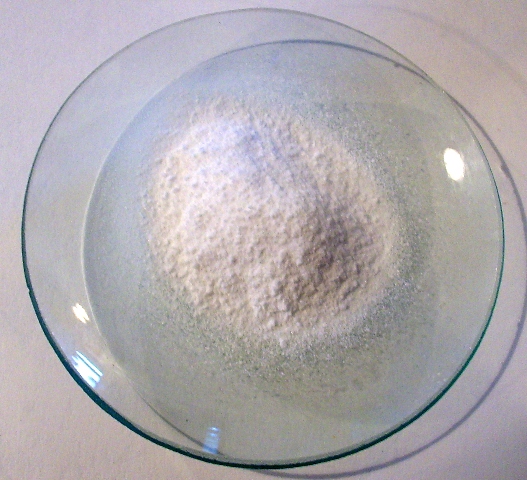


Properties and chemical behavior
KIO3 is soluble in water to a moderate degree (solubility increases with temperature) and is stable under normal storage conditions. Chemically, the iodate ion can accept electrons and be reduced to iodide (I−) or to elemental iodine under acidic conditions. The compound does not behave like metallic potassium; rather, the potassium is present as a familiar alkali metal ion. More about potassium can be found at potassium, and information on the iodate ion is available at iodate.
Production and historical notes
Industrial and laboratory synthesis of potassium iodate typically involves oxidation of iodide or partial disproportionation of iodine in alkaline solution, followed by isolation of the potassium salt. Its use grew in the 20th century alongside public-health efforts to prevent iodine deficiency disorders by adding stable iodine compounds to food supplies.
Uses and applications
Potassium iodate is notable for several practical roles:
- Salt iodization: used to fortify table salt in regions where humidity or storage conditions would degrade iodide salts.
- Medical prophylaxis: authorized in some emergency plans as an iodine source to block radioactive iodine uptake in the thyroid.
- Chemical reagent: employed as an oxidizing agent in analytical chemistry and in organic synthesis where a mild, stable oxidant is required.
- Other technical uses: occasional use in disinfection and laboratory standards.
General references on applications can be consulted at related resources.
Safety, handling, and distinctions
KIO3 is an oxidizer and should be kept away from reducing agents and combustible materials. It can be harmful if ingested in large amounts; handling requires standard laboratory precautions—gloves, eye protection, and dry storage. Compared with potassium iodide (KI), potassium iodate is more chemically stable in oxidizing or humid environments, which makes it preferred for some salt-iodization programs. Distinctions between iodate and iodide salts are important in public-health, regulatory, and chemical contexts.
For further technical data, consult material safety data sheets and authoritative chemical references. See also general compound information at this entry.
Related articles
Author
AlegsaOnline.com Potassium iodate (KIO3): properties, production, uses, and safety Leandro Alegsa
URL: https://en.alegsaonline.com/art/78419