
Pordenone, Italy
Pordenone is the chief town of its province in the Friuli‑Venezia Giulia region of northeastern Italy, known for its industrial economy, historic centre, and cultural festivals.
Pordenone is the principal town and administrative centre of the Province of Pordenone, located in the Friuli‑Venezia Giulia region of northeast Italy. The city is identified by different local names: in Venetian dialect and in Friulian it is called Pordenon. It serves as an important local hub for government, commerce and services within the surrounding plain.

Image gallery
7 Images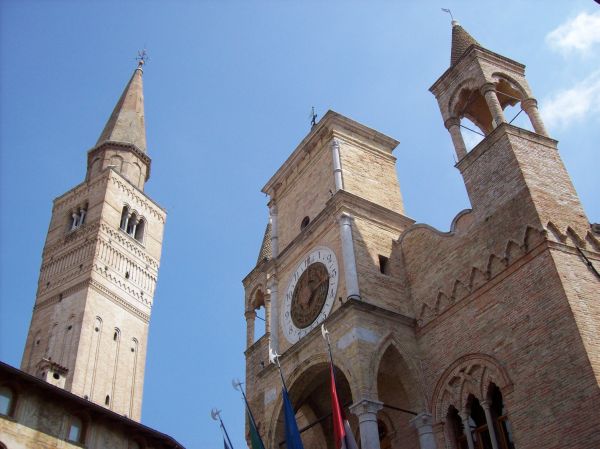



Geography and civic role
Pordenone lies on the lowlands of the Friulian plain, close to the foothills that lead toward the Alps. A small river runs through the town, shaping parts of the historic centre. As a comune and provincial capital, it combines municipal institutions, regional services and industrial districts, linking rural agricultural areas to larger urban markets.
History and development
The settlement grew in the medieval period around trade routes and river crossings. Over the centuries it shared the complex political history of the Friuli area, coming under the influence of local ecclesiastical authorities and later larger powers. From the late Middle Ages and into the early modern era the territory experienced shifts in rule typical of northeastern Italy, and the town expanded further with the advances of manufacturing and transport in the 19th and 20th centuries.
Economy, culture and institutions
Pordenone is noted for a mixed economy: light and precision manufacturing, small and medium enterprises, and a service sector that supports the province. Cultural life is active for a city of its size, with museums, galleries, and regular events. The town hosts internationally known cultural initiatives, including a celebrated festival dedicated to silent cinema and literary and music events that attract national and international visitors.
Transport, landmarks and attractions
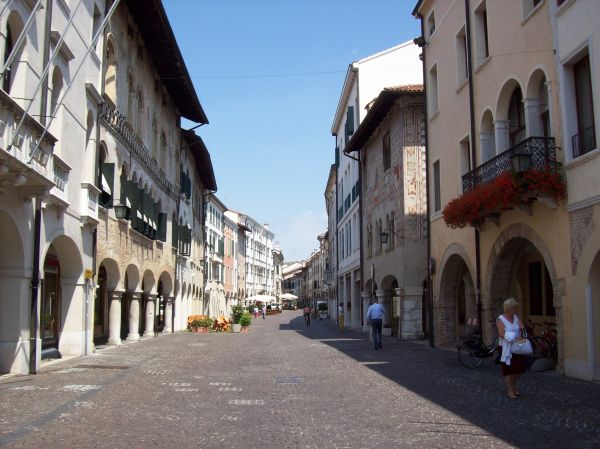
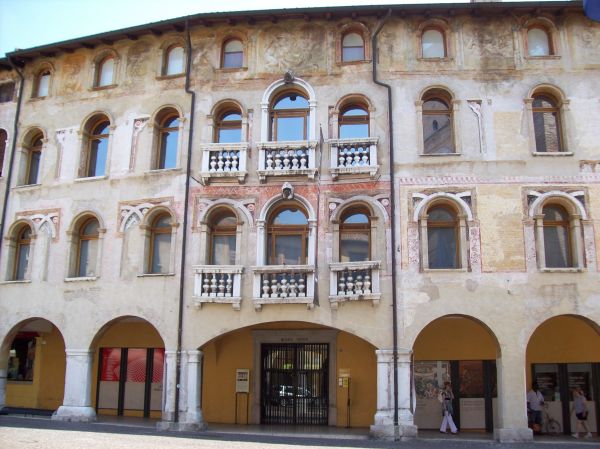
The town is served by regional rail and road connections that link it to other centres in Friuli‑Venezia Giulia and beyond. Its compact historic centre contains churches, civic palaces and a clock tower that illustrate different architectural phases from medieval to later periods. Typical points of interest include:
- Historic piazzas and civic buildings reflecting Renaissance and Baroque influences
- Local museums preserving art and the history of the province
- Annual cultural festivals and film retrospectives
As the main comune of the province (Province of Pordenone) within the autonomous region of Friuli‑Venezia Giulia, Pordenone combines regional identity, linguistic diversity and economic importance. Visitors and researchers value it both for its living urban culture and as a gateway to the wider Friulian landscape.
Related articles
Author
AlegsaOnline.com Pordenone, Italy Leandro Alegsa
URL: https://en.alegsaonline.com/art/78146
Sources
- istat.it : "Superficie di Comuni Province e Regioni italiane al 9 ottobre 2011"
- demo.istat.it : "Popolazione Residente al 1° Gennaio 2018"