
Pierre Schaeffer: pioneer of musique concrète and the sound object
French composer, engineer and broadcaster who founded musique concrète and developed tape-based techniques. Influential theorist of the 'sound object' and a major figure in 20th‑century electronic music.
Pierre Schaeffer (1910–1995) was a French composer, engineer and radio producer whose experiments with recorded sound helped create a new musical practice known as musique concrète. Born in Nancy, he combined technical know-how with an interest in everyday sounds to propose that recorded noises could be treated as musical material. He worked across composition, research and broadcasting, and his career bridged practical studio work and theoretical writing. Many accounts describe him as a transformative figure in post‑war sound culture; he is often introduced simply as a musician and innovator.
Image gallery
3 Images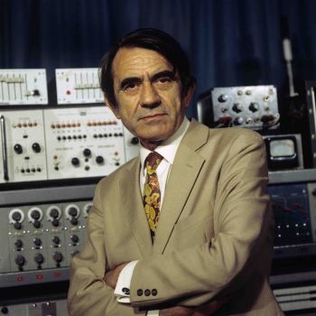

What is musique concrète?
Musique concrète rejects the strict separation between musical notes and environmental sound. Instead of writing scores for traditional instruments, practitioners assemble, edit and manipulate recorded sounds to create musical form. Schaeffer emphasized focused listening to the characteristics of sounds themselves, an approach that led him to coin and develop the idea of the "sound object" (objet sonore): a sound considered independently of its source or meaning and valued for its timbral and temporal qualities.
Techniques and tools
Working in the era of analog tape, Schaeffer and his collaborators used practical studio methods that became central to electroacoustic practice. Common techniques included:
- Recording environmental and mechanical sounds with microphones;
- Splicing and montage: cutting and joining tape to reorder events;
- Speed change, reversal and looping to transform pitch and duration;
- Filtering and equalization to shape timbre; and
- Layering and spatial mixing to build complex sound textures.
These methods relied on tape recorders, mixing consoles and basic laboratory apparatus—tools familiar to engineers and inventors of the time—and benefited from Schaeffer's early training as an engineer.
Development, collaborations and key works
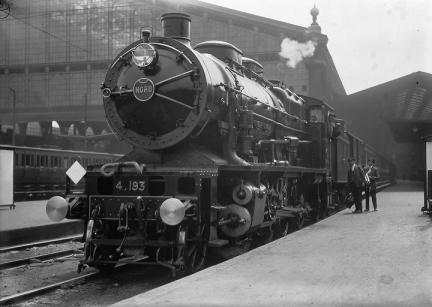
In the late 1940s Schaeffer established studios and research groups attached to French radio where composers could experiment with recorded sound. He collaborated with other composers, most notably Pierre Henry, producing landmark pieces that explored montage and the musical use of everyday noises. Early studies such as the railway sounds piece and collective works like the Symphonie pour un homme seul helped demonstrate how non‑instrumental sounds could be organized into sustained musical narratives. Schaeffer also published theoretical writings that set out listening methods and compositional principles, influencing generations of composers and researchers.
Legacy and influence
Schaeffer's ideas underlie many developments in contemporary music and sound culture: electronic and electroacoustic composition, sound art, musique électroacoustique, radio art, film sound design and even modern sampling techniques. His emphasis on the sound object anticipated approaches used by later electronic musicians, DJs and producers who treat recorded fragments as raw material. Institutions that grew from his research groups continue to support studio-based composition and archive work.
In later life Schaeffer continued to write and teach about listening and sonic perception. He died in Aix‑en‑Provence after a long illness; contemporary notices recorded his passing from Alzheimer's disease in the region of Aix‑en‑Provence. His work remains a central reference point for anyone studying the history and techniques of electroacoustic music.
Related articles
Author
AlegsaOnline.com Pierre Schaeffer: pioneer of musique concrète and the sound object Leandro Alegsa
URL: https://en.alegsaonline.com/art/76823