
Phosphorescence: slow photoluminescence and glow-in-the-dark materials
Phosphorescence is a form of photoluminescence in which absorbed energy is re-emitted as light over an extended period. It differs from fluorescence and has practical uses in safety, signage, and novelty products.
Phosphorescence is a type of photoluminescence in which a material absorbs energy and releases it as visible light over an extended interval rather than immediately. This delayed light emission is the basis for many familiar "glow-in-the-dark" products that are charged by exposure to light and then continue to emit light after the charging source is removed. For consumer illustrations see glow-in-the-dark materials.
Image gallery
10 Images


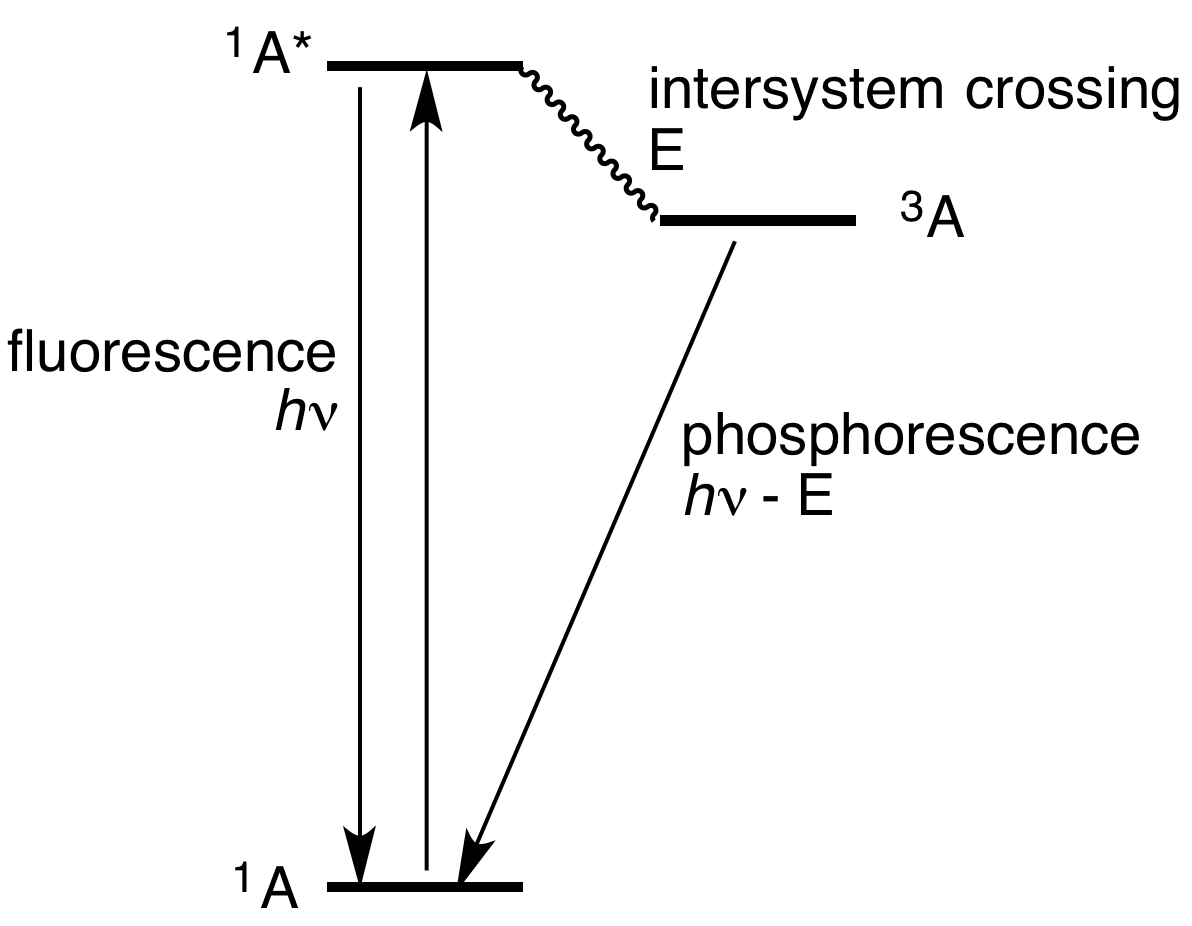


How it works
At the microscopic level phosphorescence involves excited electronic states and transitions that are quantum-mechanically less probable than the fast transitions responsible for fluorescence. An electron promoted by absorbed photons can undergo intersystem crossing into a triplet or other long-lived state, where its return to the ground state is partially forbidden and therefore slow. The stored energy is released as photons over timescales that range from fractions of a second to many hours, depending on the material and the presence of traps or defects that hold charge carriers.
Materials and history
Historically, mineral phosphors such as zinc sulfide were used in early luminous paints and devices. Later, more efficient and longer-lasting inorganic phosphors such as strontium aluminate doped with rare-earth elements became common. In the early 20th century some luminous paints used radioactive compounds (for example in watch dials), but those were phased out for safety reasons in favor of nonradioactive phosphors. Modern formulations prioritize brightness, duration, and safety.
Uses and examples
Phosphorescent materials are used where passive illumination is helpful. Typical examples include:
- Emergency and exit signage that remains visible after lights fail.
- Watch dials, instrument markers, and safety gear for low-light visibility.
- Decorative paints, toys, and novelty products that glow after charging.
- Scientific demonstrations and educational tools showing energy storage and release.
Distinctions and notable facts
Phosphorescence is often contrasted with fluorescence, which produces nearly instantaneous re-emission; a fluorescent lamp is an example of fast photoluminescence under continuous excitation (fluorescent sources). Phosphorescence must also be distinguished from chemiluminescence and bioluminescence, where light is produced by chemical reactions rather than stored electronic excitation. Practically, phosphors differ in duration, color, and sensitivity to temperature and humidity, and specialists evaluate them by decay curves and brightness under standard charging conditions.
Because the underlying physics depends on electronic states and material defects, advances in chemistry and materials science continue to improve brightness and persistence, broadening applications in safety, design, and technology while avoiding hazardous materials used in earlier eras.
Related articles
Author
AlegsaOnline.com Phosphorescence: slow photoluminescence and glow-in-the-dark materials Leandro Alegsa
URL: https://en.alegsaonline.com/art/76576