
Phaedra (Greek mythology)
Phaedra, daughter of Minos and Pasiphaë and wife of Theseus, is a tragic figure in Greek myth whose doomed passion for Hippolytus inspired ancient tragedies and later European drama.
Overview
Phaedra is a well-known figure in Greek mythology. She is traditionally named as the daughter of Minos and Pasiphaë, the sister of Ariadne, the wife of Theseus, and the mother of Demophon and Acamas. Her name comes from a Greek root often translated as "bright" or "radiant" (phaidros).
Image gallery
6 Images




Myth and major variants
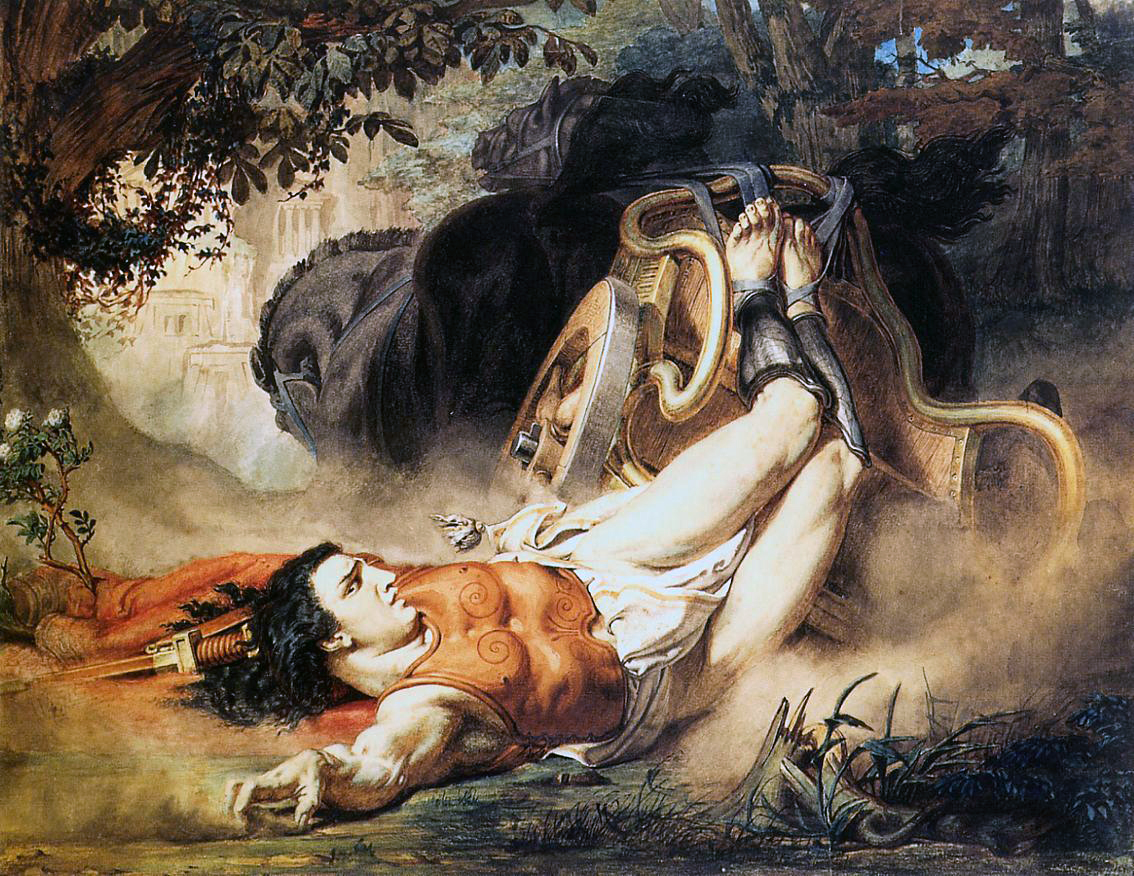
Accounts of Phaedra's story differ among ancient authors. The most influential version, preserved by Euripides in his play Hippolytus, presents her as seized by a forbidden passion for Hippolytus, the chaste son of Theseus by an amazon or other woman. In that telling the goddess Aphrodite punishes Hippolytus for spurning love by causing Phaedra's desire; the resulting events lead to accusations, a suicide, and Hippolytus's death after a curse by his father. Other treatments alter motives and responsibility, producing narratives focused on murder and revenge, false accusation, or tragic self-destruction.
Ancient and later treatments
- Euripides: a fifth-century BCE Greek tragedy that casts Phaedra as both culpable and pitiful.
- Seneca: a Roman adaptation emphasizing horror and rhetorical intensity.
- Racine: a seventeenth-century French tragedy (Phèdre) that reshaped her into a symbol of nobility destroyed by passion.
Themes and interpretations
Phaedra's story has been read in many ways: as a cautionary tale about illicit desire, as a study of divine retribution and human responsibility, and as an exploration of honor, shame, and self-sacrifice in patriarchal societies. Some versions emphasize her agency and guilt; others treat her as a victim of gods or fate. These differences have made her a rich subject for literary critics, dramatists, and artists.
Legacy and cultural importance
Beyond ancient drama, Phaedra appears in painting, opera, and modern adaptations, where her figure often symbolizes conflicted passion and moral complexity. The myth has influenced debates about tragic culpability and the portrayal of women's desires in literature. For readers seeking primary texts and modern commentary, editions and translations of Euripides, Seneca, and Racine remain central starting points for studying the character and her enduring resonance.
Related articles
Author
AlegsaOnline.com Phaedra (Greek mythology) Leandro Alegsa
URL: https://en.alegsaonline.com/art/76321