
Autonomous Region in Muslim Mindanao (former autonomous region of the Philippines)
Former autonomous region in the southern Philippines covering five provinces in the Mindanao area; created to provide self-government for predominantly Muslim areas and later replaced by Bangsamoro.
Overview
The Autonomous Region in Muslim Mindanao (ARMM) was an autonomous political region in the southern Philippines, located within the larger Mindanao island group of the country. Created to recognize and accommodate the distinct cultural and religious identity of Muslim-majority communities, ARMM was unique among the country's regions because it had its own regional government and legislative body while remaining part of the Philippines.
Image gallery
10 Images

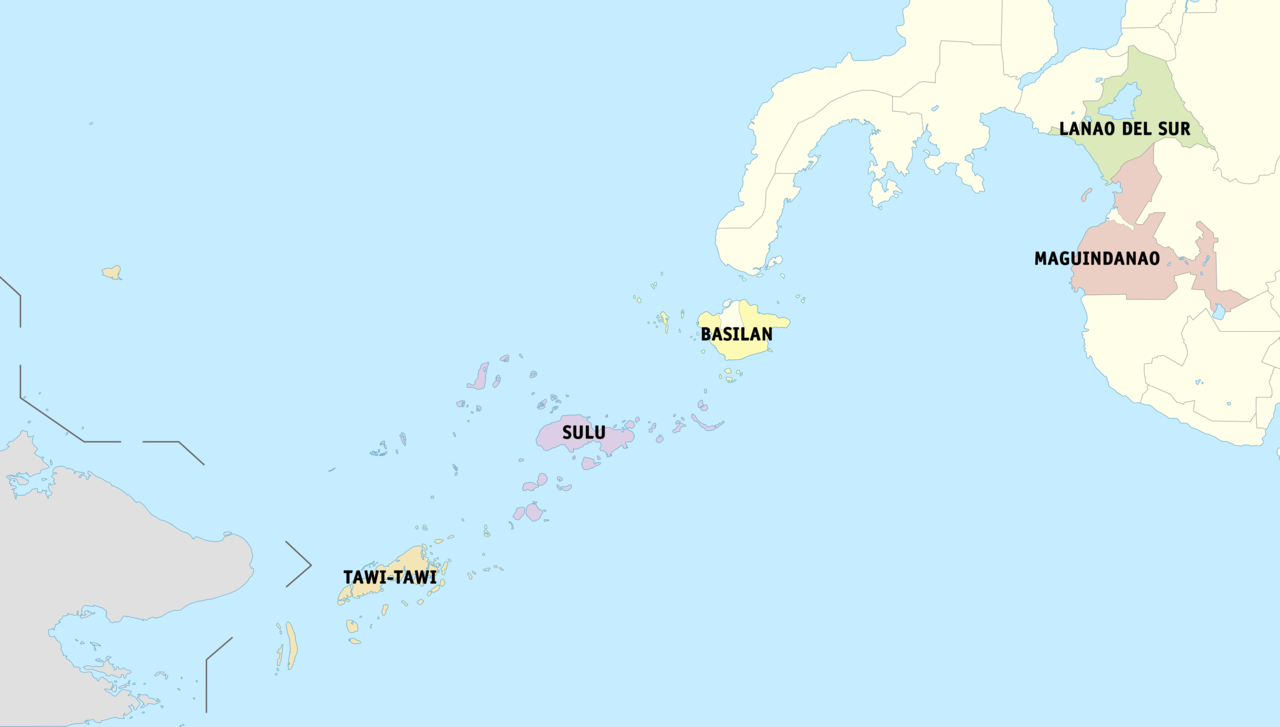


Territory and composition
ARMM comprised a number of provinces and island groups in the southern archipelago, including areas of the Sulu Archipelago and parts of mainland Mindanao. The region's administrative units included:
- Basilan (with the notable exception that Isabela City was administratively outside the region)
- Lanao del Sur
- Maguindanao
- Sulu
- Tawi-Tawi
Those provinces were often referenced collectively as the region's provinces, and they spanned both island and inland terrain, embracing a mix of maritime and highland communities.
History and development
ARMM was established toward the end of the 20th century as part of national efforts to address historical grievances, provide greater local autonomy, and promote peace in areas with strong Muslim identity. Over time the region experienced political, economic and security challenges as successive administrations and local leaders sought to strengthen governance, deliver public services, and negotiate settlements between armed groups and the national government.
Government, powers and distinctions
Unlike ordinary administrative regions, ARMM had a regional executive and a regional legislative assembly empowered to make laws on certain local matters such as education, cultural affairs, and regional economic development. The national government retained authority over defense, foreign affairs, currency, and other reserved functions. This arrangement made ARMM distinct among the country's regions, serving as a model for later autonomy proposals.
Economy, society and significance
The region's economy combined fishing, small-scale agriculture, trade and remittances, with many communities relying on maritime resources in surrounding seas. ARMM's population was largely Muslim and culturally diverse, reflecting Tausūg, Maranao, Maguindanaoan and other ethnic groups. The region's existence highlighted complex issues of identity, development and governance in a multiethnic state.
Transition and legacy
After years of negotiations and legal reform, ARMM was succeeded by a new autonomous entity intended to widen powers and institutions for self-governance. The transition sought to address shortcomings in service delivery and representation, and its legacy continues to shape debates about decentralization, minority rights, and peacebuilding in the southern Philippines.
For further background see regional histories and formal government sources.
Tags
Related articles
Author
AlegsaOnline.com Autonomous Region in Muslim Mindanao (former autonomous region of the Philippines) Leandro Alegsa
URL: https://en.alegsaonline.com/art/7629
Sources
- rla-armmgov.ph : "An Act Fixing the Permanent Seat of Government for the Autonomous Region in Muslim Mindanao at the Municipality of Parang, Province of Maguindanao"
- psa.gov.ph : Highlights of the Philippine Population 2015 Census of Population